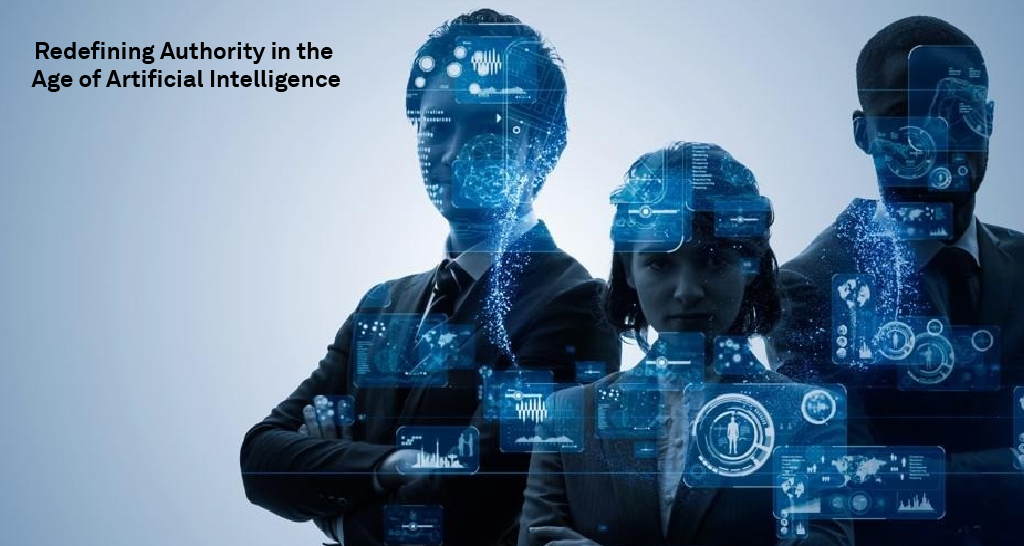
In today’s fast-moving and increasingly complex business landscape, leaders are confronting a reality where data is growing faster than traditional decision-making models can handle. This case study highlights how a mid-sized enterprise turned that challenge into an advantage by thoughtfully integrating artificial intelligence into its leadership approach not to replace human insight, but to sharpen it. By pairing AI-driven intelligence with human intuition, emotional awareness, and ethical judgment, the organization redefined how decisions are made, from long-term strategy and day-to-day operations to people leadership and culture.
The Business Context
Operating in a fiercely competitive and rapidly evolving industry, the organization found itself under mounting pressure to make decisions that were not only faster, but more precise. Leaders were surrounded by dashboards, reports, and forecasts, yet meaningful clarity remained frustratingly out of reach. Critical decisions ranging from market expansion and pricing strategies to workforce planning and risk management were increasingly shaped by instinct rather than solid evidence.
Although the leadership team acknowledged the promise of artificial intelligence, enthusiasm was tempered by caution. Questions around trust, bias, transparency, and accountability fuelled resistance at both the executive and managerial levels. Ultimately, the challenge was not a lack of technological capability, but a deeper issue of cultural readiness preparing leaders to embrace AI as a trusted partner in decision-making.
The Leadership Challenge
At the center of the conversation was a question that was deceptively simple, yet deeply consequential: how could artificial intelligence help leaders make better decisions without weakening human authority or accountability? Executives were cautious about surrendering judgment to algorithms, especially in areas involving people, ethics, and long-term strategy. Yet relying solely on experience was no longer enough in a world awash with data. The leadership team ultimately arrived at a clear conclusion the future of decision-making would be defined by augmentation, not automation.
Introducing AI as a Decision Partner
The organization began by rolling out AI-driven predictive analytics and machine-learning models across carefully selected business functions. Drawing on years of historical performance, real-time market signals, customer behavior, and operational data, these systems delivered forward-looking insights designed to sharpen leaders’ perspective. Importantly, AI was positioned as an advisor, not an authority. Its outputs arrived as recommendations rather than directives, supported by a human-in-the-loop governance model that required leaders to review, question, and contextualize every insight before acting. To further build confidence, transparency dashboards revealed how conclusions were reached, transforming AI from a black box into a tool leaders could understand, trust, and ultimately embrace.
The Role of Human Leadership
Rather than diminishing the role of leadership, AI elevated it. Leaders evolved from being solitary decision-makers into decision orchestrators interpreting data-driven insights, balancing competing trade-offs, and applying human judgment shaped by culture, context, and ethics. In this new model, technology handled complexity, while leaders focused on what mattered most: meaning, responsibility, and the human consequences behind every choice.
Implementation Journey
The rollout unfolded in carefully planned phases. Early pilots were launched in low-risk areas, allowing the organization to test assumptions, demonstrate tangible value, and gather honest feedback. These early wins proved pivotal helping to ease skepticism, build momentum, and pave the way for wider adoption across the enterprise.
Measurable Impact
Within a year, the impact was unmistakable. Decision-making cycles grew markedly shorter, forecasts became more accurate, and potential operational risks surfaced earlier than ever before. Just as importantly, leaders expressed greater confidence in the strategic choices they were making, while employees pointed to a new sense of clarity and consistency in leadership decisions evidence that smarter insights were translating into stronger, more decisive leadership.
Key Takeaways
This case study underscores a defining truth for modern organizations: artificial intelligence does not replace leadership it reshapes it. When paired with human judgment, ethical reasoning, and empathy, AI emerges as a powerful ally in navigating uncertainty and complexity. The future of decision-making will not be determined by a choice between humans and machines, but by the ability to design systems in which both can perform at their best, together.