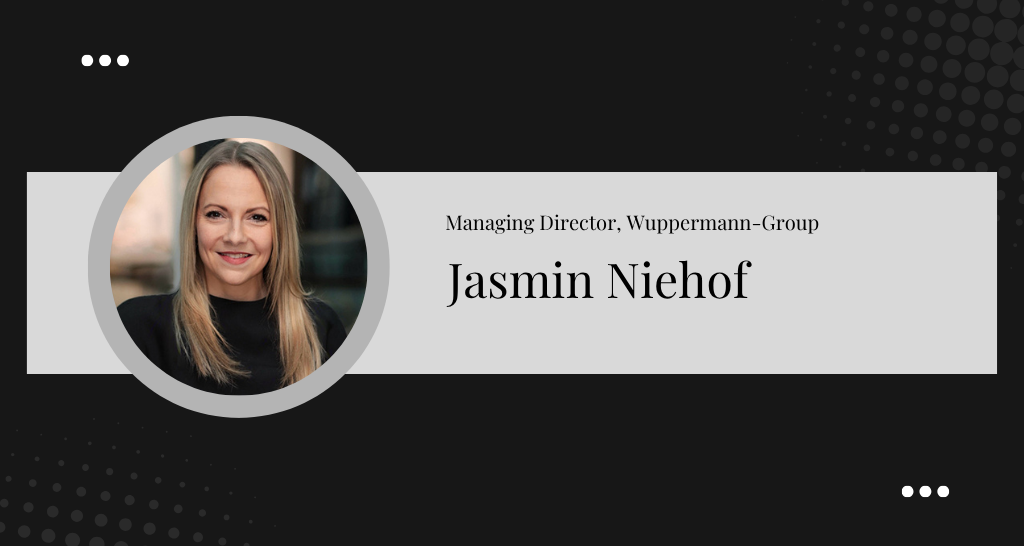
In an industry often associated with tradition, heavy machinery, and decades-old practices, a new generation of leadership is redefining what success looks like. At the forefront of this transformation is Jasmin Niehof, Managing Director of Wuppermann, whose strategic vision, technical expertise, and people-first leadership are helping shape the future of one of Germany’s most respected steel processing companies.
Since joining the Wuppermann Group in May 2025, Niehof has brought fresh energy and a modern outlook to the family-owned business. Responsible for flat steel sales and the procurement of hot-rolled strip and zinc across the Group, she represents a new era of leadership one that balances commercial excellence with sustainability, innovation, and long-term value creation.
Her appointment comes at a defining moment for the global steel industry. Faced with volatile markets, increasing environmental expectations, and rapid technological change, companies must evolve while remaining true to their heritage. Under Niehof’s leadership, Wuppermann is embracing these challenges with confidence and determination.
A Strong Foundation: From Engineering to Executive Leadership
Niehof’s professional journey reflects a deep understanding of both the technical and commercial dimensions of the steel industry. After earning a degree in Industrial Engineering with a specialization in Energy Technology from the University of Duisburg-Essen, she began her career at thyssenkrupp, where she spent nearly a decade developing expertise across several strategic functions.
Her early responsibilities focused on energy technology and regulatory matters, laying a strong analytical foundation. As her career progressed, she took on increasingly influential roles in business excellence, strategic project management, sales development, and executive leadership support. One of her most significant experiences was serving as Executive Assistant to the CEO of thyssenkrupp Steel, a role that offered valuable insight into corporate strategy and high-level decision-making.
She later led business development initiatives and headed Sales Development and Special Projects, further strengthening her expertise in commercial strategy and customer engagement. These diverse experiences prepared her to take on broader leadership responsibilities and eventually led her to Wuppermann Group.
The move from a multinational corporation to a medium-sized family-owned enterprise was intentional. Niehof recognized the unique strengths of companies like Wuppermann short decision-making processes, entrepreneurial agility, strong customer relationships, and a long-term commitment to sustainable growth rather than short-term financial targets.
Steering Growth Through Industry Challenges
The global steel market has experienced significant turbulence in recent years. Weak demand, fluctuating steel prices, rising energy costs, and increasing geopolitical uncertainties have tested even the most established organizations. Yet Wuppermann has demonstrated remarkable resilience.
Under Niehof’s leadership, the company has successfully strengthened its market position while improving revenue and EBITDA despite challenging economic conditions. Her approach combines strategic thinking with operational discipline, ensuring that both sales and procurement remain aligned with the company’s long-term objectives.
For Niehof, business success is not measured solely by financial performance. It is equally reflected in the company’s ability to solve customer challenges, build trusted partnerships, and respond quickly to changing market conditions. This customer-centric mindset has become one of the defining characteristics of Wuppermann’s competitive advantage.
Championing Sustainability in Steel Manufacturing
Perhaps the most significant transformation occurring within the steel industry today is the transition toward sustainable production. As governments, industries, and consumers increasingly prioritize environmental responsibility, steel manufacturers are under growing pressure to reduce emissions and develop cleaner production processes.
At Wuppermann, sustainability is not viewed as a compliance requirement but as a strategic opportunity. The company’s innovative “heat-to-coat” galvanizing process significantly reduces carbon emissions compared to conventional market standards, helping lower the CO₂ footprint of galvanizing by up to 54 percent. Wuppermann has also established ambitious environmental goals, aiming to eliminate production-related emissions by 2027 while addressing remaining emissions by 2030.
Its sustainability initiatives extend beyond emissions reduction. The company generates thousands of megawatt-hours of renewable electricity annually through photovoltaic systems, achieves recycling rates exceeding 99 percent at its galvanizing facilities, and provides product-specific carbon footprint certifications across nearly its entire product portfolio.
Through advanced solutions such as low-carbon steel products, WZMax corrosion protection technology, and WProtect high-performance coated steel, Wuppermann demonstrates that innovation and environmental responsibility can work hand in hand. These initiatives position the company not only as a manufacturer of steel products but also as an active contributor to the global energy transition.
A Leadership Philosophy Centered on People
While technology and innovation are transforming manufacturing, Niehof believes that people remain an organization’s greatest asset.
Her leadership philosophy centers on empowerment. Rather than concentrating decision-making authority at the top, she encourages employees to think independently, take ownership of their responsibilities, and contribute confidently to the organization’s success.
She sees her role not as directing every action but as creating the conditions in which talented individuals can perform at their highest potential. By understanding individual strengths, encouraging continuous development, and supporting thoughtful risk-taking, she fosters a culture of accountability and trust.
Equally important is her perspective on mistakes. Niehof views them as valuable learning opportunities rather than failures. This mindset promotes innovation, strengthens resilience, and encourages employees to continuously improve without fear of unnecessary criticism.
Her approach creates an environment where collaboration, transparency, and continuous learning become essential drivers of organizational performance.
Breaking Barriers in a Traditionally Male-Dominated Industry
The steel industry has traditionally been dominated by men, presenting unique challenges for women pursuing leadership positions. Throughout her career, Niehof has often found herself as both the youngest professional and the only woman in executive discussions.
Rather than viewing these circumstances as limitations, she transformed them into opportunities for growth. By consistently demonstrating expertise, communicating with clarity, and remaining authentic, she established credibility through competence rather than conformity.
Her journey reflects the growing diversity of leadership within manufacturing and heavy industry. She serves as an inspiring example for young professionals, particularly women aspiring to build careers in engineering, industrial operations, and executive management.
Her success demonstrates that effective leadership is defined not by traditional expectations but by vision, capability, integrity, and results.
Preparing Wuppermann for the Future
Looking ahead, Niehof identifies three powerful forces that will reshape the global steel industry over the coming decade: decarbonization, digitalization, and geopolitical realignment.
The demand for low-carbon materials will continue to grow as governments introduce stricter environmental regulations and customers seek more sustainable supply chains. At the same time, digital technologies including artificial intelligence, automation, and data-driven process optimization will become essential competitive advantages.
Global trade dynamics, energy security, and supply chain resilience will also play increasingly significant roles in determining business success. For Wuppermann, adapting to these trends requires continuous investment in technology, innovation, and customer-focused solutions while preserving the company’s strong engineering heritage.
Life Beyond Business
Outside her professional responsibilities, Niehof believes that effective leadership requires both physical fitness and mental resilience. Regular exercise forms an essential part of her routine, helping maintain the focus and stamina required in demanding executive roles. She is also passionate about adventure, embracing activities such as cliff jumping, canyoning, and diving in challenging environments including encounters with sharks and orcas.
These experiences reinforce qualities that are equally valuable in business: remaining calm under pressure, evaluating risks carefully, and making confident decisions in unfamiliar situations. At the same time, she values family and close personal relationships, recognizing that long-term leadership success depends on maintaining balance between professional achievement and personal well-being.
Advice for the Next Generation of Leaders
For aspiring leaders entering the manufacturing and steel industries, Niehof offers practical advice: remain curious, stay open-minded, and seek firsthand experience of industrial operations.
She believes many people underestimate the technological sophistication and innovation within modern steel production. Yet steel remains fundamental to infrastructure, manufacturing, renewable energy, transportation, and countless aspects of everyday life.
By combining technical knowledge with continuous learning and a willingness to embrace change, the next generation of professionals can play an important role in shaping a more sustainable industrial future.
A Legacy of Innovation and Sustainable Leadership
With more than 150 years of history, the Wuppermann Group has built its reputation on engineering excellence, customer commitment, and continuous innovation. Under Jasmin Niehof’s leadership, the company is entering a new chapter one defined by sustainable growth, technological advancement, and empowered leadership.
Her career reflects the qualities increasingly required in modern industry: strategic thinking, adaptability, authenticity, and a commitment to long-term value creation. As global manufacturing continues to evolve, Jasmin Niehof stands as an influential leader who is not only guiding Wuppermann through change but helping shape the future of the steel industry itself. In an era where sustainability, innovation, and resilience define competitive advantage, her leadership offers a compelling vision of what modern industrial excellence can achieve.
📌 Jasmin Niehof – LinkedIn
🌐 Wuppermann Stahl GmbH – Company Website