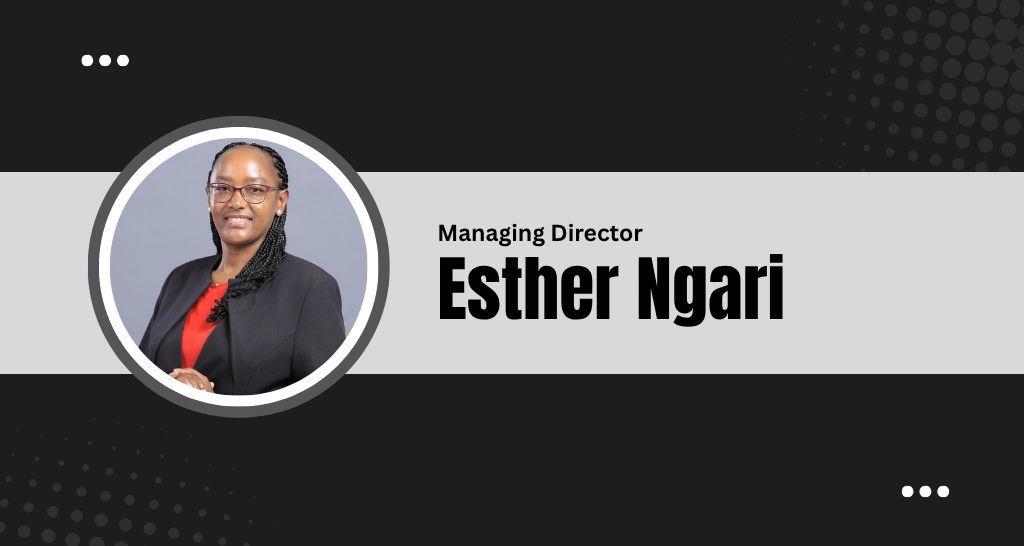
In the evolving landscape of global commerce and governance, few leaders embody the intersection of technical expertise, public service, and visionary leadership as effectively as Esther Ngari, Managing Director of the Kenya Bureau of Standards. At a time when economies are increasingly defined by trust, compliance, and quality, Esther stands at the forefront of shaping systems that quietly but powerfully influence markets, industries, and everyday lives.
Her leadership is not built on rhetoric but on results anchored in integrity, driven by purpose, and focused on long-term national and continental impact. As one of Africa’s leading women in regulatory leadership, Esther is redefining what it means to lead a standards institution in a fast-changing world.
A Purposeful Journey Rooted in Quality and Systems Thinking
Esther Ngari’s professional journey reflects a deliberate and strategic evolution. Beginning her career in industry, she developed a deep understanding of how standards function as invisible yet essential pillars of trust in markets. These early experiences shaped her appreciation for quality systems not as abstract frameworks, but as practical tools that enable efficiency, safety, and credibility.
Her transition into public service marked a significant turning point. In this space, she took on increasingly complex roles that required balancing scientific rigor, policy frameworks, and the often-competing interests of diverse stakeholders. Each step in her journey was defined by a commitment to strengthening systems and driving meaningful reform.
Key milestones along the way include leading institutional transformation initiatives, enhancing national quality systems, and positioning Kenya as a strong voice in international standard-setting platforms. Her appointment as Managing Director of KEBS represents both the culmination of years of disciplined growth and a platform to deliver systemic impact at a national and global level.
Leadership Anchored in Integrity, Courage, and Service
At the heart of Esther’s leadership philosophy are three core values: integrity, courage, and service. These are not abstract ideals but operational principles that guide every decision she makes.
Integrity, in her view, is the foundation of any regulatory institution. Without it, credibility collapses, and with it, public trust. Courage follows closely because leadership in a high-stakes environment often requires making difficult and sometimes unpopular decisions. For Esther, doing what is right consistently outweighs the need for approval.
Service completes this triad. She remains deeply aware that every standard set, every product certified, and every regulation enforced ultimately impacts the lives of ordinary citizens. This sense of responsibility shapes her approach, ensuring that policy decisions are always aligned with public good.
Transforming KEBS Through Strategic Reform
Under Esther’s leadership, KEBS has undergone a significant transformation driven by a clear and focused strategy. At the core of this transformation is a three-pronged approach aimed at strengthening standards development, market surveillance, and institutional culture.
The first pillar focuses on aligning Kenya’s standards with international benchmarks such as those developed by African Organisation for Standardisation, International Organization for Standardization, and International Electrotechnical Commission. By ensuring that standards are developed through inclusive and meaningful industry consultation, KEBS is enhancing both relevance and compliance.
The second pillar emphasizes a shift from reactive enforcement to predictive, risk-based market surveillance. By leveraging data and analytics, the institution is now able to identify potential risks before they escalate, improving efficiency and consumer protection.
The third pillar represents a cultural shift from a bureaucratic gatekeeping model to a facilitative, business-friendly approach. Esther strongly believes that standards should enable trade, not hinder it. This transformation has already led to increased business confidence and improved compliance rates across sectors.
Breaking Barriers and Redefining Leadership
As a woman leading a critical national institution, Esther has faced challenges that go beyond the technical demands of her role. Leadership in such environments often comes with heightened scrutiny, and gender-based expectations can add another layer of complexity.
Rather than allowing these challenges to define her, Esther has chosen to navigate them through consistency, competence, and results. She has built credibility not through assertion but through delivery demonstrating that effective leadership is grounded in performance and integrity.
Importantly, she views these challenges as opportunities to reshape perceptions and pave the way for future generations of women leaders. By setting new standards of leadership, she is contributing to a broader cultural shift within governance and business.
Embracing Digital Transformation and Innovation
In an increasingly digital world, Esther has positioned KEBS as a forward-looking institution that embraces innovation as a core operational strategy. Digital transformation at KEBS is not treated as a one-time initiative but as an ongoing evolution.
Key processes have been digitised, significantly reducing turnaround times and eliminating inefficiencies that previously burdened businesses. The integration of data analytics into market surveillance has enabled more precise and targeted enforcement, enhancing both effectiveness and transparency
Furthermore, KEBS is actively engaging with emerging sectors such as e-commerce and smart technologies. By anticipating future trends and adapting standards accordingly, Esther ensures that Kenya remains ahead of the curve in a rapidly changing global market.
Standards as Catalysts for Economic Growth
Esther often describes standards as the “silent architecture of prosperity.” This perspective underscores her belief that strong regulatory frameworks are essential for sustainable economic development.
By reducing uncertainty in transactions, standards create an environment where businesses can invest with confidence and consumers can make informed decisions. In the African context, the harmonisation of standards is particularly critical for unlocking the full potential of intra-African trade.
With initiatives like the African Continental Free Trade Area gaining momentum, Esther emphasizes that aligned standards will be key to ensuring seamless trade across borders. Through KEBS, Kenya is playing a leading role in driving this convergence and strengthening the continent’s economic integration.
Leadership in Times of Crisis
The COVID-19 pandemic presented one of the most challenging periods for global systems, and Esther’s leadership during this time stands as a testament to her resilience and clarity of purpose. Serving in a senior technical capacity, she played a critical role in ensuring the availability and regulation of essential products such as personal protective equipment and sanitizers.
Faced with rapidly evolving circumstances, KEBS responded by fast-tracking standards, issuing timely guidance, and making critical information accessible. Despite the urgency, the integrity of standards was never compromised.
This experience reinforced a fundamental lesson: in times of crisis, the importance of standards is amplified. Esther’s ability to lead with calm, evidence-based decision-making ensured that the institution remained both responsive and reliable under pressure.
Mentorship and Building Future Leaders
Esther’s leadership philosophy extends beyond institutional success to include the development of future leaders. She strongly believes that leadership is not about individual achievement but about creating pathways for others.
Through mentorship programs and capacity-building initiatives, she has actively worked to nurture talent within and beyond KEBS. Her approach emphasizes not only technical competence but also leadership readiness, ensuring that the next generation is equipped to navigate complex challenges. For Esther, mentorship is also about honesty providing a realistic understanding of what leadership demands while inspiring others to rise to the challenge.
A Vision for KEBS and Beyond
Looking ahead, Esther envisions KEBS as Africa’s gold-standard institution recognized for its technical excellence, innovation, and policy leadership. Her long-term strategy includes integrating KEBS into regional digital trade systems and contributing to the development of pan-African standards that enhance global competitiveness.
With a focus on key milestones such as 2030 and beyond, her vision is both ambitious and grounded. She aims to build an institution that is trusted by all stakeholders from small-scale traders to multinational corporations. Central to this vision is the idea of intergenerational impact. Esther is not just building for the present but laying the foundation for a future where KEBS continues to lead and innovate.
Advice to the Next Generation of Women Leaders
Esther’s message to young women aspiring to leadership roles is both practical and empowering. She emphasizes the importance of preparation, urging them to develop deep expertise and build reputations based on substance.
She also highlights the need for sponsorship advocates who can open doors and create opportunities. Most importantly, she encourages women to challenge existing norms rather than conform to them, and to uplift others along the way.
A Legacy Built on Impact, Not Applause
For Esther Ngari, leadership is not about visibility or recognition. It is about impact often quiet, sometimes unseen, but always meaningful. The work of a regulator may not attract headlines, but its influence is profound.
From ensuring the safety of products to enabling businesses to thrive, her contributions are woven into the fabric of everyday life. Her legacy is one of trust, reliability, and progress a testament to the power of purposeful leadership.
As she continues to lead KEBS into the future, Esther is not just shaping an institution; she is shaping a nation’s confidence in quality and a continent’s path toward economic transformation.