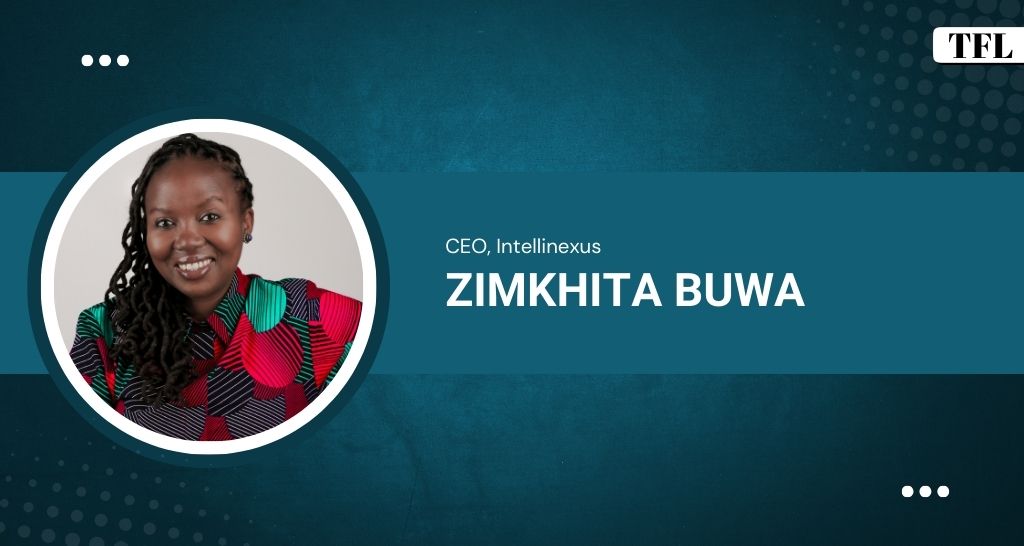
Zimkhita Buwa is the Chief Executive Officer of Intellinexus, a South African data advisory company focused on turning complex data into actionable insights that drive measurable business outcomes. With over 20 years of experience in innovation and digital transformation, her career spans roles across analytics, automation, and enterprise technology. She began her professional journey as an SAP Business Intelligence Analyst at an African-based energy group and went on to hold senior leadership positions, including Chief Operating Officer at a well-known software development company and Head of Intelligent Business Applications Core Practice at a global systems integrator and hybrid IT managed services provider. Prior to joining Intellinexus, she also served as CEO of a technology business operating in a digital-first, automation-led environment.
Zimkhita is widely recognised for her leadership style, which emphasises collaboration, innovation, and the empowerment of women and youth in the technology sector. She is a strong advocate for using data to enable informed decision-making and sustainable growth and has served as a non-executive director on the board of Rogerwilco, an award-winning digital marketing agency. Her accolades include the MTN Outstanding Women in ICT Award, the ICT category win at the 2017 Rising Star Awards, and a nomination in the Global Hero category at the Digital Female Awards in Germany. She holds an Honours degree in Information Systems from Universiti Teknologi Petronas in Malaysia and a Leadership Development certification from IE Business School in Spain. Through her industry involvement and community initiatives, Zimkhita is regarded as a trailblazer and servant leader committed to driving excellence, inclusion, and meaningful impact.
Here are the key highlights from the interview:
Can you share your leadership journey and the defining moments that inspired you to build and lead Intellinexus as a purpose-driven organisation?
My leadership journey spans more than twenty years in innovation and digital transformation, beginning as an SAP Business Intelligence Analyst at an African-based energy group and progressing through senior executive roles in software development, systems integration, and digital transformation. Over time, I have led teams across complex environments, including serving as COO and later as CEO in technology-driven organisations.
A defining moment came in 2013 when I was selected as a TechWomen Emerging Leader by the U.S. Department of State, exposing me to global perspectives on innovation and mentorship. This, combined with winning the MTN Outstanding Women in ICT Award in 2016, reinforced my commitment to empowering women in tech and fostering inclusive ecosystems.
What has consistently shaped my approach is seeing how data, when used responsibly, strategically and with intent, can fundamentally change how organisations operate and more importantly shape societies progress.
When I joined Intellinexus as CEO in April 2024, it felt like a natural evolution. I was drawn to the company’s purpose-driven ethos, aligned values, and shared belief with the founder, Jacques du Preez that data is not only a commercial asset, but a catalyst for broader impact. Purpose, for me, is about enabling better decisions, building strong data cultures, and creating environments where people and organisations can truly thrive.
What inspired me to lead this organization is its alignment with my vision of the “Data-Domino Effect”—where data strategies create cascading positive impacts, from enhanced decision-making to societal progress in areas like financial inclusion, healthcare, and education.
What core problem does Intellinexus aim to solve for businesses today, and how does your approach differ from traditional consulting or advisory models?
Many organisations have access to vast amounts of data but struggle to turn it into insight they can tangibly use. The core problem we help solve is translating data into meaningful, actionable intelligence that supports confident decision-making at every level of the organisation.
What sets our approach apart is that we are fundamentally business-led. Rather than offering generic advice, we work as strategic data leaders, bringing together innovation, deep expertise, and access to the right talent to support real outcomes.
The focus is on building internal client capability, embedding strong governance, and creating a culture where data informs everyday decisions. The goal isn’t a short-lived win, but long-term value and independence. Our proven track record with regional and global clients demonstrates how we build resilient, long-term partnerships over transactional engagements.
As CEO, which leadership values and principles guide your decision-making and shape the culture of Intellinexus?
Human connection, trust, and authentic communication sit at the heart of our leadership approach. As a leadership team, we believe strong relationships enable better collaboration, empowered teams, and more sustainable outcomes for both employees and clients.
At Intellinexus, this means actively listening, asking difficult questions, and applying what we learn. Leadership is not about having all the answers, but about creating an environment where people feel heard, respected, and empowered to contribute. Integrity, accountability, and continuous learning are essential to maintaining a culture that supports both performance and purpose.
What major trends or disruptions do you see reshaping your industry, and how is Intellinexus strategically preparing to stay ahead of these changes?
The rapid evolution of cloud technologies, data platforms, and artificial intelligence is reshaping how organisations compete and operate. However, technology adoption without strong leadership commitment, governance, and data culture often leads to missed opportunities.
The data and AI industry is being reshaped by several major trends and disruptions, including the rapid advancement of generative AI and machine learning, heightened focus on data privacy and ethical AI (driven by regulations like GDPR and POPIA), the rise of edge computing for real-time analytics, and the integration of AI with sustainability initiatives to address global challenges. In Africa, we’re also seeing skills gaps and infrastructure hurdles, but these are offset by explosive growth in digital transformation and modernisation.
Intellinexus is preparing for these changes by investing in talent sourcing to bridge skills gaps, offering specialised professionals for digital projects and focusing on responsible use of data, ethical AI implementations and leadership enablement. We help organisations understand not only what is possible, but what is practical and sustainable. By strengthening foundations and encouraging collaboration across teams and partners, we enable businesses to move faster without increasing risk.
What have been some of the most challenging moments in your leadership journey, and how have they contributed to your personal and professional growth?
Leadership transitions are inherently disruptive, both for teams and for clients. Stepping into the CEO role at Intellinexus reinforced the importance of stability, alignment, and continuity during periods of change.
Throughout my leadership journey, I’ve faced several challenging moments that have profoundly shaped my growth. One significant hurdle was managing the complexities of digital transformation during my time at a system integrator, where implementing intelligent business applications across diverse MEA regions required overcoming cultural, regulatory, and infrastructural barriers. This tested my resilience but taught me the importance of adaptive leadership and stakeholder alignment, ultimately strengthening my ability to drive cross-border collaborations.
Another pivotal challenge came during my tenure as CEO during the global pandemic, when supply chain disruptions and remote work shifts demanded rapid pivots to cloud-based solutions. Balancing team well-being with business continuity was tough, but it reinforced the value of empathy and agile decision-making.
These moments have deepened my appreciation for clear, transparent communication and shared leadership. Growth often comes from listening carefully, acknowledging uncertainty, and making deliberate choices that balance immediate pressures with a longer-term vision.
What does success look like for Intellinexus over the next few years, and what impact do you hope the organisation will have on clients and the wider business ecosystem?
Success for Intellinexus is measured by impact rather than scale alone. We aim to help organisations build strong data strategies that drive productivity, innovation, and new revenue opportunities, while also contributing to social progress across sectors such as healthcare, education, and financial inclusion.
I hope Intellinexus continues to play a role in shaping Africa’s data capability, supporting leaders to think bigger, move faster, and collaborate more effectively. When data cultures are strong, organisations become more transparent, more agile, and better equipped to serve their communities. Ultimately, success for us is about leaving a legacy of empowered organisations and communities thriving in a data-centric world.
What advice would you offer to aspiring entrepreneurs and leaders who want to build future-ready organisations with purpose and impact?
My advice is to adopt a “think bigger, be bolder, move faster” mindset. Don’t shy away from ambitious visions, especially in tech and data. Be clear about your purpose and ensure it is reflected in how you lead, how you make decisions, and how you treat people. Invest in building strong cultures, not just strong products. For me, it’s also been about leveraging data for societal good, which has guided every decision at Intellinexus.
Seek mentorship and networks, like I did through TechWomen and the African SAP User Group, to gain diverse perspectives and support. Foster inclusivity; diversity in teams drives creativity and resilience. Be agile in the face of disruptions, pivot quickly, but always with integrity and transparency.
Leaders must also be willing to think boldly, collaborate openly, and commit to continuous learning. Technology will continue to evolve, but organisations that succeed are those that prioritise people, trust, and responsible use of data to create meaningful, lasting impact. With passion and perseverance, you can build organisations that not only succeed but transform lives. Africa’s tech landscape is ripe for it, so seize the opportunity!