What Is Bancassurance And How Does It Help Customers?

Through the relationship known as bancassurance, financial institutions can provide insurance products in addition to their standard banking services. By fusing the security of insurance with the ease of banking, this integrated strategy offers clients a smooth experience. Here’s a closer look at bancassurance and its advantages for clients.

What is Bancassurance?

The practice of banks working with insurance companies to distribute insurance products through their branches or online is known as bancassurance. With the use of this approach, the bank may provide a variety of insurance products, including as life, health, and property insurance, by utilising its current infrastructure and customer base.

How It Benefits Customers

Convenience

The ease of obtaining banking and insurance services from a single source is provided by bancassurance. Clients can handle both their insurance and financial affairs with the same organisation, which saves time and eliminates the need for several accounts and interactions.

Tailored Solutions

Banks are well knowledgeable about the financial demands and profiles of their clients. They can provide customised insurance solutions through bancassurance, including combining a savings account with life insurance or a home loan with property insurance.

Streamlined Processes

The application and claims procedures are streamlined by the combination of banking and insurance services. Due to the smooth connection between the bank and the insurance provider, customers benefit from less complicated paperwork and quicker processing times.

Enhanced Customer Service

Bancassurance offers its clients devoted relationship managers who can offer tailored guidance and assistance for their banking and insurance requirements. A more thorough service experience is ensured by this all-encompassing approach.

Conclusion

Customers can benefit greatly from bancassurance because it offers a convenient, integrated service that combines insurance and banking. Bancassurance improves customer experience by meeting a variety of financial needs with customised solutions and efficient procedures by utilising the bank’s existing infrastructure and client relationships.

The Future Of Insurance: How Digital Transformation Is Revolutionizing Risk Management

The insurance sector is undergoing a significant revolution, fuelled by digital technologies that are changing the way businesses assess, manage, and reduce risk. With breakthroughs in artificial intelligence (AI), big data, the Internet of Things (IoT), and blockchain, insurers are adopting digital solutions to improve productivity, accuracy, and customer experience.

Historically, insurance companies used historical data and statistical models to determine risk. Today, digital transformation enables real-time data analysis, resulting in more exact risk assessments. AI algorithms can assess massive volumes of data, including customer behaviour, environmental conditions, and market trends, to provide individualized policies and pricing. This not only lowers underwriting expenses but also results in more accurate premium calculations.

The Internet of Things is another game changer, especially in areas such as auto and health insurance. Devices such as smart home sensors and car telematics provide real-time data that insurers can use to continuously analyse risk, enabling dynamic rate adjustments. Policyholders gain from personalized coverage, while insurers minimize potential losses.

Blockchain technology improves transparency and security in insurance transactions. Blockchain eliminates fraud and expedites the claims process by generating a decentralized, tamper-proof record.

Chatbots, smartphone apps, and internet platforms increase customer service by allowing for seamless and efficient contact. Claim processing, which was once a laborious and arduous operation, is now faster and more efficient.

The future of insurance lies in harnessing digital advances to improve risk management while also developing more responsive, customer-focused solutions.

From Relief to Resilience: The Role Of Charities In Building Long-Term Sustainable Solutions

Charities play an important role in responding to immediate crises and delivering crucial relief during natural disasters, conflicts, and health catastrophes. However, their impact extends beyond short-term assistance. In recent years, there has been a substantial shift toward building long-term, sustainable solutions for increasing community resilience.

Traditional charity strategies frequently prioritize urgent relief—food, housing, and medical care. While these measures help save lives, they do not address the root reasons of susceptibility. The move from relief to resilience underlines the need to encourage communities to become self-sufficient and better equipped to face future problems. This entails tackling systemic challenges like poverty, education, healthcare, and climate change adaptation.

One way charities build resilience is by investing in education and skills training, which allows people to get jobs and escape the cycle of poverty. Furthermore, charities are increasingly working with local groups and governments to carry out sustainable development projects such as clean water initiatives, renewable energy solutions, and sustainable agriculture.

Furthermore, charities are including resilience development in disaster response plans. This involves assisting communities in improving infrastructure and disaster preparedness, allowing them to recover more quickly and prevent future risks.

Charities that focus on long-term resilience are not only responding to disaster but also actively promoting sustainable development, allowing vulnerable communities to prosper in the face of future challenges.

LIFE: Promote Dignity Among Those Affected By Crises

The humanitarian services are influenced by several key factors, including geopolitical dynamics, climate change, technological advancements, and evolving donor expectations. Ongoing conflicts, such as those in Ukraine, Syria, and Sudan, continue to drive significant humanitarian needs, including emergency relief and long-term support for displaced populations. Natural disasters exacerbated by climate change are increasing the frequency and intensity of humanitarian crises. Events like floods, droughts, and hurricanes create urgent needs for relief and recovery efforts. LIFE for Relief and Development was born out of a collective vision to provide sustainable solutions to communities in need. Founded in 1992 on the principles of compassion, integrity, and equality, LIFE started as a small initiative and has grown into a global movement.

The inception story

“Our main goal is to stop suffering and promote dignity among those affected by crises through emergency relief, medical care, education, clean water initiatives, community development, family assistance, and refugee support. In the last three decades, LIFE has distributed just under $600 million in global humanitarian aid. For its efforts, it has earned a 99% rating on Charity Navigator, is recommended by USAID, and was voted one of the top humanitarian organizations in the U.S. by Impactful Ninja. Our inception story is one of hope, where a dedicated team came together to turn adversity into opportunity, laying the foundation for a future where our common humanity comes first,” says Dr. Hany Saqr, CEO, LIFE.

The man behind the curtain

Dr. Hany Saqr is driven by a desire to help people. His journey began as a physician, where he saw the profound difference that compassion and care can make. This experience sparked a passion in him to extend his efforts beyond individual patients and into broader humanitarian work. Moving into the non-profit sector allowed him to channel his skills and energy into tackling some of the world’s most pressing challenges.

The differentiating factor

“Our unique selling propositions include our holistic approach to humanitarian relief, our emphasis on empowering communities through education and sustainable development, finding solutions to urgent needs that are culturally relevant and based in the community, and our ability to swiftly mobilize resources in times of crisis.

We also pride ourselves on transparency and accountability, maximizing every donation and ensuring that it goes towards helping the people we serve. Our innovative use of technology, such as data analytics and satellite imagery, revolutionizes our approach to aid distribution, ensuring rapid and precise delivery while growing local economic growth and community engagement.”

The initial challenge

“One of the significant challenges LIFE faced was during the early days of our expansion, was scaling our operations without compromising on quality. We addressed this by investing in partnerships that shared our vision. Having a diverse and strong network has allowed us to increase the quality of our work while still reaching farther and helping more people. Additionally, navigating legal and political complexities in crisis zones has required persistent advocacy, strategic diplomacy, and strong local partnerships to ensure the impartiality and effective delivery of our aid.”

Leveraging technology

“We are at the forefront of integrating technology into our humanitarian efforts. From utilizing AI to enhance logistics and distribution, to employing digital platforms for transparency and communication, we ensure that we are using every technological advancement at our disposal to amplify our impact. These innovations allow us to deliver aid more efficiently, monitor progress in real-time, and engage with our donors and beneficiaries in meaningful and effective ways. We have also digitalized our operations and updated our software to streamline processes and reach more potential donors,” says Dr. Hany.

A sustainable approach

“One of a business leader’s roles is being a steward of positive change. At LIFE, we integrate social and environmental consciousness into our strategies by promoting sustainable development practices, reducing our carbon footprint, and initiating programs that uplift underprivileged communities. An example of this is our water well projects. We have built hundreds of water wells all over the world using the latest technology. We assess each area for the best, and most environmentally friendly clean water solution that will last well into the future.”

Achievements

With over 13,000 orphans under its sponsorship, LIFE provides essential support to children worldwide. The Orphan Sponsorship Program ensures they receive food, shelter, and education. Special events like the Global Orphan Party bring joy to these children, offering fun, games, and gifts to show them they are valued and cherished. The 2024 Global Orphan Party that took place in June hosted 7,871 orphans worldwide.

In times of crisis, LIFE’s Emergency Relief Program responds quickly by delivering clean water, food, clothing, hygiene products, bedding, shelter, and other essentials. In 2023 alone, LIFE assisted 27,000 individuals affected by global emergencies. LIFE addresses healthcare needs by distributing medical supplies, setting up clinics, and upgrading facilities. In 2023, we distributed $16 million worth of medical supplies. The ‘Here to Hear’ project supports the hearing impaired with essential services, this program installed 500 hearing aids in 2023.

LIFE’s clean water initiatives are crucial, especially in Gaza. With 2.2 billion people lacking safe drinking water. LIFE has built over 850 clean water wells worldwide, helping to break the cycle of poverty and improve health.

The Education Program ensures that children have access to school supplies, equipment, and education through school construction, scholarships, and operational support. Our most recent education project is building tent classrooms in Gaza. Many children in Gaza do not have the ability to go to school due to the ongoing crisis. LIFE decided to change that and provide tents, chalkboards, desks, chairs, school supplies and trained teachers to children of displaced families living in camps in Gaza.

In our Community Development efforts, LIFE constructs infrastructure such as community centers, medical clinics, schools, and water wells, growing self-sustaining environments in underdeveloped areas. The Family Assistance Program supports vulnerable single mothers and disabled heads of households with monthly essentials and opportunities to rebuild their lives after experiencing loss. LIFE’s Winter Relief initiative provides warmth and essential supplies to displaced communities facing harsh winters, including those in Afghanistan and Syria. For individuals displaced by conflict and disaster, LIFE’s Refugee Assistance program offers vital support, including food, water, healthcare, housing, and education, to help them rebuild their lives and find stability.

Advice to the future leaders

“Lead with purpose and integrity. Understand that true leadership is about service and making a difference in the lives of others. Stay adaptable, be willing to learn, and never lose sight of your objectives. The work you create is a direct reflection of the values you hold dear. Embrace innovative thinking, encourage collaboration, and remain committed to continuous improvement,” adds Dr. Saqr.

The bottom lines

LIFE’s mission is deeply rooted in the belief that saving lives should be a priority of all mankind. For this reason, LIFE is dedicated to alleviating human suffering regardless of race, color, religion, or cultural background. In response to poverty, famine, social and economic turmoil, natural disasters, war, and other catastrophes, LIFE works to provide assistance to people across the globe by offering humanitarian services such as food, water, and temporary shelter as well as healthcare and education. “Additionally, our recent expansion, including new offices in Yemen, Kenya, Malaysia, and Somalia, are exciting new venture that will enable us to reach more marginalized communities and enhance our global impact,” concluded Dr. Hany.


IBM: Solving The World’s Problems Through AI

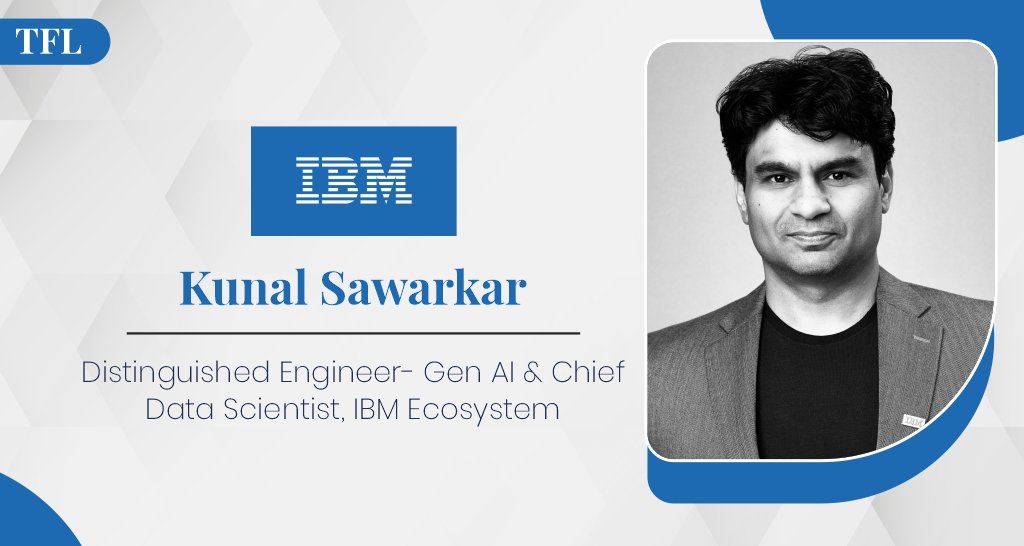
IBM, with a 100-year history, is now focused on Hybrid Cloud and AI as the central pillar. The AI Partner Ecosystem plays a crucial role in its global strategy. Within the AI ecosystem, IBM acts as a build partner to conduct AI R&D for its partners, helping them embed AI into their software products. These partners range from large, strategic companies like SAP and Adobe to hundreds of startups just beginning their journey. The AI ecosystem serves as their engineering and R&D partner, not only co-creating but also co-investing and co-marketing.

The partner ecosystem has grown tremendously at IBM in the past couple of years, and with Generative AI, it has been geared towards enterprise AI, focusing on delivering ROI from AI and taking pilots to production.

My Journey

“I love rock climbing, hard hiking, and flying (as a trainee pilot). When not doing that, I do machine learning. I find the two personas quite compatible with each other, as both are always seeking new problems to solve, whether in the mountains or machine learning. Rock climbing is never about reaching the summit but finding the best path to get there. There are infinite ways to solve a problem, and the best path is often the hardest. As they say, ‘The harder the path, the more the fun!’ It’s those hard problems that are worthy of our passion, and I bring this same attitude to my work. Solving unsolved problems in machine learning and converting them into impactful products with positive impact on society and industry drives me.

I began doing Data Science long before it was considered the sexiest job in the industry, known back then as ‘Data Mining’ or by some obscure statistical programming term. My educational background reflects this journey. After a few years in the industry, I returned to school to get a master’s degree from Harvard University, focusing on applied statistics. This decision, at the time, was not driven by a future plum job but purely by my intellectual curiosity, as I found statistics to be at the core of every discipline (from psychology to astronomy) and a beautiful allegory to the game of chance and certainty that defines our existence in the universe. This has been pivotal in my career,” added Kunal Sawarkar, Chief Data Scientist, at IBM Ecosystem.

The Early Challenges

“Initially, as a young graduate, the challenge was finding what excited me in the tech world versus what would help me climb the corporate ladder. I chose to focus on Product R&D rather than IT consulting, changing companies until I found the right role with challenging projects. Later in my career, it was about finding projects worthy of significant AI investments. When I was starting in leadership roles, I found it challenging to convince executives of AI’s value and the need for substantial investment. The need for deep skills was crucial, as AI’s long development and production timelines test patience. Overcoming this involved demonstrating the tangible impacts and benefits of AI projects, along with creating a narrative that business leaders could relate to,” said Kunal.

My Role at IBM

“At IBM, as a Distinguished Engineer for Generative AI & Chief Data Scientist, I lead the AI Lab to build cutting-edge products. My AI Lab works with the worldwide partner ecosystem, embedding AI into tech companies’ products. We act as an external AI R&D partner, co-creating products and bringing them to market to find the product-market fit. I lead a worldwide team of data scientists, AI engineers, designers, and architects, sitting at the intersection of core research, product development, and market adoption functions to drive GenAI growth at IBM. As my AI Lab is focused primarily on the adoption of AI technology, we come across problems in AI that our partners (other large tech companies like SAP, Adobe, D&B, etc. as well disruptive AI Startups) find hard to solve themselves with their AI teams, and that’s where my organization steps in to act as a build partner for them. This approach has worked very well for IBM, as the revenue impact of the AI ecosystem has seen tremendous growth over the last few years, while also creating value for our partners by turbocharging their AI ideas to production,” added Kunal.

My Leadership Style

“When asked, my peers and teammates described my leadership style as ‘bold, meticulous, and decisive’…someone who knows the right thing to do and how to get things done. My leadership style involves pushing boundaries and employing Socratic thinking in decision-making, followed by executing decisions with focused determination. I advocate for moving fast by embracing bold, unprecedented actions.

As a leader, I always try to inspire my team by fueling intellectual curiosity and matching it to the second most important thing, which is ‘impact’—impact on business, society, and the field.

As a leader, I believe that hierarchy and creativity can’t co-exist. So, I tend to focus on ideas rather than on who they come from. Free exchange of ideas with radical candor goes a long way in ensuring success for the team. I am always asking them to think big and bold. I tell them “There’s no cost to imagining things—there are no rules of physics that you have to bend to comprehend an AI, and so keep challenging the status quo! “,” Kunal responded.

Innovative Strategy

“I revamped the existing operating model to foster a ‘move fast and make things’ culture. Having myself published over 20+ papers & patents in the ML, I focus on inspiring my team to make more original contributions to the field of AI.

Instead of large teams resulting in interaction overhead, I believe in ‘pizza- size’ teams for each areas—small, expert teams with laser focus. The new challenges bring a sense of volatility and complexity to my role, and I try to capture it with one word: ‘scaling.’ Can you scale to problems that have much more heterogeneous data structures, much more complex user inputs, and, of course, a much larger volume?

I strategically target mindshare to grow market share, transitioning from relationship-led to product-led growth, where open contributions are valued equally with client contributions.”

IBM Achievements Under My Leadership

“Over the years, I’ve founded multiple AI Labs, growing them into a large department with significant revenue impact and eminence. Under my leadership, we started AI mission for Ecosystem partners and achieved better- than-expected revenue impacts, becoming a first- mover AI products, and over a dozen patents that protect our competitive edge.

I focused on creating a narrative that specifically targets the partner ecosystem and is not a repackaged version of client-based products. This includes bringing new products like Watson NLP Libraries to market, which are designed around embedding AI and creating first-of-its-kind open-source GenAI middleware frameworks like SuperKnowa (for RAG), QueryCraft (for text-to-SQL), and JudgeIT (for evaluating GenAI). Designing products and SDK layers focused on embedding, with a narrative that targets not just business leaders but developers, has been a key transformation that I drove. This has proven effective with the hypergrowth we’ve seen from partners with their adoption of these enterprise-grade AI solutions.”

Personal Achievement

“My greatest achievement was building a passionate & committed team that was dedicated to the mission. Any success I’ve had is due to being lucky: finding the right challenges, having the support of family and health, and leading a team that trusts and dedicates 110% to my vision.”

Advice to the Young Entrepreneur

I also work as Startup Advisor since I spent most of my career acting as an in-house entrepreneur for large tech companies by starting new teams or Product R&D labs. As an entrepreneur, it’s crucial to find paths in ambiguity and set a crystal-clear vision. A leader’s job is to set the long-term vision for the stakeholders, the product, the business, and the team. Being agile and being focused are not antonyms, and a good leader can be firm on the goal while flexible on the details. Day-to-day management is about managing existing tasks, but growth comes from taking a holistic view, seeing the forest above the trees, formulating long-term visions, making bold decisions, and executing them effectively,” concluded Kunal.

Visit Kunal Sawarkar – LinkedIn Profile

From The Hart Management: Help Clients Make Their Businesses A Success

The consulting industry continues to grow due to increased complexity in business environments, technological advancements, and the need for strategic guidance. As organizations face economic uncertainty and rapid technological changes, they turn to consultants for expertise in navigating these challenges. Economic volatility, including inflation and geopolitical tensions, impacts client budgets and consulting demand. Despite this, companies are prioritizing investment in areas like digital transformation and sustainability, which drives consulting opportunities. ‘From The Hart Management’ is an award-winning group of strategists, marketers, analysts, accountants, planners, and advocates who thrive on sharing their experience and knowledge to help clients make their businesses a success. The track record proves that clear communication and exerting collaboration will boost the bottom line. 

The leadership journey

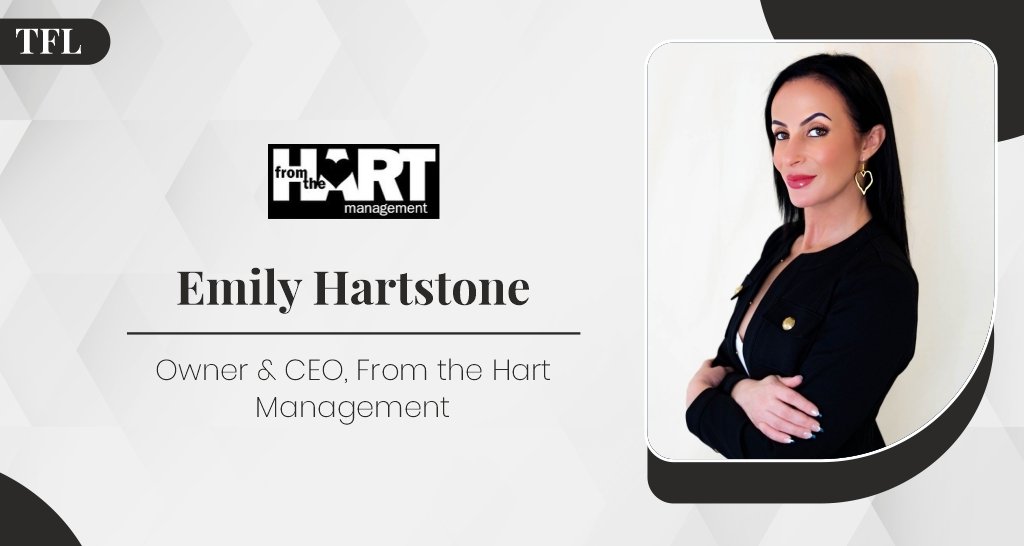
“My leadership journey began with a deep passion for helping others reach their full potential, both personally and professionally. Early in my career, I realized that leadership wasn’t just about guiding a team toward a common goal, but about empowering individuals to discover their strengths and overcome challenges. My experience with overcoming health challenges and transitioning from equestrian dreams to entrepreneurial success fuelled my desire to create a people-first consulting firm. I wanted to build a business where every voice mattered and where the focus was on both personal growth and professional excellence. The inspiration for becoming a leader in my field comes from a genuine commitment to shaping the future of empowerment, not just for myself, but for everyone I have the privilege to work with,” says Emily Hartstone, Owner& CEO, From the Hart Management.

The key qualities of a leader

“In today’s fast-paced and ever-evolving business world, a successful leader must embody a few key qualities. First and foremost, adaptability is essential being open to change and able to pivot quickly in response to new challenges or opportunities. Second, emotional intelligence is crucial, as it allows leaders to connect with their teams on a deeper level, fostering a culture of trust, empathy, and collaboration. Vision is another vital quality; a leader must be able to see beyond the present and inspire others with a clear and compelling direction for the future. Finally, integrity and authenticity are non-negotiable. Leaders must lead by example, staying true to their values and principles, even in difficult times. These qualities, combined with a genuine commitment to the growth and well-being of both the business and its people, are what set apart effective leaders in today’s complex business environment.”

Client-oriented services

From The Hart Management, LLC, a dynamic multi-level firm with a diverse portfolio across several industries. “We specialize in non-profit and business management consulting, offering tailored strategies that prioritize people and purpose. Additionally, we operate in the events industry as a full-scale event production company, delivering memorable experiences that resonate with our clients’ visions. Through our platform, HartCenteredLife, we have also expanded into the self-improvement and personal development space, empowering individuals to achieve their best in life and business.”

Advice to future leaders and entrepreneurs

My advice to leaders and entrepreneurs aspiring to drive innovation is to start by cultivating a mindset of curiosity and openness. Innovation thrives when you’re willing to question the status quo and explore new possibilities, even if they seem unconventional. Encourage a culture of experimentation within your team, where failures are seen as valuable learning opportunities rather than setbacks.

Another key piece of advice is to stay deeply connected with the needs and desires of your customers or clients. The most impactful innovations often come from a deep understanding of the challenges people face and a commitment to solving them in creative ways. Listen actively, gather feedback, and use those insights to guide your innovation efforts.

Finally, don’t be afraid to lead with heart and purpose. Innovation is not just about creating something new; it’s about creating something meaningful. When you align your innovations with your core values and the positive impact you want to make, you’ll not only drive success in your field but also inspire those around you to contribute their best ideas and energy. Remember, the most successful innovations are those that resonate deeply with people and make a lasting difference.

Beating the odds

“One of the most significant challenges I faced as a leader was navigating the early stages of my health journey while running and growing my business. Being diagnosed with Leukemia and Graves’ Disease not only posed personal challenges but also required me to rethink how I could effectively lead my team and continue serving our clients during such a critical time. The key to overcoming this challenge was embracing vulnerability and open communication. I decided to be transparent with my team about what I was going through, which allowed us to rally together and find new ways to support one another. I also leaned heavily on my daily practice of the Silva Method, which helped me maintain a positive mindset and focus on what I could control,” adds Emily.

The future roadmap

“Our future roadmap is strategically designed to build on our current successes while expanding our impact and reach. In the short term, our focus is on enhancing the core aspects of our business, including refining our consulting services, scaling our event production capabilities, and growing the HartCenteredLife™ platform. We’re committed to deepening our relationships with clients and stakeholders, implementing innovative solutions, and leveraging technology to improve our service delivery,” concluded Emily.

Hackers Use Google Drawings in New 3-Step Amazon Phishing Attack

Cybercriminals’ strategies are constantly improving, and a recent phishing attempt on Amazon users exemplifies their unique approach. Hackers are now using Google Drawings as part of a complex three-step phishing attack to fool victims and collect personal data.

Deceptive Email: The attack begins with a fairly valid email that purports to be from Amazon. This email frequently has an enticing subject line, such as “Important Account Update” or “Security Alert.” It employs recognized branding and language to instill a sense of urgency, urging recipients to take urgent action.

Google Drawings Exploit: When the user opens the link provided in the email, they are taken to a Google Drawings document. At first sight, the document appears to be a normal file, but it contains a hidden hyperlink or embedded script. This false page is designed to resemble an Amazon login page, gathering user credentials as they are input. Google Drawings is an uncommon target for such assaults because it does not typically elicit quick suspicion from consumers.

Credential Harvesting: After the user enters their credentials, the phishing site sends the sensitive information to the attackers. The hackers then use the stolen credentials to get illegal access to the victim’s Amazon account, which could result in additional exploitation or financial loss.

Protective Measures

To avoid such assaults, users should be wary of unsolicited emails and check the veracity of links before clicking. Ensuring website security and utilizing multi-factor authentication can provide additional layers of defence against phishing attacks. To summarize, this new phishing scam emphasizes the importance of remaining vigilant and aware of developing cyber risks. Understanding and recognizing these strategies allows users to better protect themselves from such sophisticated attacks.

Google Reveals New Sensitive Data Privacy Feature for Chrome

In response to growing worries about digital privacy, Google has added a new feature to its Chrome browser that improves the safety of sensitive data. The new “Sensitive Data Warning” function is intended to alert users when they are about to enter sensitive information, such as credit card numbers or personal identity numbers, onto potentially hazardous or unverified websites. This proactive method seeks to reduce the risk of data breaches and phishing attempts by giving real-time alerts and recommendations.

How It Works

When a user visits a website that is not encrypted or has been recognized as potentially unsafe, Chrome displays a conspicuous warning before entering any sensitive information. This alert contains recommendations for safer practices, such as confirming the site’s security certificate and checking for HTTPS encryption. The function prevents users from accidentally giving personal information with potentially harmful sites by educating them and providing prompt feedback.

Enhanced Privacy Controls

In addition to the Sensitive Data Warning, Google has implemented improved privacy options in Chrome’s settings. These options enable users to monitor and restrict the exchange of personal information between websites and third-party services. Users can now simply change their privacy settings to limit access to their browsing history, location, and other sensitive data.

Impact and Future Outlook

This upgrade marks a substantial improvement in Chrome’s continuous efforts to emphasize user privacy. By incorporating these advanced features, Google hopes to provide users with better tools for protecting their data and navigating the internet more securely. As cyber dangers change, such proactive steps are critical for retaining user confidence and providing a safer online experience.

To summarize, Google’s new Sensitive Data Privacy Feature for Chrome improves user safety by offering real-time warnings and increased privacy options, demonstrating the company’s dedication to enhancing digital security.

Harnessing AI as a Force for Social Good: A Strategic Advantage for Businesses

In an era where technology has a tremendous impact on every aspect of life, corporations are rapidly understanding the need of using artificial intelligence (AI) as a force for social good. This method not only addresses serious societal issues, but it also has strategic benefits for organizations, including improved reputation, operational efficiency, and market prospects.

First, incorporating AI for social good improves a company’s brand image and corporate social responsibility (CSR) reputation. Consumers and stakeholders are increasingly drawn to companies that show a commitment to beneficial societal impact. Businesses can improve their public image, attract socially conscious customers, and develop stronger brand loyalty by employing AI for projects such as disaster response, healthcare advancement, and environmental sustainability.

Second, AI-powered social good projects can spur innovation and increase operational efficiencies. Artificial intelligence solutions, for example, can improve supply chains to eliminate waste, predict and mitigate environmental impacts, and speed healthcare diagnosis and treatment. These developments not only benefit societal well-being, but also result in cost savings and more efficient operations, providing a competitive advantage in the marketplace.

Furthermore, leveraging AI for social benefit creates new market opportunities. Businesses that align with global environmental and ethical principles are better positioned to capitalize on emerging markets and investment opportunities. Partnerships with non-governmental organizations (NGOs), governments, and other stakeholders in social good activities can result in beneficial collaborations and new client segments.

Conclusion

To summarize, using AI as a force for social good benefits businesses by improving their reputation, increasing operational efficiencies, and opening up new markets. When businesses adopt this approach, they not only contribute to societal progress but also create a strong, forward-thinking brand that appeals to today’s socially conscious consumers.

7 Ways to Turn The ‘Bring Your Own AI’ Threat Into An Opportunity

The rise of ‘Bring Your Own AI’ (BYOAI) poses a unique mix of difficulties and opportunities for enterprises. While integrating various AI tools and platforms might introduce dangers such as security flaws and uneven data practices, it also provides opportunities to innovate and improve organizational efficiency. Here’s how businesses can transform the BYOAI threat into a strategic advantage:

Standardize AI Governance Policies:

Create and implement comprehensive AI governance frameworks that ensure all AI tools adhere to security, privacy, and ethical guidelines. This proactive strategy reduces risk and facilitates the effective integration of varied AI technologies.

Foster Cross-Functional Collaboration:

Encourage collaboration across IT, data science, and business departments when evaluating and managing AI products. By matching goals and sharing insights, teams may capitalize on BYOAI advancements while mitigating potential hazards.

Leverage AI for Personalized Customer Experiences:

Use several AI techniques to provide highly tailored consumer experiences. Different AI applications can provide unique insights into client behaviour, enabling more targeted and effective marketing campaigns.

Enhance Data Integration and Analytics:

Implement strong data integration solutions to consolidate data from several AI systems. This complete picture improves analytics, drives informed decision-making and identifies new business prospects.

Promote AI Literacy and Training:

Invest in training programs to improve AI literacy among personnel. Equipping employees with the skills to analyze and effectively use AI solutions enables them to make educated decisions and adapt to new technology.

Innovate Through Experimentation:

Encourage exploration with BYOAI tools. Testing and integrating various AI solutions can result in fresh methods and new ways to handle old challenges.

Build Strong Vendor Relationships:

Form alliances with AI vendors and technology providers to keep current on the latest breakthroughs and best practices. These partnerships can provide essential support and insights, ensuring that your AI products are utilized to their greatest potential.

Conclusion

Businesses that implement these techniques can not only address the dangers connected with BYOAI, but also capitalize on the benefits it brings, resulting in development and innovation in a quickly changing technology landscape.