
Author: The Fortune Leaders
Top 10 Pioneering Business Leaders to Follow in 2024
The 10 Most Influential Business Leaders of 2024

The 10 Empowering Women Leaders to Follow in 2024

The 10 Most Influential Business LeadeR of 2024

10 Successful Business Leaders Making a Difference 2023
Daniel Parra: Architect of Intelligent Travel in a Borderless World

In an era when travel has become as much about personalization as it is about movement, Daniel Parra stands at the intersection of technology, human curiosity, and cultural intelligence. As CEO of SMART ITINERARY SL, Parra represents a new generation of global leaders those who understand that innovation is not just about building platforms, but about reimagining experiences. His journey, shaped by years of working and living across borders, including Japan, reflects a leadership philosophy grounded in adaptability, empathy, and relentless evolution.
At its core, ITINERARY was born from Parra’s greatest passion: travel itself. Yet unlike traditional tourism entrepreneurs, he did not set out merely to sell trips. He sought to solve a deeper problem how to transform the invisible, time-consuming work of creating personalized itineraries into a scalable, digital-first solution without losing the human soul of travel.
A Leadership Style Built on Flexibility and Trust
Parra’s leadership style is defined less by hierarchy and more by synergy. Operating a company with managers and partners spread across multiple countries requires constant communication, cultural sensitivity, and flexibility. He leads primarily through online collaboration, ensuring that despite geographical distances, the team remains aligned and motivated.
What unites the ITINERARY leadership team is a shared love for travel. This common passion has shaped the company’s culture into one that values curiosity, openness, and user empathy. Parra believes that happy teams build better products and in a remote, globally distributed workforce, maintaining that happiness requires trust rather than control.
The Birth of SMART ITINERARY: From Insight to Platform
The inspiration behind ITINERARY emerged from Parra’s firsthand experience working in tourism. He observed a growing demand for highly personalized travel plans custom itineraries crafted carefully for each traveler. Ironically, this critical service was rarely reflected in invoices, despite requiring hours of expert effort. Parra recognized that automating this process digitally was not just an efficiency play; it was the future of travel planning.
The turning point came during a culinary trip, where he met Manuel de Morales, who would later become his co-founding partner. The connection was immediate. Parra shared his vision, and de Morales instantly recognized its potential. When the COVID-19 pandemic temporarily froze global travel, it also created something else: time. The two reconnected, refined the concept, and laid the foundation for ITINERARY. From those uncertain months emerged a company that steadily evolved improving its technology, securing funding rounds, and expanding its vision beyond borders.
Innovation as a Shared Responsibility
For Parra, innovation is non-negotiable especially in a digital business. But rather than centralizing creativity at the top, he distributes it across the organization. Many of ITINERARY’s key employees are also partners, aligning ownership with vision. This structure ensures that innovation is not forced but organic, driven by shared belief in where the company is headed.
Brainstorming is embedded into the company’s rhythm. Meetings are not just for reporting but for imagining. Parra emphasizes that there are no “bad ideas,” only ideas that may not survive evaluation. Encouraging people to speak freely, even imperfectly, is far better than silence. In his view, teams that stop sharing ideas stop growing.
Navigating Complexity Through Transparency
One of the most defining leadership challenges Parra faced came from managing technological growth. Early on, ITINERARY partnered with a small IT company in Pakistan specializing in GIS, led by their CTO. As the platform expanded, a much larger company, TK Analytics, joined as a partner and took over software management.
Instead of replacing one with the other, Parra made the unconventional decision to keep both teams working together. The challenge was no longer technical it was human. Aligning multiple companies, cultures, and workflows required radical transparency and flexibility.
The experience reinforced a core leadership lesson: clarity and honesty are the glue of complex partnerships. When everyone understands the vision and their role within it, collaboration becomes possible even across continents.
Technology with a Human Face
ITINERARY’s value proposition lies in its ability to blend digital efficiency with human expertise. The platform connects users directly with affiliated travel professionals tour guides, local experts, and service providers allowing bookings and direct communication within the same ecosystem.
Parra believes that while technology can optimize processes, it should never erase the human touch. Travel, after all, is deeply personal. By combining automation with access to real specialists, ITINERARY offers users the best of both worlds: speed and soul.
Talent, Accountability, and Hard Decisions
Nurturing talent, in Parra’s view, begins with recognition and reward. When good ideas and hard work are visibly appreciated, motivation follows naturally. But leadership also requires accountability. He is candid about the difficulty of firing underperforming employees, yet firm in his belief that unresolved issues can damage an entire organization.
He compares such situations to a small illness ignored, it spreads; addressed early, it protects the whole. This balance of empathy and decisiveness has been instrumental in maintaining a healthy company culture.
Resilience in Times of Uncertainty
Parra understands that disruption is inevitable. Since its inception, ITINERARY has pivoted multiple times, adapting to market realities and user needs. Keeping a close eye on competitors and trends is part of the job but resilience is the true differentiator.
During difficult periods, Parra made a symbolic yet powerful decision: he cut his own salary more than anyone else’s. The message was clear leadership shares the burden. This act of solidarity helped the team weather the storm with unity and trust intact.
Lessons from Japan’s Innovation Ecosystem
Although ITINERARY operates globally, Parra’s years living and working in Japan profoundly shaped his leadership outlook. He emphasizes that success in Japan requires deep respect for language, customs, and unspoken norms. Leaders must either master these themselves or rely on trusted local partners who can bridge cultural gaps.
Equally important is humility the willingness to listen, adapt behavior, and accept guidance. In Japan’s innovation ecosystem, progress is built on precision, respect, and long-term relationships.
Looking Ahead: 2026 and Beyond
As 2026 approaches, Parra’s ambitions are clear. ITINERARY is preparing to launch its mobile app, a milestone expected to significantly expand its affiliate network, user base, and revenue. Geographic expansion is also on the horizon, with new markets such as Greece in focus. The goal is to achieve strong performance metrics and secure a Series A funding round in 2027, positioning the company for its next phase of global growth.
A Philosophy of Constant Change
Parra often reflects on how quickly the world evolves. He points to Netflix a company that began in 1997 as a DVD-by-mail service while Blockbuster dominated physical rentals and earned hundreds of millions from late fees. The lesson is clear: dominance today guarantees nothing tomorrow. “The world is changing very rapidly, and we must change with it,” Parra believes.
In that mindset lies the essence of his leadership. Not clinging to what works, but constantly questioning what comes next. In redefining how people plan and experience travel, Daniel Parra is not just building a company he is designing a future where innovation moves as freely as the travelers ITINERARY serves.
- 📌 Visit Daniel Parra 👉 – LinkedIn Profile
- 🌐 Explore ITINERARY 👉 – Company Website
Timeless Temples to Neon Streets: How Japan Redefines the Modern Travel Experience

Japan truly stands out as a travel destination where the ancient and the ultra-modern coexist beautifully, rather than clashing. In 2026, this remarkable balance is more evident than ever, attracting travellers who are eager to immerse themselves in a country where age-old traditions seamlessly blend with cutting-edge innovation at every corner.
At the core of Japan’s cultural identity lie its temples and shrines, which provide a serene escape for reflection amidst the hustle and bustle of travel. From the ancient Buddhist temples in Kyoto to the Shinto shrines nestled in lively neighbourhoods, these sacred sites are held in high regard and are actively visited. Here, travellers can observe rituals, partake in seasonal festivals, and experience the tranquillity of morning prayers, all of which offer a glimpse into Japan’s enduring spiritual life, untouched by the passage of time.
Tradition in Japan is anything but stuck in the past. Many cultural experiences have been thoughtfully reimagined for today’s travellers. For instance, tea ceremonies are now offered as interactive workshops, giving visitors a chance to dive into the etiquette and philosophy behind them. Traditional crafts like pottery, calligraphy, and kimono dressing are presented in ways that feel personal and engaging, helping to bridge cultural gaps while keeping authenticity intact.
Step into the vibrant cities of Japan, and you will immediately notice the striking contrasts. Tokyo, Osaka, and Yokohama present a futuristic landscape filled with smart infrastructure, efficient transport systems, and captivating digital experiences. High-speed trains whisk you from historic towns to neon-lit cityscapes in just a few hours, allowing you to journey through different eras all in one day. Technology truly enhances your travel experience with cashless payments, handy translation apps, and themed attractions that beautifully merge storytelling with innovation.
Fashion is a vibrant arena where Japan’s unique blend of identities truly stands out. Neighbourhoods like Harajuku and Shibuya are at the forefront of global trends, showcasing daring street styles, while traditional pieces like the kimono still play a significant role in shaping modern design. Local shops often combine vintage vibes with contemporary tailoring, beautifully illustrating Japan’s deep appreciation for both its heritage and innovative spirit.
Food truly enhances the experience. Traditional dishes like ramen, sushi, and tempura sit side by side with innovative dining ideas that give a fresh twist to classic flavors. Whether you are at a cozy family-run spot or a sleek, modern restaurant, Japanese cuisine weaves a narrative of change while staying true to its origins.
Japan Takes the Lead in AI-Powered Robotics and Automation Innovation

Japan is quickly stepping up its game in the world of artificial intelligence, especially when it comes to robotics and automation. This move is putting the country right at the forefront of the global shift towards smarter and more efficient machines. As businesses around the globe scramble to integrate AI-driven technologies, Japan’s deep-rooted knowledge in robotics, paired with new investments in AI, is transforming not just manufacturing and services, but also our daily lives.
The manufacturing sector is truly the backbone of the country’s leadership. Japanese companies are responsible for a large portion of the world’s industrial robots, and in recent years, we have witnessed a remarkable rise in AI-driven automation within factories. Automotive and electronics manufacturers are increasingly utilizing robots that come equipped with machine learning, computer vision, and predictive analytics. This technology helps enhance precision, minimize errors, and streamline production lines. These smart systems are now capable of adapting in real time, learning from data to boost their performance without needing constant oversight from humans.
Japan is taking a big leap beyond just factories by introducing AI-powered robotics into a variety of new fields. You can now spot service robots in healthcare, retail, logistics, and hospitality, all stepping in to help with labor shortages and the challenges of an aging population. In hospitals and care facilities, these AI-driven robots are lending a hand with patient monitoring, mobility assistance, and everyday tasks, which helps lighten the load for human staff. Meanwhile, in logistics and warehouses, autonomous robots are expertly navigating complex spaces, managing inventory, and boosting the efficiency of last-mile deliveries.
Japan’s robotics scene is buzzing with excitement thanks to innovative showcases and strong industry partnerships. Recently, major tech exhibitions in Tokyo have put the spotlight on robots that can perform advanced visual inspections, interact like humans, and make decisions on their own. What is impressive is the introduction of new AI training tools that enable even those without a tech background to teach robots new tasks quickly. This is speeding up the adoption of automation among small and mid-sized businesses that previously struggled with technology.
Government support is vital in driving this momentum forward. National strategies are focusing on integrating AI, advancing smart manufacturing, and pushing the boundaries of robotics research. Funding is being funneled into startups, universities, and collaborations between the public and private sectors. These initiatives are designed not just to enhance productivity but also to promote the ethical, safe, and human-centered use of AI.
John Oxenham: Shaping Africa’s Competition Law Future
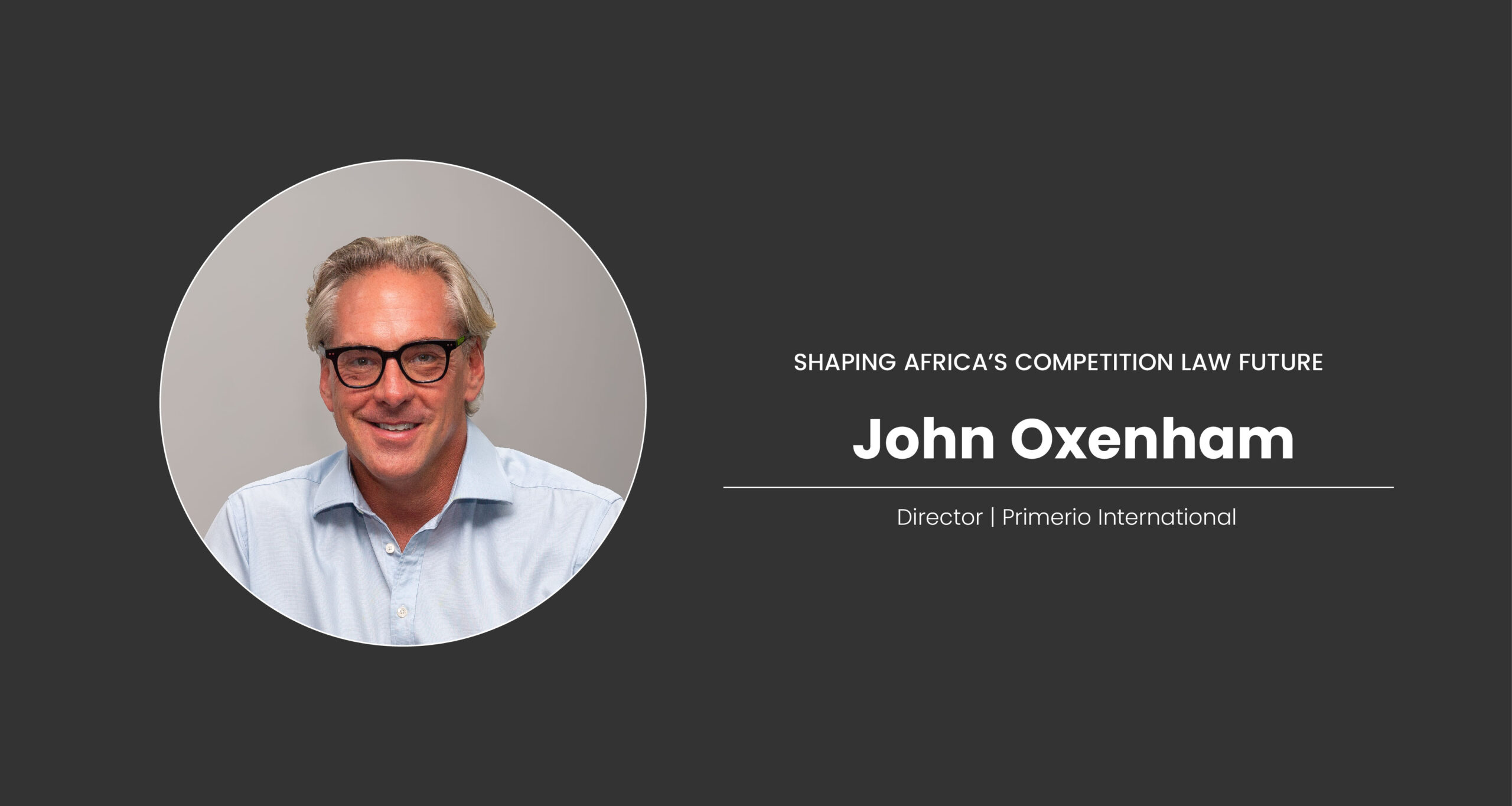
As Africa’s markets become more interconnected and regulatory scrutiny deepens, competition law has emerged as one of the most influential forces shaping business strategy across the continent. At the centre of this evolution stands John Oxenham, Founder and Managing Partner of Primerio International, a firm that has redefined how competition and regulatory law is practised in Africa. With a career spanning Johannesburg, Washington, D.C., and multiple African jurisdictions, Oxenham has built a pan-African legal platform grounded in principle, technical excellence, and a clear strategic vision.
Johannesburg Origins and the Foundations of Discipline
Born and raised in Johannesburg, Oxenham’s professional journey is deeply influenced by his South African roots. His formative education, which included time in England and later at the University of Cape Town, played a defining role in shaping his character and approach to the law. Exposure to different educational systems instilled resilience, discipline, and focus qualities that would later prove essential in navigating complex regulatory and cross-border legal environments.
These early experiences also fostered an appreciation for both structure and adaptability. For Oxenham, law was never simply about doctrine; it was about understanding how rules operate in real economies and how institutions evolve over time.
Building Expertise at Webber Wentzel
Oxenham began his legal career at Webber Wentzel, one of South Africa’s most prominent law firms. Specialising in competition law, he entered the field at a time when South Africa’s antitrust regime was gaining prominence and enforcement agencies were asserting their authority.
During this period, Oxenham developed a strong technical foundation in merger control, restrictive practices, and abuse of dominance. More importantly, he gained early exposure to the strategic dimension of competition law how regulatory decisions can reshape industries, influence investment, and alter market behaviour.
A Global Perspective: Washington, D.C.
Seeking to broaden his expertise, Oxenham moved to Washington, D.C., where he worked as a foreign antitrust adviser at Howrey LLP. Immersed in one of the world’s most sophisticated antitrust environments, he was exposed to complex investigations, advanced economic analysis, and high-stakes cross-border matters.
This experience proved transformative. It provided Oxenham with a global benchmark for regulatory practice and reinforced the importance of independence, rigorous analysis, and credibility with enforcement agencies. Crucially, it also highlighted the absence of comparable, integrated competition law platforms in Africa an insight that would later inform his entrepreneurial vision.
Returning Home: Partnership and Entrepreneurial Drive
On returning to South Africa, Oxenham became a partner at Webber Wentzel and later co-founded a specialist practice focused on competition law and complex disputes. His reputation continued to grow, but so did his conviction that Africa’s legal market needed a new model one capable of addressing cross-border regulatory challenges in a coordinated and consistent manner
Africa’s economies were integrating, regional competition authorities were becoming more assertive, and multinational clients were seeking clarity across multiple jurisdictions. The traditional, fragmented approach was no longer sufficient.
The Founding of Primerio: A Pan-African First
In 2014, Oxenham developed the concept of Primerio as a dedicated pan-African competition and regulatory boutique. Two years later, the firm commenced trading as Africa’s first specialist pan-African competition law firm a bold and unconventional move in a profession often dominated by full-service firms.
Primerio’s structure was deliberately designed for cross-border work. By 2021, the firm had established its operational headquarters in Johannesburg, supported by regional hubs in Mauritius and Kenya. Today, Primerio advises across Southern, East, West, and North Africa, as well as before regional authorities such as COMESA, ECOWAS, and CEMAC.
Core Principles: African Roots, Global Standards, Genuine Diversity
Primerio’s growth has been underpinned by a clear set of values. The firm is grounded in African roots, ensuring that advice is informed by local regulatory realities and enforcement cultures. At the same time, it operates according to global standards, drawing on international best practice in competition, investigations, and regulatory advisory work.
A defining feature of the firm is its commitment to genuine diversity. Primerio’s teams reflect different legal traditions, languages, and cultural perspectives from across the continent. This diversity is not symbolic; it enhances the quality of analysis and enables the firm to operate seamlessly across jurisdictions.
Advocacy is another cornerstone of the firm’s identity. Primerio actively engages in policy dialogue and regulatory development, recognising that sound frameworks ultimately benefit both markets and clients.
Africa’s Evolving Regulatory Landscape
Oxenham believes Africa is entering a decisive phase in its regulatory development. Competition regimes at both national and regional levels are becoming more sophisticated, with increased coordination and enforcement activity. Digital markets, platform economies, and data-driven business models are placing new demands on traditional competition law tools.
At the same time, there is a growing convergence of competition law, trade policy, and anti-corruption enforcement. Heightened scrutiny around bribery, money-laundering, and asset recovery has increased the global risk profile for businesses operating in Africa. Regulatory exposure is no longer confined to a single jurisdiction; it is increasingly cross-border and reputational.
Managing Cross-Border Complexity
Primerio’s approach to complex, multi-jurisdictional matters is built on strategic coherence. Each matter begins with a single, integrated strategy, executed across jurisdictions through coordinated teams.
Operating from regional hubs, the firm combines competition, regulatory, white-collar, and trade expertise with in-house economists and former regulators. Matters are centrally led, while trusted local counsel ensure alignment with domestic legal and enforcement nuances. Early risk assessment and proactive regulator engagement are critical elements of this model.
Leadership Philosophy: Specialist and Principled
Oxenham’s leadership philosophy is defined by focus and integrity. He has deliberately positioned Primerio as a specialist boutique, resisting expansion for its own sake. The firm concentrates on high-stakes competition, regulatory, investigations, and complex commercial work where it can deliver distinctive value.
Internally, Oxenham leads by example setting high technical standards, maintaining independence in difficult matters, and empowering younger lawyers with early responsibility. This approach has created a culture of accountability, excellence, and trust.
Ethics and Integrity at the Core
In areas such as competition enforcement, anti-corruption, and asset recovery, ethics are non-negotiable. Primerio routinely advises on anti-bribery, anti-money-laundering, internal investigations, and asset recovery, including through global networks such as ICC FraudNet.
The firm invests heavily in compliance frameworks and contributes to international initiatives like the ICC Antitrust Compliance Toolkit. Matters are carefully screened, conflicts rigorously managed, and instructions declined where independence could be compromised.
A Landmark Case That Shaped a Legacy
One of the most influential matters in Oxenham’s career was the South African bread cartel case, which led to the country’s first major follow-on damages and class action proceedings for cartel conduct. The case became a watershed moment in South African competition law, shaping jurisprudence on class actions and civil liability.
The experience inspired Oxenham to author Class Action Litigation in South Africa, the first textbook on the subject, reinforcing his belief in litigation as a driver of legal development and access to justice.
Mentorship and Building African Legal Talent
Mentorship is central to Primerio’s operating model. Lean, partner-led teams ensure that associates work directly on complex cross-border matters and engage with regulators early in their careers.
The firm actively promotes diversity and international exposure through exchanges, joint publications, and speaking engagements. Many of its younger lawyers are now recognised individually by international legal directories, reflecting the firm’s commitment to building world-class African legal talent.
Looking Ahead: A Long-Term Pan-African Vision
Oxenham’s long-term vision is for Primerio to remain the leading African-rooted competition and regulatory boutique, while preserving the agility and independence that define it today. Strategic priorities include deepening presence in key African markets, strengthening engagement with regional bodies, and continuing to invest in thought leadership and policy development. In an era of accelerating regulatory change, John Oxenham stands out as a legal leader shaping not only cases, but the very framework within which African markets operate.
- 📌 Visit John Oxenham 👉 – LinkedIn Profile
- 🌐 Explore Primerio International 👉 – Company Website