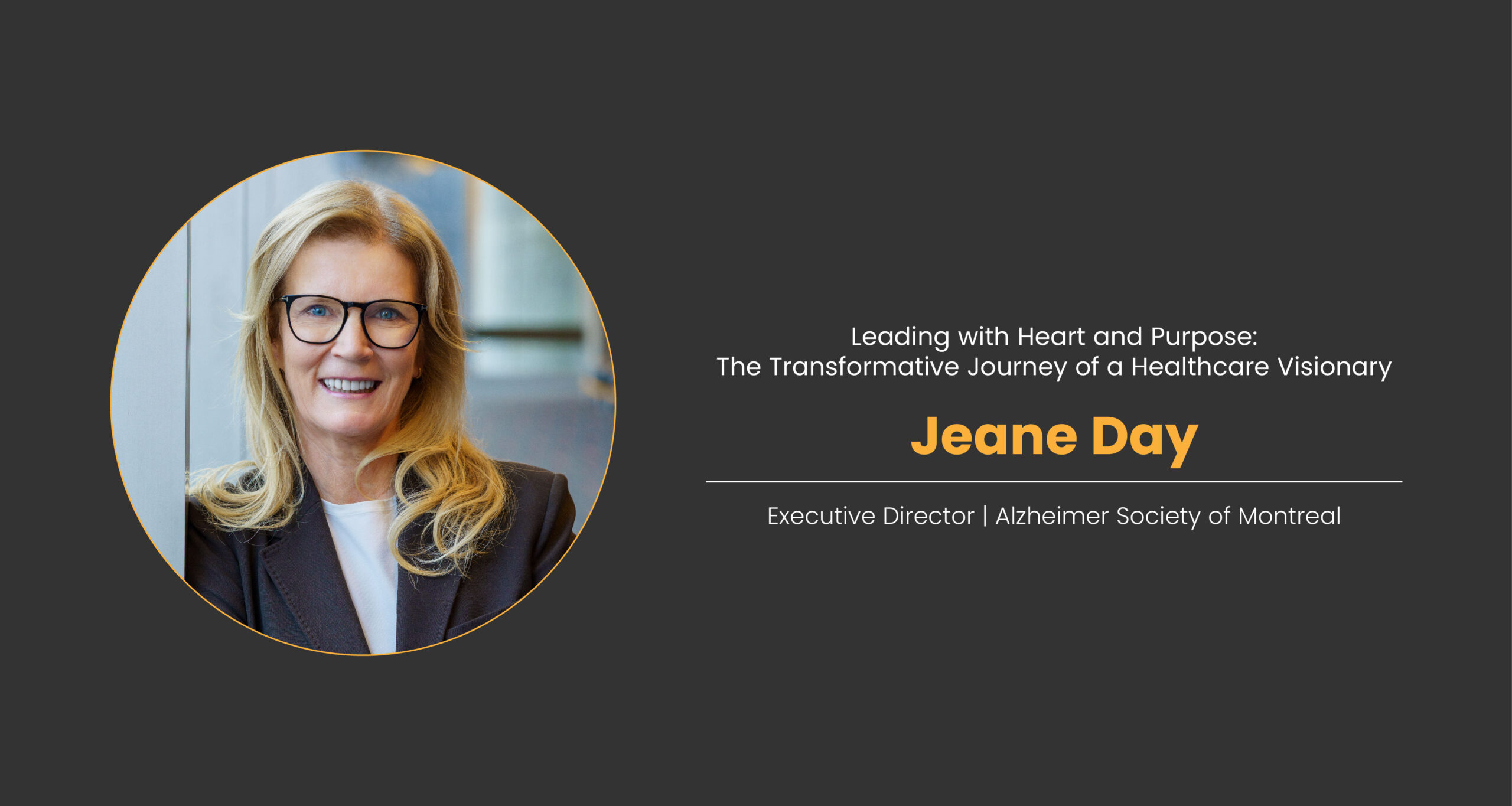
In a world where healthcare challenges are becoming increasingly complex, leadership rooted in empathy and collaboration stands out as a beacon of hope. For nearly five years, the Executive Director of the Alzheimer Society of Montreal, Jeane Day, has embodied that very spirit leading with heart, clarity, and an unwavering commitment to human dignity. Her journey is not merely one of professional growth, but of purpose guided by a lifelong passion for social causes and the well-being of others.
From her earliest days, Jeane, was drawn to the intersection of health and humanity. “From the very beginning, I have been driven by a deep interest in social causes and health issues,” she reflects. “At every stage, it has been people’s well-being that has guided my choices.” This intrinsic motivation has defined her path across various domains from paramedical care and pediatric foundations to workplace prevention, mental health promotion, and cognitive health. Each chapter in her journey has been a testament to her belief that the measure of true progress lies in improving lives.
A Mission Rooted in Compassion
Today, as Executive Director of the Alzheimer Society of Montreal, Jeane, leads a team of nearly 60 dedicated professionals united by one mission to support individuals living with neurocognitive disorders and their caregivers with empathy, excellence, and innovation.
The Society’s work extends beyond traditional healthcare. It provides personalized support, peer-led support groups, respite services for caregivers, and cognitive stimulation activities for those living with Alzheimer’s and related conditions. But what makes its approach distinct is its human-centered philosophy blending art, physical movement, and social connection to nurture cognitive well-being.
“Our goal is to alleviate the personal and social consequences of Alzheimer’s disease through interventions that have a lasting positive impact,” she explains. “We also work closely with community partners to create a social safety net for families.”
Under her leadership, the organization has taken part in key provincial consultations, contributing to the National Policy on Neurocognitive Disorders and Alzheimer’s Disease ensuring that real-world insights from patients and caregivers inform public health strategies.
Balancing Vision with Action
Balancing short-term objectives with long-term aspirations is an art one that Jeane has mastered through experience and strategic foresight. For her, leadership means maintaining equilibrium between operational excellence and visionary ambition.
“Our long-term vision is built on continuity, collaboration, and care,” she says. “But every day, we must translate that vision into tangible results whether it’s improving services, supporting our staff, or deepening our community impact.”
Jeane’s leadership style is grounded in collective intelligence an approach that values teamwork, mutual trust, and the cross-pollination of ideas. “By joining forces with our partners and stakeholders, we share best practices and mobilize knowledge that fuels meaningful, high-impact action,” she explains.
Transforming the Organization from Within
One of Jeane’s proudest achievements as Executive Director has been strengthening the organization’s internal culture. “I’ve witnessed how investing in our people changes everything,” she says. “We’ve built a team that is not only skilled and professional but also deeply collaborative and courageous.”
This transformation has redefined the Alzheimer Society of Montreal’s DNA fostering trust, innovation, and a mindset of continuous improvement. Mental health in the workplace has become a central focus, ensuring that the caregivers of caregivers the staff themselves are nurtured, supported, and inspired.
“To me, leadership is not just about strategy; it’s about creating a nurturing environment where everyone feels valued and empowered,” she notes. “When people feel supported, they bring their best selves to work. And that energy directly translates into better care for our clients.”
Leading with Mentorship and Collective Strength
Jeane’s leadership philosophy is built on mentorship, empowerment, and shared vision. “A clear vision is essential, but without a dedicated team that shares that vision, it’s impossible to make it real,” she reflects.
Jeane believes in surrounding herself with people whose strengths complement each other, creating a dynamic environment where creativity thrives. “What I love most is seeing my colleagues grow, thrive, and unlock their potential. Leadership is about truly understanding each person’s strengths and aligning them with meaningful projects.”
Trust, she insists, is the foundation. “It fuels growth, collaboration, and the kind of professional relationships that are grounded in respect and kindness.”
Driving Change Through Innovation and Advocacy
Among Jeane many initiatives, several have left an enduring mark on the Montreal community. One such effort “The Faces of Alzheimer’s It’s All of Us!” was a powerful public awareness campaign that reached thousands through the Montreal metro network. It humanized Alzheimer’s disease by showing the faces and stories behind the diagnosis, as well as the healthcare team supporting caregivers and their loved ones, fostering understanding and empathy.
She also led the creation of the first practical guide for individuals living with neurocognitive disorders and their caregivers, a 24-page booklet offering a more comprehensive approach of the disease and showcasing resources available to families. In 2024, she spearheaded a historic event at the Quebec Parliament, bringing together policymakers, scientists, and advocates to discuss advances in cognitive health and how to translate them into real-world solutions.
Beyond local impact, her vision has expanded globally. The founding of the Powerful Think Tank, an international working group for sharing best practices and innovations in dementia care, reflects her belief in collaboration without borders. “We can’t tackle global health challenges in isolation,” she says. “By connecting with global experts, we multiply our capacity to make a difference.”
A Vision for the Future
Looking ahead, her roadmap for the Alzheimer Society of Montreal is as ambitious as it is compassionate. The organization aims to make its services even more accessible across Montreal expanding respite care, cognitive stimulation programs, and peer support groups, while also strengthening initiatives centered on art, movement, and meaningful social interaction.
“As neurocognitive disorders continue to rise, we must meet this growing need with creativity, compassion, and determination,” she emphasizes. “Our challenge is not just to grow, but to evolve ensuring that what we offer remains relevant, impactful, and anchored in dignity.”
Part of that evolution involves empowering the workforce giving teams the right tools, training, and recognition to succeed. She is also a firm believer in impact measurement as a tool for accountability and improvement. “Impact isn’t just a number; it’s our compass,” she says. “It tells us if we are truly making a difference in people’s lives.”
Her vision extends beyond the city to a world where neurocognitive disorders are recognized as a major public health priority. Through global collaboration and advocacy, she hopes to push for stronger care systems, better prevention, and sustainable funding.
Lessons in Leadership and Legacy
For aspiring leaders in healthcare and nonprofit work, Jeane advice is simple yet profound: “Surround yourself with people who share your vision and your values. True strength lies in collaboration. It is through collective effort that we overcome challenges and celebrate success.”
Jeane believes that leadership, at its core, is a human journey. “It thrives on trust, empathy, and purpose. When we lead with heart and unite around a shared mission, we create change that lasts not just within organizations, but in people’s lives.”
Her mantra “Alone we go faster, together we go further” is more than an expression; it is the essence of her leadership philosophy. Every decision, every partnership, every initiative is rooted in that collective spirit.
The Heartbeat of a Purpose-Driven Life
What keeps her motivated day after day is the energy of her team and the shared commitment to improving care. “The diversity of talents, the richness of ideas that’s what drives me,” she says. “Those moments when perspectives converge and ideas spark that’s where transformation begins.”
For Jeane, leadership is not a title but a responsibility a call to action to make healthcare more compassionate, inclusive, and human. “Progress,” she concludes, “is a shared journey. Together, we build, we grow, and we make a difference.”
And indeed, through Jeane vision, empathy, and unwavering dedication, she is not only transforming an organization but redefining what it means to lead in healthcare proving that when compassion meets collaboration and collective intelligence, leadership becomes a force for lasting change.