
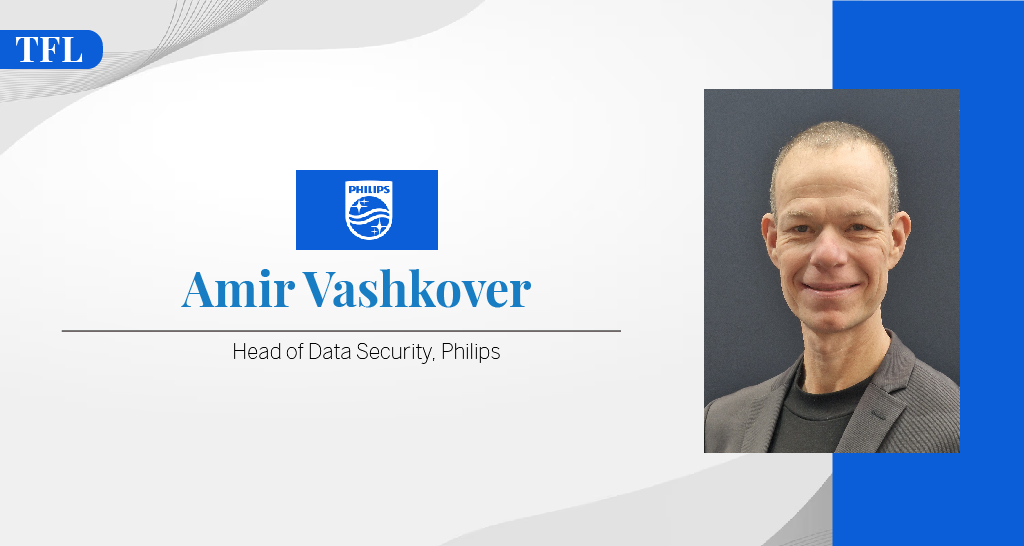
Amir Vashkover: Data Security Leader Improving Organization’s Security Culture

Amir Vashkover, earned a degree in Engineering and established a solid groundwork for his career as a technical expert. He holds a degree in Computer and Electrical Engineering, equipping him with extensive knowledge in algorithms, network security, and system architecture. Subsequently, he advanced his education by obtaining a Master’s degree in Business Administration (MBA), which enhanced his skills in leadership, change management, and various business-related competencies. This combination of technical and business education, along with a commitment to lifelong learning, has been instrumental in developing his capacity to effectively navigate his dual roles as a technology professional and a business leader.  

The Leadership Journey  

Amir contends that a significant factor influencing his career trajectory has been his readiness to embrace entirely new roles, sectors, and technologies, despite his academic background. He recognizes the importance of balancing the utilization of his specialized experience with the pursuit of new opportunities, which allows him to apply his existing knowledge while simultaneously learning from new challenges and developing as a versatile professional.

Amir’s path as a business leader in data security has been characterized by a dedication to innovation and perseverance. He began his professional journey in the Network and IT industry, developing enterprise solutions to meet the increasing demands for communication. Throughout his career, Amir made a shift into the realm of cybersecurity, concentrating on fulfilling security needs while facilitating the rapid growth and execution of businesses.

Amir emphasizes his background in implementing security solutions and spearheading strategic security initiatives, which ultimately brought him to Philips. In his role at Philips, he is tasked with safeguarding data security. He leads cybersecurity strategies that are in harmony with the company’s commitment to providing secure and dependable healthcare solutions.

Overcoming the Odds

The opportunities that Amir has recognized and cultivated throughout his various career transitions have also brought significant challenges. Moving between different industries and positions necessitated his rapid adaptation to new environments, the acquisition of unfamiliar technologies, and the establishment of credibility across a range of professional contexts. Although this process was frequently intimidating, Amir addressed these obstacles by committing to ongoing learning, utilizing his foundational technical skills, and proactively pursuing mentorship and collaborative opportunities.

In the realm of Security, a significant and persistent challenge has been the need to balance security measures with business efficiency. To address this issue, he has collaborated closely with stakeholders to establish security protocols that improve, rather than obstruct, operational productivity. By aligning security strategies with the goals of the business, Amir has successfully achieved a smooth integration of security into essential business functions.

Strategies to Steer High Performing Team

Creating a highly motivated cybersecurity team necessitates effective leadership, transparent communication, and a nurturing work atmosphere. Amir highlights the significance of purpose-oriented tasks, ensuring that every team member comprehends the importance of their contributions to safeguarding essential systems. He also promotes a culture of collaboration, encouraging team members to express their ideas and take responsibility for security projects.

Lastly, inspired by the four-color behavior model based on the work of Swiss psychologist Carl Jung, Amir recognizes achievements and provides tailored professional development opportunities, playing a crucial role in boosting morale and motivation.

Skills to lead a Strong Cybersecurity Team

Amir believes that leading by example is essential to inspiring and influencing others. Recognizing that integrity, accountability, and collaboration are fundamental to a strong cybersecurity team, he consistently upholds these values in his actions.

Integrity ensures that security professionals adhere to ethical standards and build trust within the organization.

Accountability is essential in fostering a culture where team members take responsibility for their actions, decisions, and contributions to security initiatives. It encourages a proactive approach to identifying risks and resolving security issues before they escalate.

Collaboration is equally vital, as cybersecurity cannot be a siloed effort; it requires engagement with other departments to integrate security into the company’s broader goals and faster innovation.

Essential Transformation in the Cybersecurity Domain

“I would advocate for greater consolidation of cybersecurity technologies and solutions. The current landscape is highly fragmented, with organizations often relying on multiple disconnected security tools that create complexity and inefficiencies. By streamlining security frameworks and integrating advanced threat detection, automation, and response mechanisms, companies can enhance their resilience and improve operational efficiency,” added Amir.

Additionally, Amir also wishes for increased investment in cybersecurity education to change people’s mindsets, fostering greater awareness and improving security culture, as human error remains one of the weakest links in cybersecurity defenses.

The Role of AI in Shaping the Industry

AI is poised to revolutionize the landscape of data security. By utilizing AI-powered threat detection, organizations can greatly improve their capacity to recognize and react to cyber threats as they occur, thereby minimizing the chances for attackers to exploit vulnerabilities. Machine learning algorithms are capable of processing extensive security data to uncover patterns and irregularities, enabling organizations to proactively address new threats. “The collaboration between AI technologies and human expertise will be crucial in enhancing cybersecurity resilience in the future,” concluded Amir.


📌 Visit Amir Vashkover 👉  – LinkedIn Profile

Dr. Gustavo Sosa: Focusing On The Development Of Novel Active Ingredients For The Global Crop Protection

INBIOAR was established on the foundation of scientific expertise. Dr. Gustavo Sosa, a scientist, recognized the business potential that often arises from scientific discoveries. His research focused on allelochemical compounds, which are part of plants’ defense mechanisms. While this area of study may not seem commercially viable at first glance, a closer examination reveals that certain plants release chemicals that can kill or inhibit the growth of other plants. In practical terms, one plant acts as a bio-herbicide against another, presenting a viable business opportunity. With the scientific knowledge to isolate these chemicals and produce the inhibitors on a commercial scale, Dr. Gustavo saw a clear path forward. However, the journey was more intricate than anticipated. Leading such a diverse team at INBIOAR posed a new challenge for Dr. Gustavo, requiring him to develop additional skills.

Overcoming the Challenges

Dr. Gustavo previously served as a professor of plant biochemistry, a role that equipped him to guide new teams. However, he faced significant challenges. The chance to engage in his scientific business venture was substantial, prompting Dr. Gustavo to showcase his full potential. Gradually, he emerged as a leader, attentive to the perspectives of others and adept at uncovering their talents. His leadership style evolved into one that nurtured and supported the abilities of those around him.

In the business realm, Dr. Gustavo maintained close relationships with individuals from the corporate sector, from whom he gained valuable insights. Dr. Gustavo remained steadfast in his pursuit of his objectives. He developed his leadership skills through practical experience, collaborating with others in the process. In return, he offered his ability to assist them in their endeavors. Consequently, INBIOAR flourished as a cohesive team.

Fostering Innovation

INBIOAR does not have employees; instead, everyone is regarded as a colleague. When Dr. Gustavo brings a recent graduate student on board, he motivates them to pursue a Ph.D. Innovation is rooted in expertise and research efforts.

“There is no greater advantage than training the team to a Ph.D. level and integrating them as colleagues rather than as employees.”

Dr. Gustavo’s primary focus is on education and learning. All subsequent advancements in the field of innovation stem from this essential initial step.

Sustainable Development

Currently, the application of herbicides results in the elimination of weeds, but the residual chemicals persist in the soil for an extended period. Is this truly necessary? The chemical-laden dust can be carried by the wind, contaminating areas from water sources to urban environments. INBIOAR is considering the use of a bioherbicide that effectively eradicates weeds, with the added benefit of natural chemicals breaking down in the soil within a few hours.

“One illustration of our approach involves the use of orange juice as a bioherbicide. We apply only 1 kg of orange juice per hectare, which translates to a dosage of 0.1 grams per square meter. The question arises: how long will these grams persist in the soil before they degrade? The duration is relatively brief. Consequently, the weeds are eliminated, and the chemical is expected to break down within approximately 24 hours,” added Dr. Gustavo.

INBIOAR prevents the bioherbicide from contaminating other regions or dispersing to different locations. Even if the bioherbicide becomes airborne with dust, it will remain present for only a few hours. Nature has a way of breaking down what it creates.

Staying Ahead of the Trend

Initially, the company developed its own discovery platform. This platform’s versatility enables INBIOAR to operate in various regions to identify plants that produce bio-agrochemicals. INBIOAR stands out as the sole team engaged in the bioprospection of plants to discover natural bio-agrochemicals. The company competes with academic groups conducting similar research programs. Notably, INBIOAR has screened nearly 4,000 samples, encompassing 1,200 different plant species.

INBIOAR intends to establish a presence in Texas to conduct screenings of the state’s flora, thereby expanding its operations in both the United States and Argentina. This strategic move will enable INBIOAR to utilize both facilities, effectively experiencing two growing seasons within a single year. Such an arrangement will significantly enhance the pace of its research programs.

Advise to Aspiring Entrepreneur

“I will use Steve Jobs talk in Stanford. Be in love with something. Staying in love will allow you to work at another level. You will never feel tired. You will never need a moment to stop. You will have a goal and the strength inside you to go for it,” says Dr. Gustavo.

The Road Ahead

INBIOAR has the potential to serve as a worldwide supplier of natural chemicals for the crop protection sector. The company can facilitate the transition of organic farming from conventional practices to more sustainable and environmentally friendly technologies by providing natural solutions to aid in this transformation.

Off-Plan Properties VS. Ready Homes: What Is The Best Investment Strategy?

In the realm of property investment, investors frequently encounter the decision of choosing between off-plan properties and completed homes. Each option presents distinct benefits and challenges, underscoring the importance for prospective buyers to assess their objectives, financial situation, and long-term plans. This blog post will examine the contrasts between off-plan properties and ready homes, offering valuable insights to help you determine the most suitable investment strategy for your requirements.

What Are Off-Plan Properties?

Off-plan properties refer to real estate that is marketed and sold prior to its construction or finalization. These properties are primarily conceptual, represented through blueprints or in the initial stages of development, with buyers making investments based on architectural plans, design specifications, and anticipated completion schedules.

For numerous purchasers, the primary attraction of off-plan properties is the opportunity for capital growth. To entice buyers, developers frequently present lower prices at the beginning of a project, enabling early investors to acquire properties at a reduced rate relative to the market value upon completion of construction. Furthermore, many developers provide flexible payment options, permitting investors to distribute their payments over an extended period.

The Pros of Off-Plan Properties

Lower Purchase Prices: Off-plan properties typically come at a lower cost compared to completed homes, presenting a more budget-friendly investment opportunity. Investors have the chance to acquire a property at a favorable price, particularly if they make their purchase early in the development phase.

Potential for High Returns: In regions with high demand or during periods of market expansion, off-plan properties may see substantial appreciation by the time they become available for occupancy. This presents an opportunity for considerable capital gains.

Flexible Payment Plans: Developers frequently provide a payment plan that allows buyers to make payments in stages throughout the construction period. This approach can ease the burden of the initial investment, particularly for first-time buyers or individuals who prefer to delay full payment.

The Cons of Off-Plan Properties

Construction Delays: A major risk linked to off-plan properties is the possibility of delays. Unexpected challenges, such as supply chain disruptions or regulatory obstacles, can extend the timeline for completion, resulting in investors having to wait longer than anticipated for their property.

Market Risk: The real estate market may experience considerable fluctuations from the moment of acquisition to the point of finalization. Factors such as economic recessions, alterations in interest rates, or variations in market demand can diminish the expected return on investment.

No Physical Inspection: As the property is still under development, investors are unable to conduct a physical inspection prior to making a purchase. Consequently, any potential problems related to construction quality, design, or location may only become apparent after the acquisition.

What Are Ready Homes?

Ready homes, as indicated by their name, are properties that have been fully constructed and are ready for immediate occupancy. These residences are perfect for buyers seeking to move in swiftly or to begin renting the property for income without the delay of construction.

The Pros of Ready Homes

Immediate Occupancy: The primary benefit of ready homes is their immediate availability for occupancy. Whether intended for personal living or investment purposes, buyers can avoid the waiting period associated with construction and the potential for delays.

Known Condition: In contrast to off-plan properties, completed homes enable buyers to conduct a physical inspection of the property. This eliminates any uncertainty regarding the outcome, allowing investors to evaluate the home’s condition in detail.

Established Market: Investors can assess the market value of ready homes by examining similar properties in the vicinity. This approach minimizes the likelihood of overpaying or investing in a poorly performing neighborhood.

The Cons of Ready Homes

Higher Prices: Properties that are move-in ready typically command a higher price than those sold off-plan. As a result, investors might incur greater costs for a home that has been previously occupied, which could restrict the opportunity for immediate increases in property value.

Maintenance Costs: Aging homes often entail increased maintenance and repair expenses. As these properties deteriorate over time, the resulting wear and tear can result in extra costs for the new homeowner.

Limited Customization: In contrast to off-plan properties, completed homes do not offer the opportunity for customization to align with individual tastes or current trends. Buyers receive exactly what is presented, which may not be attractive to everyone.

Which Is the Best Investment Strategy?

The decision to invest in off-plan properties versus completed homes primarily hinges on the investor’s objectives, risk appetite, and time frame.

Off-Plan Properties: For those seeking long-term capital appreciation and who are willing to be patient, investing in off-plan properties could be a more advantageous choice. These properties typically present lower upfront expenses and the possibility of substantial returns; however, they also entail higher levels of uncertainty and risk.

Ready Homes: For those seeking a more secure investment that offers immediate returns, purchasing ready homes may be an ideal option. These properties present lower risks, as they provide the potential for instant rental income and allow for personal inspection prior to acquisition. Nevertheless, it is important to note that they often entail higher initial expenses and may offer limited chances for substantial appreciation.

Ultimately, there is no universal solution. An effective investment strategy might incorporate a combination of both off-plan and completed properties, enabling you to take advantage of the benefits offered by each method.