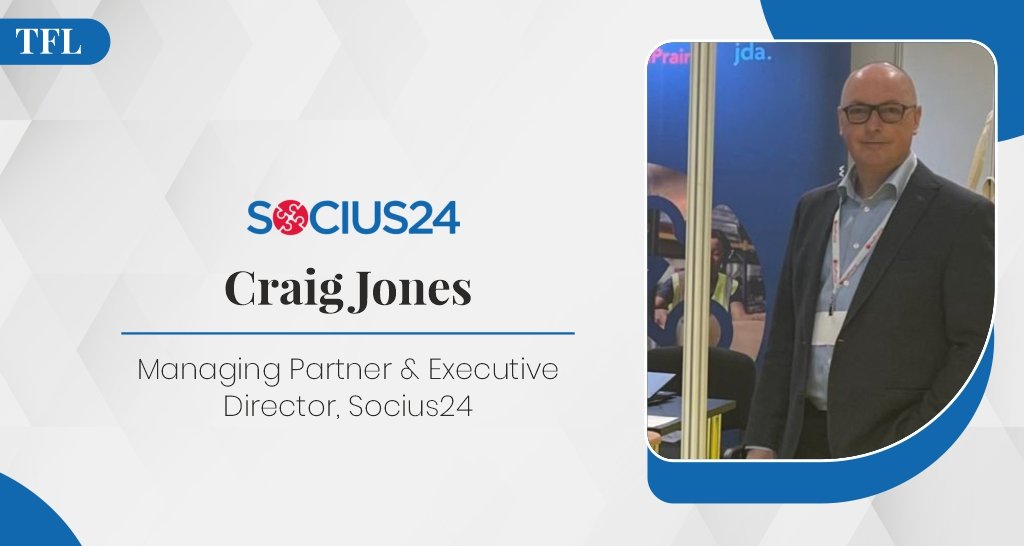
Socius24: Helping Businesses To Improve The Implementation And Performance Of Warehouse Management Systems

The warehousing market is estimated to be valued at USD 329.79 billion in 2021 and is projected to reach USD 562 billion by 2026 at a CAGR of 11.25%. Warehousing is the foundation of the global logistics sector, with a crucial contribution to product storage and management.

Socius24 was incorporated in 2013 by Craig Jones and Ray Williams, who had for 20 years previously, been deeply involved in the development of a best-in-breed Warehouse Management System (WMS) – Dispatcher WMS. The company is now an award-winning reseller of that software – Dispatcher WMS – and the preferred sales partner of the company that currently owns it Blue Yonder.

Socius24 implements Dispatcher WMS (alongside its own, complementary software) all over the world, and uses the extensive industry knowledge of its employees to ensure customers achieve optimal returns on their investments. Socius24 is known for its straightforward, honest, and effective deployment, training, and post-implementation support. “We are problem-solvers.”

The differentiating factor

Socius24 employs many of the people who originally developed and deployed the software that the company now implements. Many employees have worked with the system since the 1990s. It has had many reincarnations over the years, due to its effectiveness and has just been updated again with a new UI.

“No one knows the software better than we do. As well as this, all our project managers used Dispatcher WMS extensively in their previous jobs. We offer a unique combination of technical and operational insight into this WMS to our customers,” says Craig Jones, Managing Partner and Executive Director, Socius24.

The initial challenges

“We work within the supply chain and we’re not immune to a worldwide trend of trying to minimize costs and maximize profit. The software we sell is a best-in-breed, highly functional system that can (and does) run anything from a small family business to massive international corporations. Because of this, it’s sometimes not the cheapest option available.

When we lose out to lesser options, it’s typically because businesses have decided to implement a shorter-term, less scalable solution. And often, it’s one that then goes on to choke their expansion because the product they chose isn’t scalable or functional enough to support their growth goals. It can be frustrating at times to watch businesses go through the disruption and expense of a WMS implementation, only for them to have to do the whole thing again a few years later, but with the additional costs brought to bear by having to implement the right solution, second time around.

Strategies to remain ahead of the competition

“Having worked in the warehousing and logistics industry for such a long time, Socius24 has been able to look at where things were headed and then create additional, mobile apps that can be bolted onto a traditional WMS to expand its reach.

Additionally, when Socius24 was originally incorporated, the partners decided to make the company entirely remote as we have no offices. They did this to support their sustainability goals (no commute). However, the infrastructure that this way of working needed was already in place when 2020 came around, and because of it, the company was able to implement four projects remotely when the world needed the Supply Chain the most and many other providers had to shut operations down,” added Craig Jones.

Adaption to the contemporary demand

“Since 2020, a lot has changed in the supply chain industry, and Socius24 has evolved to facilitate those changes. Warehousing businesses used to work on a ‘just in time’ basis, meaning that they kept as little stock on hand as possible, to keep down costs. Things would be delivered and then shipped out as quickly as possible.

With the supply chain disruption brought about by the pandemic (and then through various other influences on the world supply chain such as the war in Ukraine, issues with moving container ships through the Suez Canal etc.), this ‘just in time’ methodology has transformed into a ‘just in case’ one. This means that businesses spread their inventory over a much larger area, often using third-party logistics (3PL) companies to keep additional stock on hand local to customers, in case there are additional disruptions.

Post 2020, Socius24 anticipated this movement to decentralized storage and developed their own WMS-independent and database-agnostic e-billing software – something that can quickly and easily be deployed for 3PLs to keep track of their customers’ stock,” elaborated Craig Jones.

Future vision

“The partners decided to change the structure of the company to become an Employee-Owned Trust (EOT) last year. This means that every employee now has an interest in the company. Socius24’s move into Employee Ownership was designed to secure its independence and empower its employees as co-owners,” concluded Craig Jones.

Visit Craig Jones – LinkedIn Profile

Visit Socius24 – Company Website
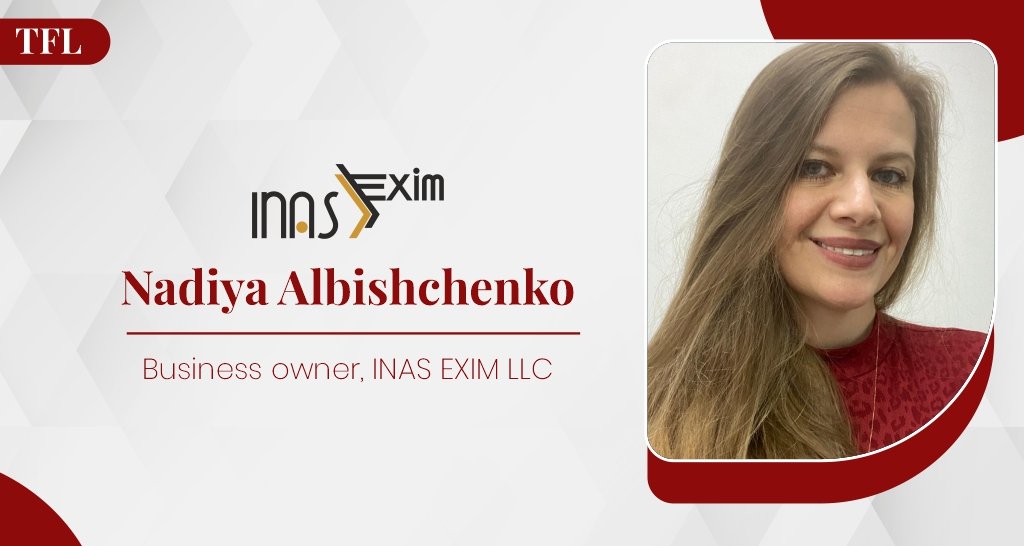
INAS ExIm LLC: Redefine Industry Standards For A Sustainable Global Food Landscape

The import-export market is a dynamic and complex environment influenced by various factors such as global economic conditions, trade agreements, technological advancements, and geopolitical events. INTERNATIONAL NETWORK FOR ACHIEVABLE SOLUTIONS EXPORT- IMPORT (INAS ExIm LLC) has its primary focus on an easy, profitable, and sustainable business model in international trade.

Established in 2015, INAS ExIm LLC swiftly emerged as a prominent player in the global market with a mission to nurture enduring partnerships in the food industry. Based in the dynamic global hub of the United Arab Emirates, we are committed to cultivating lasting relationships within the global food industry.

“Our comprehensive services include private label solutions, brand strategy, product innovation, and support for bulk commodity trade. We prioritize reliability, quality, and trust in our global supplies, emphasizing the intertwining of quality and sustainability. Aligned with Sustainable Development Goals (SDGs), our strategy emphasizes making a positive impact on the world through corporate responsibility and adherence to SDGs,” says Nadiya Albishchenko, Business Owner.

The differentiating factor

“INAS ExIm LLC stands out in the industry with its unique focus on an Easy, Profitable, and Sustainable business model in international trade. Our commitment to providing achievable solutions sets us apart, ensuring that our clients experience streamlined processes, profitable outcomes, and environmentally sustainable practices. With a primary emphasis on making international trade accessible, lucrative, and eco-friendly, we redefine industry standards and create value for our partners worldwide,” added Nadiya.

Beating the odds

“Our primary challenge lies in recovering from the aftermath of the Russo-Ukrainian war, but we are proactive in our approach. With a blend of resilience, innovation, and a dash of determination, we are tackling these challenges head-on, paving the way for a brighter future.”

Influence on the global market

“At our company, we envision our products and services as catalysts for global industry transformation. With our innovative approach and commitment to excellence, we are not just changing the game—we are rewriting the rules. By consistently delivering the latest market trend solutions that exceed expectations, we are setting a new standard of excellence that resonates on a global scale. Our goal is not just to influence the industry; it is to redefine it. Through groundbreaking technologies, unparalleled quality, and a relentless pursuit of customer satisfaction, we are paving the way for a brighter, more innovative future for our industry worldwide.”

Meeting the contemporary challenges

“We have been always looking for a new partnership, especially in the wild ride that is 2024. Our company has been like a pickle in brine—adaptable and always in search of new jars to jump into! We are currently dipping our metaphorical cucumbers into the pickle business, expanding beyond our bread and butter. After some serious taste-testing in the UAE and Jordan (because who does not love a good pickle test?), we are cooking up some exciting new flavors like hamburger chips, sweet corn, and jalapenos. By the end of this rollercoaster year, we will have a whole pantry full of pickle delights ready to tickle your taste buds. Keep an eye on our catalog for the latest updates you never know what tasty surprises we will pickle next.”

The leader behind the curtain

“Well, let me tell you, it is all about creating that special something we like to call “Synergy.” You see, in my book “Synergy: A Synopsis of an Elite Business Partnership,” I dish out some practical advice on how to get your team firing on all cylinders and hitting those company goals. From celebrating the little victories like finding that missing stapler to building a team that works together like a well-oiled machine, “Synergy” is all about making work fun while still getting the job done. So, if you want to learn how to inspire and motivate your employees, grab a copy of Synergy.”

 The success story

“Yes, we had the opportunity to collaborate with one of India’s foremost pickle-manufacturing companies last year. They had a thriving business of supplying a variety of pickles to esteemed clients such as Walmart, Aldi, Lidl, and Tesco under their private label, both in the USA and European markets.

Identifying their untapped potential in the Middle East, we worked out a strategic partnership to extend their presence into this region, as well as Africa. Since our collaboration began, we have successfully initiated supply chains to key markets including the UAE, Tanzania, Jordan, and Bahrain. Additionally, we are currently in discussions with other pivotal regions such as Saudi Arabia, Oman, and Qatar to commence supplies. Our extensive network and dedication to quality and reliability have played a pivotal role in our rapid market penetration.

The exceptional speed and success of our endeavors have exceeded expectations, leaving our partners delighted, satisfied, and ecstatic to continue our collaborative journey in the region.”

The Future Roadmap

“Our future roadmap is like a surprise box of chocolates you never know what you are gonna get! From animal feed to high-tech wonders, we are charting a course that is as unpredictable as it is exciting. So, buckle up, because the journey ahead promises to be a wild and delicious ride,” concluded Nadiya.

Improving Intercultural Awareness for Effective Global Public Relations

In our interconnected world, the ability to communicate effectively across cultures has never been more important, especially in public relations (PR). Intercultural awareness, which involves understanding and respecting the diverse cultural backgrounds of the people we interact with, is essential for building meaningful relationships and ensuring our messages resonate with varied audiences.

Why Intercultural Competence Matters

Globalization has brought about a highly connected and diverse market. PR practitioners must develop intercultural competence to function within this complex context. This competence is about the ability to understand, appreciate, and communicate with people from different cultural backgrounds. It allows the PR practitioner to build a relationship with individuals and groups across different cultures. This is at the heart of public relations because it is a core value.

Cultural sensitivity is one aspect of intercultural competence. Being able to be aware and respectful of cultural differences and avoid doing things that might be considered offensive is of great importance. Cultural sensitivity allows us to communicate well with a diverse audience and ensure that messages and campaigns do not offend the cultural and religious sensibilities of the people.

For example, take the case of the Chevy Nova. In the 1960s, General Motors launched the Chevy Nova to the U.S. market with great success. When they decided to expand to Spanish-speaking countries, sales just did not take off. It was later found out that “Nova” translates to the Spanish phrase “no go.” This could have been averted had there been better cultural insight. This example shows the importance of understanding cultural differences in our global economy.

Challenges in Intercultural Communication

Despite the significance of intercultural communication, it also poses some serious challenges. The two most common challenges that occur when dealing with people from other cultural backgrounds are miscommunication and cultural misunderstandings. Such misunderstandings usually crop up as a result of differences in communicating styles, values, and norms.

The first, and perhaps most obvious, challenge intercultural communication has to face is language barriers. Even if both parties speak the same language, cultural expressions and idiomatic expressions may still confuse. For example, some phrases or gestures considered appropriate in one culture will be highly insulting and inappropriate in another. This gives rise to significant obstacles to the proper delivery of PR messages.

Cultural stereotypes are also a challenge in intercultural communication. These stereotypes can lead to assumptions and biases that affect how messages are received and interpreted. For example, a campaign that inadvertently reinforces negative stereotypes about a particular cultural group can damage the reputation of an organization and alienate key stakeholders. PR practitioners must recognize and address these biases to ensure their messages are inclusive and respectful.

Another challenge is the difference in expectations and norms across cultures. In some cultures, formal and hierarchical communication is practiced; in others, it is informal and egalitarian. PR practitioners should be aware of these differences and adjust communication strategies accordingly. If not done, it may deliver messages that are either misunderstood or rejected by the audience targeted.

A usually used example of intercultural expectations is of an American company selling high-end technical goods to a potential Chinese buyer. At dinner, the head of the Chinese delegation was received by a junior member of the U.S. team, who asked him to “sit where you like,” after which the Chinese delegation felt insulted and reconsidered the deal. The Chinese respect their hierarchy and cannot consider equality; the Americans are different in this regard.

Strategies to Improve Intercultural Awareness

To navigate the challenges of intercultural communication, PR practitioners must adopt strategies that enhance their intercultural awareness. Here are some suggested approaches:

  1. Adapting Communication Styles: PR practitioners must be flexible and adaptable in their communication styles. This involves tailoring messages to fit the cultural context of the target audience. For example, in high-context cultures, where communication is often indirect and relies heavily on context, PR messages should be crafted to convey meaning subtly and respectfully. Conversely, in low-context cultures, direct and explicit communication is more effective.
  2. Engaging with Local Communities: Building relationships with local cultural groups helps PR practitioners to understand their values and preferences. This should be followed by a higher level of engagement with cultural groups, through community events or even focus groups and social media. This helps practitioners to have knowledge of the cultural landscape and develop campaigns relevant to the target audience.
  3. Utilizing Local Expertise: Hiring local experts or consultants who have a deep understanding of the cultural nuances is highly recommended. These experts can offer guidance on culture, language usage, and potential sensitivities that may arise from the campaign and ensure that PR campaigns are appropriate and effective in the culture.
  4. Culturally Inclusive Content Creation: Content creation should be inclusive to avoid the exclusion of some audience members. The use of inclusive images, language, and narratives will ensure that the target audience is reflected in the content created. The content also should not stereotype any cultural groups but represent different groups in the multicultural reality of the target audience.

It should be noted that intercultural awareness is an important PR practitioner’s asset: it helps improve the efficacy of communication, develop better relationships, resolve conflicts, and improve brand reputation. This all means that further development of intercultural competence by PR professionals is necessary for future success in a more globalizing world. These insights are appropriate to infuse into PR practices, helping navigate the complexities of a globalized marketplace and produce more effective, respectful strategies in communications.

About the author:

Dr. Clāra Ly-Le is the founder and managing director of EloQ Communications, a boutique PR agency in Vietnam. With a Ph.D. in Communication, she champions professionalism in Vietnamese PR, mentors the next generation, and has earned numerous accolades for her innovative and impactful work in the industry.

Asigra: A Pioneer And Thought Leader In The Backup And Recovery Industry

The backup and recovery industry is evolving rapidly to meet the challenges of increasing data volumes, sophisticated cyber threats, and the need for regulatory compliance. Innovation in cloud-based solutions, automation, and AI are driving the market, while the demand for simplicity and efficiency remains a top priority for businesses. Companies that stay ahead of these trends will be better positioned to protect their data and ensure business continuity in an increasingly digital world.

Asigra has been a pioneer and thought leader in the backup and recovery space for the past 37 years, setting itself apart with industry-leading data and ransomware protection capabilities. “Building on our long history of innovation, we have launched our latest backup platform, SaaSAssure, designed to provide comprehensive backup, recovery and for a variety of SaaS applications. Our mission statement is “Recovery is Everything.” Our core value is “inspiration,” says Eric Simmons, CEO, Asigra.

The Inception Story

Asigra was founded more than 37 years ago by David Farajun, a visionary computer programmer who could not find an adequate solution to back up the code he was developing. That frustration inspired him not only to build a product that met his needs but also to create a company that would evolve alongside changes in cybersecurity. Ultimately, this led to the industry’s first agentless enterprise cloud-based backup and recovery software that also addresses today’s cyber threats.

“Today, David continues to guide our direction, along with a leadership team packed with industry heavy-hitters. Our software has developed to include features like bi-directional malware scanning, CDR, MPA, SaaS Protection, and Validation Restore to verify the integrity of backups, and we are frequently first to market with new advances a product of our perennial commitment to our original vision of technology that constantly iterates to get ahead of new threats.”

Constantly Evolving to Provide Industry-leading Protection

Headquartered in Toronto, Asigra has expanded to include a wider range of tools for data protection through our MSP and VAR partners.

We are constantly and proactively pursuing ways to protect against ransomware attacks and other threats to the backup and recovery of servers, virtual machines, endpoint devices, databases, and SaaS/IaaS-based applications.

Through our Secure Backup Platform and other solutions, we provide ransomware protection, cloud SaaS backup, compliance management, and business continuity support that can prevent catastrophic business impacts.

The differentiating factor

“We are an organization driven by inspiration. In every interaction, we ask ourselves if we are approaching initiatives to inspire. This powerful motivator influences our colleagues in both their contributions to Asigra and in their personal lives.  It also pushes us to seek innovations that extend beyond technology and emphasize the value we deliver to our partners and customers. Inspiration is not always easy, but it elevates our understanding of what truly matters beyond technology, allowing us to connect on a deeper level.”

Staying ahead of the competition

With the rapid adoption of SaaS applications creating today’s SaaS-powered workplace, it is imperative to ensure a company’s entire SaaS footprint is protected. Most SaaS providers follow the Amazon Web Services (AWS) Shared Responsibility Model, which states that businesses are responsible for their data. Businesses need to understand that SaaS providers do not offer backup and recovery services, nor do they guarantee data protection they focus on application availability and data redundancy. The crucial difference is that if a business’s SaaS data is deleted or compromised through accidental deletion, ransomware, or other cyber-attacks, the data is often non-recoverable. To address this gap, Asigra offers SaaSAssure, a cloud-native solution designed to provide backup and recovery services for high-value, business-critical SaaS applications.

Adapting to the changing landscape

Most CIOs prioritize data protection and business resiliency as their top concerns. In response, “we have developed a solution to safeguard the vast amount of critical business data residing in vulnerable SaaS applications. Our platform enables businesses to achieve full protection of sensitive data generated and stored in a multitude of clouds in under 10 minutes.”

Strategies for the future challenge

Asigra is among the few organizations that have developed a multi-tenant platform designed with a partner-first approach. “We currently support over 300 managed service providers globally and are committed to expanding our partner community. Our focus also includes systems integrators who implement and customize SaaS applications for companies, as well as strategic partnerships with SaaS providers and other entities not currently targeted by our competitors, offering significant growth opportunities.”

The initial challenge

“The key challenge is leveraging our time and resources to effectively remain ahead of the competition in this market as the largest players in the business begin to extend their offerings. We will continue to differentiate through our focus on inspiration and bring that level of value and attention to what matters most to the customers we serve. Knowing that a backup admin can sometimes take three weeks to remediate a backup failure simply because they changed the backup location by accident and both proactively addressing this and offering automated or immediate remediation is a massive time saver and risk eliminator. We also continue to expand our strategic partnerships to further differentiate faster. As an example, partnering with an organization that has a solution to identify all the SaaS apps within a business. This helps to prioritize their backup needs and budget. Lastly, our unique integration of backup with cyber security protection continues to evolve alongside the threat landscape.”

Products and services influencing the global scale

“We serve a global market today and one critical element we focus on is working with analysts and industry influencers to help educate the market on the importance of protecting their SaaS data with 3rd party solutions. A second key message is to have SaaS providers extend their APIs to make it possible and easier to back up and restore all the data stored within their applications. Many do not do this effectively today and if they require the end customer to be responsible for the data, they need to enable them to protect all of it effectively.”

International stories success & partnership

“We are partnering with Auvik which is a cloud-based network monitoring tool that offers the ability to discover, monitor, manage and secure SaaS to eliminate shadow IT. Adding backup and recovery is a perfect complement to this offering and vice-versa. Others are in various stages of completion.”

Awards and Recognition

“Throughout our history, Asigra’s technological innovation has been motivated by our experiences with customers. The most impactful have been the stories we have heard from those who come to us when their former backup solution could not restore a clean copy of their data. Those experiences, plus our drive to anticipate and protect against new threats, have led to unique security technology that far surpasses our competitors’ security strategies. And while our customers’ and partners’ feedback is the only validation we need, it does not hurt that we are consistently recognized as an industry-leading platform,” added Simmons.

The future roadmap

The company is evolving into a comprehensive data protection and analysis platform, harnessing the power of AI and machine learning for key use cases. “Initially, we will predict, remediate, and eventually eliminate backup and recovery errors, often caused by human error.  Another critical use case for the injection of AI and ML involves identifying ransomware and other cyber-attacks. Additionally, we will focus heavily on advanced data analytics, enabling organizations to derive valuable insights from aggregated backup data. This approach is simpler and more cost-effective than moving everything into a data lake. Furthermore, we will implement our unique bi-directional antimalware and Content Disarm and Reconstruction (CDR) technologies to enhance protection against ransomware attacks,” concluded Eric Simmons.

Visit Eric Simmons – LinkedIn Profile

Visit Asigra – Company Website