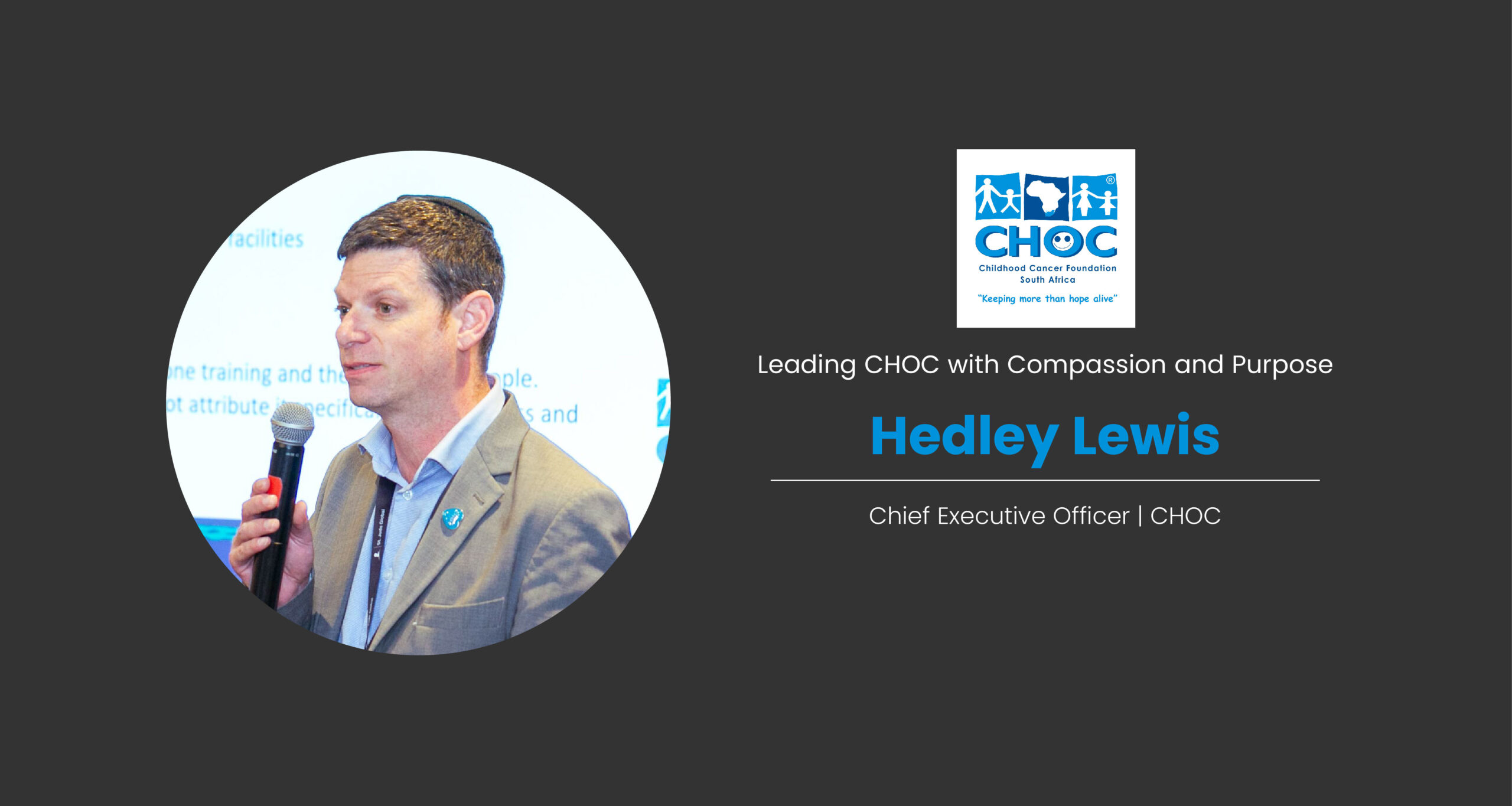
Hedley Lewis, the Chief Executive Officer of CHOC Childhood Cancer Foundation South Africa, is a compassionate and visionary leader dedicated to improving the lives of children battling cancer and life-threatening blood disorders. With a strong background in leadership and social impact, Hedley has been instrumental in expanding CHOC’s national reach and enhancing its support programs. His commitment to community service and child welfare drives his mission to ensure that no family faces the cancer journey alone. Under his guidance, CHOC continues to deliver holistic care and advocacy with empathy and excellence.
Here are the key highlights from the interview:
Q1. Brief the inception story of your organization? What inspired you to establish and follow the mission and vision of CHOC?
Inception Story
CHOC was founded in 1979 by a small group of dedicated parents whose children were undergoing cancer treatment. Faced with the overwhelming emotional, financial, and logistical challenges of navigating childhood cancer, they came together to create a support system that would ease the burden for other families. What began as a grassroots initiative has since grown into a nationally recognized organization, offering comprehensive care and advocacy for children with cancer and life-threatening blood disorders.
CHOC is a registered and internationally recognized Non-Profit Organisation (NPO), providing holistic support to children and teenagers with cancer and life-threatening blood disorders, as well as their families. Our services span the country, reaching both urban and rural communities across South Africa.
CHOC serves the childhood cancer community in South Africa; however, CHOC’s reach goes much further. We reach out to communities and serve individuals by offering a range of services. Through Childhood Cancer International, CHOC supports our sister organisations in the Sub-Saharan African countries by building capacity and sharing information.
◦ CHOC Programmes include accommodation, transport to and from treatment centres, Financial Transport Assistance, and Awareness Training and Education Programme on the Siluan Early Warning Signs of Childhood Cancer.
◦ Emotional Support (both professional and non-professional) for children, teenagers and their families through their cancer journey as well as palliative, end-of-life care and bereavement support.
◦ Patient Support for patients and families, including essential CHOC Carebags, nutritional food support, and bereavement services.
Professional Emotional Support (Psychosocial Support Services)
CHOC provides psychosocial support to children, teenagers, and their families to help them cope with the numerous new demands on the family and to provide relevant information to assist them.
CHOC employs a team of social and social auxiliary workers who provide full-time psychosocial support in the Paediatric Oncology Units, from diagnosis to the end of treatment or end-of-life care, where we also offer bereavement and grief support.
Emotional Support (Parental and Family Support)
Trained volunteers provide comprehensive emotional support to children, teenagers, and their families. We offer support groups for survivors, as well as a Parent-Supporting-Parent Programme, which provides support to parents whose children have been newly diagnosed with cancer through group discussions, and during parent tea’s at the Paediatric Oncology Units.
The psychosocial team provide support to parents and families through bereavement and grief counselling. Every year at the end of November, Remembrance Services are held nationwide. During the Remembrance Services, CHOC remembers the children and teenagers who bravely fought and sadly lost their lives. It is a chance for us to stand together with the families and doctors and pay tribute to these children and teenagers.
CHOC Education Programme
The iPad Learning Programme, facilitated by iSchool-Africa, commenced in May 2024 with CHOC Childhood Cancer Foundation SA. This initiative supports paediatric oncology patients by ensuring their education continues despite the challenges posed by cancer treatment and prolonged hospital stays. The programme brings iPads loaded with engaging content directly to children and teenagers undergoing cancer treatment. The goals include reducing anxiety, minimising learning loss, and assisting with various therapies. Comprehensive training is provided to hospital school teachers and teacher consultants to integrate the technology effectively into the children and teenagers’ routines and educational plans.
Vision & Mission
Vision: All children and teens with cancer or life-threatening blood disorders have comprehensive access to care and support.
Mission: Supporting children and teenagers with cancer and life-threatening blood disorders, and their families; improving early detection and augmenting effective treatment.
What This Means to Families
For the children, teenagers and families we serve, CHOC’s mission and vision translate into hope, dignity, and practical support during one of life’s most difficult journeys. The organisation stands as a lifeline ensuring that no child faces cancer alone and no parent is left without guidance.
Since transitioning from the corporate world to the nonprofit sector, I’ve found deep purpose in lending my voice to children whose own voices are often faint or unheard. CHOC’s impact supporting over 1,700 children annually, delivering thousands of bed nights, and offering psychosocial care to families nationwide, showed me the power of compassion in action. It became clear that I wanted to be part of an organization where, I can assist in reshaping the landscape of Paediatric Oncology in South Africa by empowering communities, strengthening healthcare partnerships, and ensuring that childhood cancer is met with expertise, empathy, and unwavering support.
Q2. What were some of the most significant challenges you faced during the early stages, and how did you navigate them as a leader?
When I transitioned from the corporate world into the nonprofit sector, I knew I was stepping into something far more personal and purpose-led But that shift came with its own set of challenges.
One of the first hurdles was adapting to a resource-limited environment. In corporate settings, you often have access to tools, teams, and budgets. In the non-profit world especially in healthcare, you learn to do more with less. It required a complete shift in mindset and leadership style.
Then came the emotional weight. Working with children and teenagers who have been diagnosed with cancer and their families is profoundly humbling. You’re not just managing programmes; you’re walking alongside people in their most vulnerable moments. That demands compassion, resilience, and a kind of leadership that listens more than it speaks.
Funding was, and still is, a constant challenge. Sustaining programmes such as accommodation, transport, nutritional support, and psychosocial care requires continuous advocacy, donor trust-building, and demonstrating tangible impact. However, having a strong, supportive team and board is absolutely vital to achieving CHOC’s mission. I’m deeply grateful for the collaboration, dedication, and shared vision that carry us through every challenge we face. It’s through this united effort that we continue to make a meaningful impact in the lives of children with cancer and their families.
Raising awareness in underserved communities also remains a significant challenge. Early detection saves lives, yet stigma and misinformation persist. That is why advocacy and education have become central to CHOC’s mission.
Through it all, I’ve leaned on purpose, empathy, and collaboration. I’ve worked closely with paediatric oncologists, government departments, volunteers, and donors, because leadership in this space is not about standing alone, it’s about standing together.
If I’ve learned anything, it’s this: resilience is not just about bouncing back, it’s about staying grounded in your mission even when the road gets tough. That’s what keeps me and CHOC moving forward.
Q3. In today’s rapidly evolving business world, what core values and leadership traits do you believe are most important for long-term success?
Childhood cancer advocacy isn’t just a healthcare issue; it’s a human rights issue. The next generation of African leaders must be bold enough to challenge broken systems, compassionate enough to walk with families, and visionary enough to build a future where no child is left behind.
True leadership in this space must begin with compassion. Every decision affects real lives, children determined to survive and families navigating grief and uncertainty. Compassion builds trust, and trust builds resilience.
Leaders must also be a voice for the voiceless. Across Africa, too many children and teenagers are diagnosed too late due to stigma and lack of awareness. We must influence policy, engage media, and fight for equity.
Beyond treatment, we must build systems of holistic support that empower families. At CHOC, we provide accommodation, nutritious meals, transport, and psychosocial care. These are not luxuries; they are lifelines.
Collaboration is essential. We work hand-in-hand with paediatric oncologists, nurses, social workers, government, and NGOs. Our partnerships with SAPHO and the Tumour Registry are examples of how collective effort creates systemic change.
Finally, leaders must remain resilient and purpose driven. The work is tough, funding is limited, and the emotional toll is heavy. But the mission is too important to abandon. At CHOC, we stay focused on the children, we adapt, we grow, and we keep showing up.
To the next generation of leaders: lead with heart, build with vision, and never forget who you’re doing it for.
Q4. In your opinion, what are the key qualities required for a successful leader in today’s business environment?
Leadership, particularly in the non-profit healthcare sector, is impossible without a strong and passionate team. At CHOC Childhood Cancer Foundation SA, our regional teams, social workers, and volunteers, work near paediatric oncology units across the country, ensuring that families receive consistent, practical, and emotional support during the most challenging times of their lives.
This frontline presence is backed by a robust finance and governance framework, along with a dedicated HR function that empowers staff to focus on what matters most while supporting children, teenagers and their families. With systems in place to ensure compliance, transparency, and operational efficiency, our teams can channel their energy into care, advocacy, and impact.
Strong fundraising programmes, driven by empathy and strategic execution, allow CHOC to sustain and grow its services. Our staff and volunteers gain immense personal and professional fulfilment from the work they do, witnessing the resilience of adolescents, the gratitude of families, and the tangible difference their efforts make in the lives of others. This work cultivates a deep sense of purpose, compassion, and unity across the organisation.
At the heart of this cohesive and mission-driven culture as the CEO, my leadership brings together diverse teams under a shared vision of excellence, compassion, and accountability. I ensure that every part of CHOC from governance and fundraising to frontline support is aligned and working collaboratively. My ability to inspire, connect, and lead with integrity has been instrumental in building a united organisation where every team member feels valued, supported, and driven by the cause.
Together, CHOC’s people form a powerful force for good, one that not only uplifts children and teenagers with cancer and their families but also strengthens the broader healthcare and non-profit landscape in South Africa.
Building on this foundation, I believe the following leadership qualities are essential:
- Authenticity: Great leaders are grounded in who they are, lead with integrity, and are not afraid to show vulnerability.
- Empathy and compassion: Emotional intelligence is non-negotiable. Understanding your team and community builds trust and resilience.
- Visionary thinking: Leaders must inspire others toward a better future, anticipating change and embracing innovation.
- Adaptability: The world is fast-changing. Leaders must be agile, open to feedback, and committed to lifelong learning.
- Collaboration and influence: Leadership today is about building coalitions and empowering others, not controlling them.
- Resilience: Setbacks will come, but true leaders remain steady, model perseverance, and inspire others to do the same.
- Strategic communication: Clear, transparent, and inspiring communication aligns people with purpose and drives culture and impact.
Q5. What advice would you offer to the next generation of entrepreneurs and leaders across Africa?
My advice is simple but profound: lead with empathy. In our field, compassion isn’t a luxury, it’s a necessity. Every child we serve is more than a diagnosis; every caregiver is more than a support system. They are the heartbeat of our mission.
Build systems that wrap around the family holistically – medically, emotionally, logistically, and socially. At CHOC, we’ve seen how something as simple as a warm bed, a meal, a transport voucher, or a listening ear can transform a family’s experience.
Embrace innovation from data-driven treatment plans to mobile health tools but ensure that technology serves humanity and reaches even the most remote communities.
Above all, embrace collaboration. At CHOC Childhood Cancer Foundation SA, partnership is not just a strategy, it’s a lifeline. We actively engage with a wide network of stakeholders including government departments, public and private hospitals, NGOs, corporates, and community organisations. These relationships are foundational to our mission of supporting children with cancer and their families. These alliances are deeply meaningful. They reflect a shared commitment to dignity, hope, and healing. Every stakeholder plays a role in the journey of a child or teenager who has been diagnosed with cancer, and CHOC is proud to be the thread that weaves these efforts together
To young African leaders: be bold, be kind, and be relentless. The children of this continent deserve nothing less.
I’ve had the privilege of surrounding myself with an exceptional team, and I truly believe I work alongside some of the most dedicated and compassionate individuals. Together, we are not just colleagues—we are a united force making a meaningful difference in the lives of children with cancer. I’m deeply honoured to work with people who bring heart, purpose, and unwavering commitment to everything they do.
Q6. What do you see as the most impactful trends or transformations shaping your industry in 2025 and beyond?
The childhood cancer field is undergoing profound transformation, driven by innovation, collaboration, and equity.
We are at a turning point. In high-income countries, survival rates for childhood cancer exceed 80%, while in many parts of Africa, survival is just 20%. This disparity is unacceptable—it is a call to action.
Global initiatives such as the WHO Global Initiative for Childhood Cancer (CureAll framework) are working to raise survival rates to 60% by 2030. For CHOC, this means deepening our involvement in public health, advocacy, and grassroots awareness.
Families affected by childhood cancer face immense psychological, emotional, financial, and logistical challenges. Many experiences strain due to travel distances to treatment centres, lack of nearby accommodation, out-of-pocket expenses, and disruptions to family life. The burden is shared not only by patients, but also by parents, siblings, and caregivers. As reflected in the global campaign #WeAllLiveIt, when a child is diagnosed with cancer, the entire family embarks on the journey together. But medicine alone is not enough. Healing requires wraparound support, beds near hospitals, nutritious meals, transport assistance, and psychosocial care. CHOC’s integrated model is designed to provide this, and it is increasingly being recognised as best practice worldwide.
Collaboration is another key driver. Governments, NGOs, hospitals, and the private sector are working together like never before. CHOC’s partnerships help shape national policy and strengthen healthcare systems from the ground up. The Department of Health, NCR, CHOC, SAAPHO, and WHO commend the dedication of healthcare professionals, support organisations, and members of the public who offer vital care and compassion to children with cancer. The NCR remains committed to ensuring accurate data collection and analysis to inform decision-making and improve outcomes.
Finally, the voices of survivors are reshaping the conversation. Their stories guide how we design programmes and ensure long-term healing.
The future of childhood cancer care will be more connected, compassionate, and equitable and CHOC is determined to help lead that transformation.
Q7. Brief us about your future roadmap.
Our future roadmap is focused on both strengthening and innovating:
- Enhancing existing programmes to further reduce treatment abandonment rates.
- Expanding awareness campaigns, across South Africa, ensuring no environment is overlooked, to educate communities on the early warning signs of childhood cancer.
- Innovating support models, leveraging digital tools, expanding accommodation and nutritional programmes, and strengthening psychosocial services.
- Building stronger collaborations with government, hospitals, and NGOs to unify efforts under paediatric oncology units.
- Empowering survivors and families to share their voices, guiding us in creating more relevant and compassionate programmes.
Our vision for the future is clear: a South Africa where no child faces cancer alone, where early detection is the norm, and where every family receives the support they need to stay strong and hopeful.