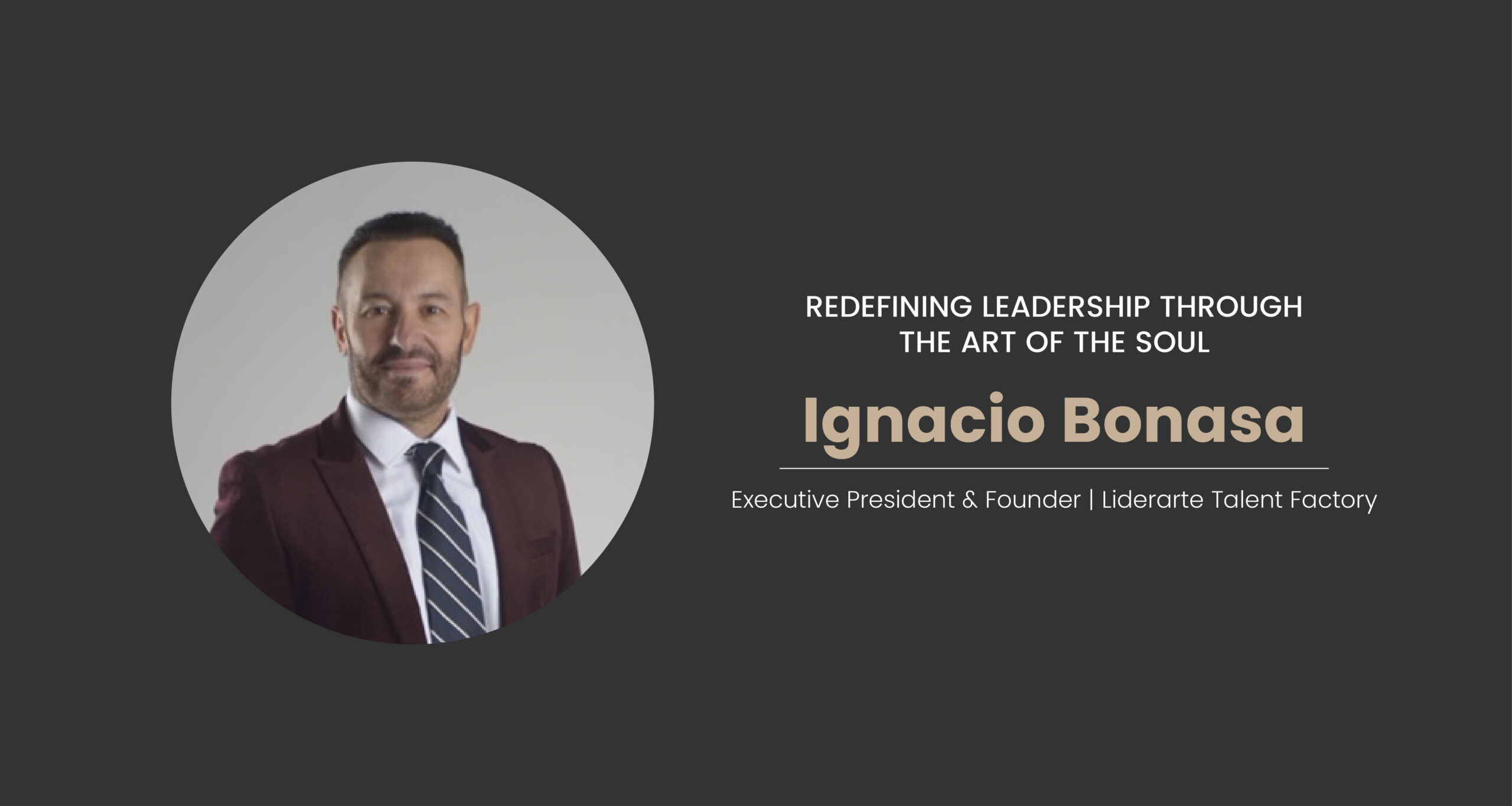
Ignacio Bonasa: Redefining Leadership Through the Art of the Soul

In an era where leadership is often defined by numbers, profit margins, and boardroom strategies, Ignacio Bonasa, Executive President and Founder of Liderarte, stands out for a different kind of power one rooted in empathy, creativity, and authenticity. He walked away from the security of a high-flying corporate career to pursue something deeper: a mission to reconnect leadership with soul. For Bonasa, true leadership is not about control or authority it is about awakening humanity in oneself and others.

From Boardrooms to Soul Rooms

For more than twenty years, Bonasa thrived in the financial world. With a Law degree, an MBA from ICADE, and a PDG from IESE, he rose quickly through the ranks, ultimately becoming CEO of BBVA Portugal and President of BBVA Dinero Express. His life was one of structure, discipline, and success at least on the surface. Yet, amid all the milestones, he began to feel an inner emptiness. “There came a point when I realized I had everything, except what truly fulfilled me,” he recalls. “External success doesn’t mean much if it doesn’t echo on the inside.”

That moment of clarity marked a profound turning point. Bonasa realized that true achievement could not be measured by status or salary but by alignment between inner purpose and outward action. What began as quiet discontent transformed into a powerful calling to leave behind the predictable rhythm of corporate life and create a new model of leadership rooted in emotional intelligence and artistic depth.

The Birth of Liderarte: A Talent Factory with Soul

Out of that awakening, Liderarte was born. Not a consultancy, not a business school something more human, more alive. Bonasa calls it “a talent factory with soul.” Its mission is simple yet transformative: to place the human being back at the center of leadership. “We don’t teach leadership; we awaken it,” he explains. “Our work is about helping people reconnect with their essence, their emotions, and their creativity.”

At the core of Liderarte is the groundbreaking methodology Learning Through Art, which uses art as a language for transformation. Through music, theatre, writing, dance, and other creative forms, participants explore self-awareness, emotional regulation, and authentic expression. The goal is to move from intellectual learning to experiential awakening. As Bonasa puts it, “Leadership isn’t about climbing it’s about rooting.”

Learning Through Art: The Language of Transformation

The Learning Through Art model is built on the belief that leadership must evolve through experience and emotion, not theory. It focuses on five interconnected stages: self-awareness, emotional self-management, inspirational leadership, soulful team management, and deep commitment to oneself, others, and society. These stages are supported by what Bonasa calls the 4A Framework: Aprendizaje (Learning), Actitud (Attitude), Alma (Soul), and Accion (Action).

Through this approach, every Liderarte program becomes a creative journey. Initiatives like RESETEATE (Reset Yourself) encourage leaders to pause and reconnect with their inner world, while Orchestral Leadership uses live symphonic music to teach harmony and collaboration. Each experience blends reflection, emotion, and artistry transforming leadership from an abstract concept into a lived, felt experience. “What we offer doesn’t stay in the classroom it becomes part of how you lead and how you live,” says Bonasa.

Programs That Touch the Heart and Mind

In the past year and a half, Liderarte has reached over 2,000 professionals across seven countries, earning an average satisfaction score of 9.5 out of 10. Its programs are not only intellectually stimulating but emotionally profound. Dale la vuelta a la tortilla (Turn the Table) transforms shared pain into collective healing; Compases Creativos uses jazz improvisation to teach adaptability and teamwork; Brain Experience Journey merges neuroscience and art to activate new cognitive pathways; and Womentoring empowers women through storytelling and sisterhood.

Leading with Vulnerability and Vision

Bonasa’s leadership style is as distinctive as his philosophy. He does not lead from a podium but from presence. “To me, transformative leadership means having crossed the soul’s desert and returning with water for others,” he says. Vulnerability, to him, is not a weakness it’s a bridge. His team reflects this ethos. He calls them “soul artisans” individuals who combine creativity with emotional and strategic intelligence. Together, they form a community of facilitators who inspire others to lead from within rather than above.

Preparing Leaders for a New Era

In a time when technology evolves faster than human behavior, Bonasa believes leadership must evolve emotionally. “We’re living in an age of digital progress and emotional regression,” he observes. “The future belongs to leaders who can combine intelligence with empathy.” Under his guidance, Liderarte focuses on five essential competencies for the new age of leadership: emotional self-awareness, deep empathy, purpose-driven communication, strategic creativity, and personal coherence.

Beyond Business: A Cultural Shift

Liderarte’s work extends far beyond the private sector. In hospitals, its RESETÉATE program helps medical teams reconnect with purpose and empathy. In schools, The Hero’s Journey inspires young people to uncover their vocation. In technology companies, Innovarte bridges the gap between innovation and humanity. Across NGOs and public institutions, Bonasa’s initiatives are bringing back what he calls “the art of being human” to environments often starved of emotion and meaning.

The Power of Letting Go

Ignacio Bonasa’s story is ultimately one of surrender. By walking away from corporate titles and predictable success, he discovered freedom and authenticity. “When you stop leading for recognition and start leading for purpose, everything changes,” he reflects. Today, he is less the executive giving orders and more the quiet current guiding others toward transformation. His leadership is not about control it is about creating spaces where others can shine.

A Letter to the Leaders of Tomorrow

Ignacio often ends his sessions with a heartfelt message to future leaders:

“Dear leader of tomorrow,

Do not strive to become like someone else. Strive to remember who you are.

True leadership is not measured in power but in presence.

Do not chase applause if it means losing yourself.

Lead from the soul, even when others do not understand.

Be vulnerable—it is your greatest strength.

When the winds of change blow, remember—you can always adjust your sails.

Leadership is not about controlling the sea, but about navigating it with purpose.”

Through Liderarte, Ignacio Bonasa has built not just a company, but a movement a poetic reimagining of what leadership can be when it is guided by heart, art, and authenticity. In his world, leadership is no longer a title it is an act of creation, a dance of consciousness, and above all, a work of art.

An Interview with Dan Yogev Kaznelson of EL AL Israel Airlines

Dan Yogev Kaznelson is a visionary leader in the aviation industry, currently driving digital and operational innovation at EL AL. With a background in IT and project management, he has built a career around leveraging technology to transform complex systems and enhance efficiency. His leadership style emphasizes collaboration, inclusivity, and empowering teams to co-create impactful solutions. Under his guidance, EL AL has embraced digitalization, AI-driven tools, and customer-centric innovations to stay competitive in a rapidly evolving market. Widely respected for bridging technology and people, Dan continues to shape the future of aviation with strategic foresight and a passion for meaningful impact.


Here are the key highlights from the interview:

1. Can you share the story of your professional journey and what inspired you to pursue a career in the aviation industry?

My career has been driven by a passion for technology, problem-solving, and operational excellence. I began in project management and IT, where I discovered how digital solutions can transform complex environments. Aviation stood out because it’s a truly complex industry with multiple interconnected systems, where every day is different and no two days are the same. It’s an environment that constantly demands flexibility and the ability to react quickly to change, which aligns perfectly with my interest in strategic thinking and innovation. The opportunity to apply technology to create meaningful impact across people and operations inspired me to dedicate my career to this dynamic field.

2. How did your early experiences shape your leadership style and vision for driving innovation at EL AL?
Early in my career, I realized that successful leadership is about listening as much as directing. Working in project management and IT taught me to understand people’s perspectives, involve them in shaping solutions, and harness their potential. I also developed a habit of asking key questions for every initiative: What value does this bring? How will it benefit the organization? At EL AL, this approach drives inclusive innovation, where employees are active participants in valuable projects. I maintain an open mind, encouraging everyone to share new ideas, because those closest to the work often have the best insights. By building strong partnerships across teams and fostering open dialogue, I’ve learned that sustainable innovation emerges when people feel empowered, engaged, and part of the journey.

3. What drew you specifically to focus on aviation and airline management, and how has your role evolved over time?
Aviation drew me because it’s a highly complex, dynamic industry where multiple systems interact, and no two days are ever the same. It challenges you to react quickly to change and make decisions that ripple across the entire organization. I initially focused on IT and digital projects, but over time my role has evolved to overseeing broader operational and digital strategies, integrating technology and processes. Several projects have also improved the employee experience, which in turn has had a positive impact on the passenger experience. Today, I work to enhance efficiency and ensure EL AL remains innovative, agile, and future-ready.

4. How has EL AL adapted its services to meet the evolving expectations of travelers and the changing dynamics of the aviation industry?

EL AL has embraced innovation, digitalization, and AI-driven solutions to meet the evolving expectations of passengers. We have introduced new services and self-service options that make the travel experience more convenient, flexible, and personalized. At the same time, we continuously improve operational processes, enabling smarter decision-making and more efficient day-to-day operations. Passengers now receive real-time updates and enhanced support, reflecting our commitment to seamless, technology-enabled experiences. By combining these elements, EL AL stays agile, innovative, and ahead in a competitive aviation landscape.

5. What were the most significant challenges you faced in leading within such a highly competitive and regulated industry, and how did you overcome them?

One of the greatest challenges in aviation is leading transformation in a highly regulated and competitive environment. Regulatory requirements, complex systems, and naturally cautious mindsets often make change difficult. I overcame this by learning from leading companies in the industry, drawing insights from colleagues at other airlines, and approaching problems with creative, out-of-the-box thinking. At the same time, I emphasized collaboration, building strong partnerships across departments, and fostering open dialogue, ensuring that every change was understood, embraced, and delivered clear value. This approach has proven essential in driving successful innovation in a complex environment.

6. How do you ensure EL AL remains competitive and relevant in a fast-changing global aviation landscape?

To stay competitive, EL AL focuses on continuous innovation, operational excellence, and customer-centric solutions. We invest in digital tools, AI-driven systems, and self-service platforms that enhance efficiency and improve the passenger experience. At the same time, we nurture a culture of collaboration, learning, and agility, ensuring that new ideas are tested, refined, and implemented effectively. By combining strategic technology adoption with strong operational practices, EL AL remains adaptive, resilient, and positioned to lead in a rapidly evolving global aviation market.

7. What advice would you give to young professionals who aspire to build a career in aviation and airline management?

For young professionals aspiring to a career in aviation, I would advise them to remain curious, embrace challenges, and think boldly. Seek opportunities to learn and make a meaningful contribution by addressing problems, and take lessons from both successes and setbacks while maintaining adaptability in a fast-paced industry. Cultivate relationships and surround yourself with individuals who challenge you and help you achieve your full potential. Above all, strive to make a tangible impact—through innovation, collaboration, practical engagement, and persistence in bringing ideas to fruition.

9. How do you see the aviation industry evolving over the next 5–10 years, and what role do you envision EL AL playing in shaping that future?

The aviation industry will continue to experience strong growth over the next decade, driven by rising passenger demand and global connectivity. Digitalization will play a central role, with intelligent, data-driven systems, AI, self-service solutions, and flexible platforms transforming how airlines operate and anticipate passenger needs. EL AL has already initiated its digital transformation, and as an Israeli company in the “Startup Nation,” we are committed to adopting emerging technologies and becoming a fully digital airline. Our focus is on delivering efficient, seamless, and personalized experiences, while leading the next generation of innovation and shaping the future of aviation.

10. How would you like your leadership and contribution to the aviation sector to be remembered?

I hope to be remembered as a leader who bridged technology and people, turning innovative ideas into meaningful impact. My goal has always been to improve operational processes, enhance experiences, and empower teams to perform at their best. I want my contribution to reflect a commitment to innovation, collaboration, and practical results, leaving a legacy that not only advanced EL AL but also helped shape the broader aviation industry for the better.

11. Is there anything specific you would like to highlight about EL AL’s journey, achievements, or impact that you feel would inspire our readers?

EL AL’s journey in recent years demonstrates the power of vision, innovation, and perseverance. Following the challenges of COVID, EL AL rebuilt itself as a new-generation airline, redefining how we operate and serve our passengers. Projects I have led—such as EFF, Trip Trade, ACC and many more—have showcased how strategic technology adoption can transform operations and drive efficiency, with several receiving international recognition and awards. Beyond these achievements, EL AL has consistently maintained 5-star customer service ratings across multiple years, a testament to our dedication to excellence. Together, these milestones highlight what is possible when technology, people, and strategy align, and I hope they serve as inspiration for others to embrace innovation and create meaningful impact in their own industries.

Why Simplified HR Solutions Are Game-Changers for Small Businesses

Every choice matter for small businesses. You need to be efficient to stay in business and develop because you do not have a lot of time, money, or people. Many small firms have trouble with their employees.  From payroll and compliance to hiring and keeping employees happy, HR chores may quickly get out of hand.  This is where simplified HR solutions come in, and they are changing the game.

You can conduct important things like payroll, managing benefits, monitoring time, and managing performance all in one easy-to-use system with simplified HR solutions. Business owners and managers do not need to use a lot of different tools or spreadsheets to keep track of everything about their employees anymore. This saves time and money by lowering the number of mistakes that cost money.

Another big problem for small firms is following the rules. It’s not always easy to understand tax and labour rules, and even a small mistake can get you in trouble. Many efficient HR solutions offer with built-in help for following the rules. This implies that companies don’t have to pay outside experts or do a lot of research to keep up with new rules.

The best part might be the employees’ experience. Even small groups want things like requests for time off, pay stubs, and performance appraisals to be clear, open, and speedy.    With easier HR systems, employees can do things on their own.This gets them more involved and takes some of the work off of their superiors.

You can also make these systems larger. As a business gets bigger, its HR needs may change.   They can add more features, serve more people, or use more powerful analytics.  They are an excellent investment for the long run because they can be updated.

Small businesses need all the aid they can get in today’s tough market. They not only provide you more time to focus on growth by using simpler HR solutions, but they also make the workplace culture stronger and more productive.

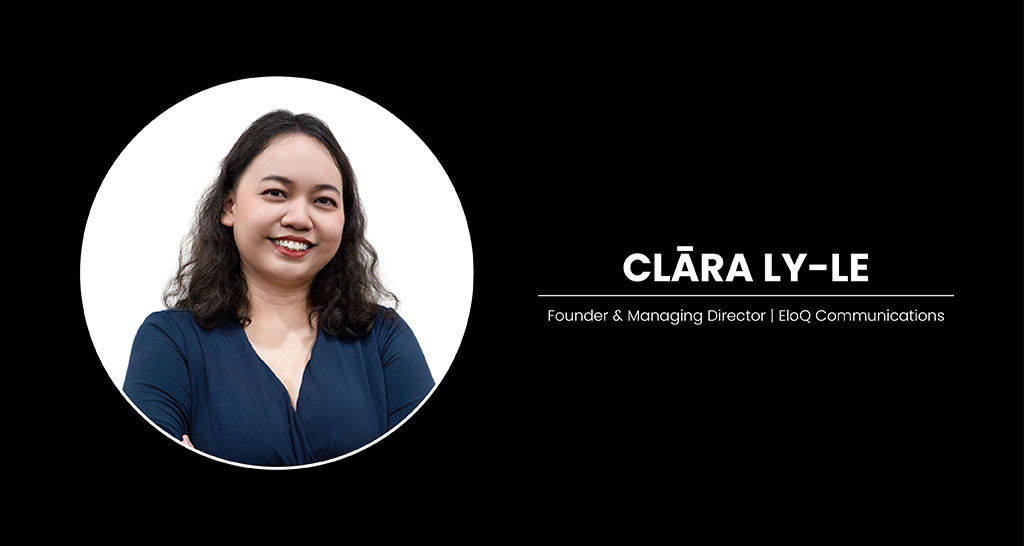
Interview With Clāra Ly-Le, Founder & MD Of EloQ Communications

Clāra Ly-Le, Founder and Managing Director of EloQ Communications, a leading PR and marketing agency in Vietnam, has over a decade of experience blending sharp business insight with a bold, innovative approach that challenges industry norms. Alongside her leadership at EloQ, she serves as Vice Dean of the Faculty of Public Relations and Communications at Van Lang University, where she bridges academia and industry by equipping students with real-world skills and driving the professional growth of Vietnam’s PR sector. Respected as both an industry leader and an educator, Clāra is dedicated to nurturing talent and shaping the future of communications.

Here are the key highlights from the interview:

Q1. Brief the inception story of your organization? What inspired you to establish ELoQ Communications?

I am Clāra Ly-Le. EloQ Communications was born out of my vision to bridge global best practices in public relations with the unique cultural and market dynamics of Vietnam and the ASEAN region. I saw a clear gap that, while Vietnam’s communications industry was vibrant and full of potential, many brands, both local and international, struggled to connect authentically with Vietnamese audiences, and local agencies often lacked a truly global outlook.

In 2018, I founded EloQ Communications to address this need. From day one, our mission has been to combine strategic insight, creativity, and cultural sensitivity to help clients tell their stories in ways that resonate both locally and globally. Today, EloQ is a multi-award-winning agency serving clients from startups to Fortune 500s across ASEAN, helping brands tell their stories with clarity, creativity, and cultural intelligence.

Q2. What are the initial challenges that you faced during the inception and how did you overcome those challenges?

At the start, the challenge was shifting mindsets in Vietnam’s PR industry from transactional, pay-for-play media to ethical, strategic communication. We invested time in educating clients on the long-term value of authentic storytelling and relationship-building. Another hurdle was earning credibility as a young agency among established competitors. I overcame this by leveraging my PhD expertise, international network, and proven results to build trust. By staying transparent, delivering measurable outcomes, and upholding high professional standards, EloQ established itself as a multi-award-winning agency known for integrity, creativity, and cultural intelligence across Vietnam and ASEAN.

Q3. Can you share your leadership journey and what inspired you to become a leader in your field?

My path to leadership has been about adaptability and vision. I embrace a collaborative style, empowering people to bring their ideas forward and own their results. What inspires me most is seeing both my team and clients grow, whether that’s a young professional gaining confidence or a brand finding its authentic voice. Leadership, for me, is about creating an environment where trust, creativity, and shared success thrive.

Q4. What key qualities do you believe are essential for a leader in today’s business world?

Adaptability to navigate shifting markets and technologies, empathy to understand and connect with diverse stakeholders, and integrity to make decisions that build long-term trust.

Q5. What trends do you believe will shape your industry in 2025 and beyond?

I see three major trends shaping PR in 2025 and beyond: the rise of AI-powered tools transforming how we monitor, analyze, and personalize communication; growing demand for authenticity as audiences become more skeptical of polished corporate messaging; and deeper integration of ESG narratives as businesses are held accountable for social and environmental impact.

Q6. What advice would you give to aspiring leaders looking to make a difference in their respective fields?

Focus on impact, not just position. Build your network with authenticity; relationships often open doors skills alone can’t. And never compromise your integrity. Trust is the currency that sustains influence over the long term. Most importantly, lead with purpose. When your decisions align with a clear mission, you’ll inspire others and create change that lasts.

Q7. Can you describe the primary area of innovation you are focusing on within your business?

At EloQ Communications, our key innovation lies in crafting culturally intelligent, fully integrated campaigns that cut through the noise in Vietnam and across ASEAN. We specialize in tailoring brand messages so they resonate across multiple channels – traditional media, social platforms, and on-the-ground activations – while preserving authenticity. What sets us apart is our commitment to measurable impact: every campaign is backed by clear KPIs and transparent reporting. This ensures our clients, from local disruptors to global leaders, gain not only visibility but also long-term trust and influence in their target markets.

Q8. Brief us about your future roadmap?

Looking ahead, EloQ Communications will expand our footprint across ASEAN, building a stronger network of local experts to deliver seamless multi-market campaigns. In Vietnam, we aim to develop new service lines, such as advanced crisis readiness programs and sector-specific PR consulting, to address the evolving needs of our clients. We will continue to invest in talent development, ensuring our team stays ahead of industry trends while maintaining the cultural intelligence that defines our work. Our goal remains clear: to be the trusted partner for brands seeking high-impact, authentic communication that builds lasting influence in Southeast Asia.