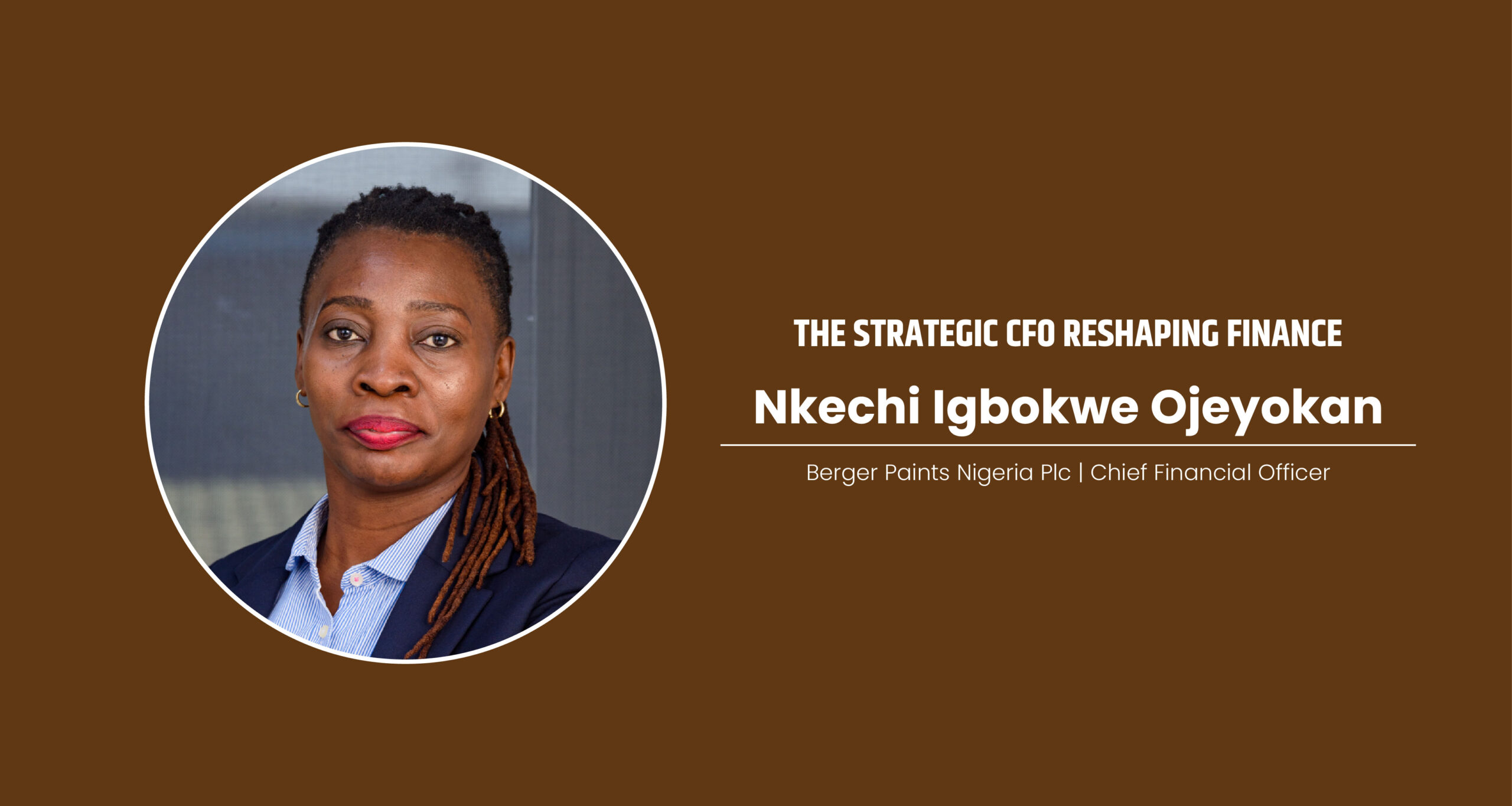
Nkechi Igbokwe Ojeyokan: The Strategic CFO Reshaping Finance

In the fast-moving corridors of Nigerian business, where volatility in markets and unpredictability in policy shifts often test the resilience of companies, one finance leader stands out for her ability to combine discipline with innovation. Nkechi Igbokwe Ojeyokan, the Chief Financial Officer of Berger Paints Nigeria Plc, has built her reputation as one of the most strategic CFOs redefining what financial leadership means in 2025.

Her journey from a young finance graduate in the UK to the executive suite of one of Nigeria’s most respected manufacturing companies is not just a chronicle of steady career progression it is a case study in adaptability, foresight, and the power of finance to influence corporate destiny.

The Making of a Finance Leader

Nkechi’s story begins with a rigorous academic grounding. In 2007, she earned an MSc. in Finance and Investment at the University of Ulster, Coleraine. Like many ambitious young professionals, she cut her teeth in temporary roles in accounts receivables in the UK before returning home to Nigeria. That decision set her on a trajectory that would eventually establish her as one of the country’s leading voices in finance.

In 2009, she joined Nigerian Breweries Plc, a member of the Heineken Group and one of the largest companies in West Africa. Her entry role as a Financial Control Analyst gave her a first real taste of what corporate finance demanded: accuracy, speed, and insight. She handled product variance analysis, functional expense reporting, and deviation commentaries tasks that sharpened her analytical eye and taught her how numbers tell a story far beyond ledgers.

As she rotated through roles including Interim Payment Accountant and Internal Audit Assistant she developed a well-rounded skillset. Vendor payments, ERP migration, audit preparation, and the creation of a key control framework exposed her to a wide spectrum of business operations. These years built the foundation for her ability to see finance not just as an administrative function, but as a lens for understanding the entire business.

Rising Through the Ranks

By 2012, Nkechi was promoted to Business Unit Controller for Lagos, a role that placed her closer to management decision-making. Suddenly, finance was no longer about reporting past performance it was about shaping future outcomes. She partnered with business leaders, embedded controls, and ensured financial integrity aligned with operational goals.

Her upward trajectory continued in 2015 when she was appointed Business Controller for the West Zone. Here, she managed financial operations across seven sales regions in eight states. The scale was staggering: managing credit of ₦9.2 billion to generate revenues exceeding ₦124 billion by 2019.

Under her leadership, Nigerian Breweries achieved remarkable cost discipline and revenue growth. Bad debt levels were maintained at less than 0.05% of revenue. Through rigorous budget monitoring, she delivered savings of 15% against planned spending. Control compliance stood consistently above 90% from 2017 to 2019. But perhaps just as importantly, Nkechi honed her skills as a leader of people mentoring direct reports, driving performance management, and learning how to inspire teams to deliver at scale.

A Defining Chapter at Champion Breweries

If her years at Nigerian Breweries were about honing her craft, her tenure at Champion Breweries Plc was about transformation. In 2020, she was appointed Finance Director of the Heineken-owned company a promotion that came with steep challenges.

The world was in the grip of the COVID-19 pandemic. Nkechi, now a mother of two young children, relocated across Nigeria to assume her new role. Beyond finance, her responsibilities expanded to include Procurement and IT functions she had no prior experience in.

It was a trial by fire. Yet, under her leadership, Champion Breweries thrived. Between 2020 and 2022, revenue surged by 77% and net profit skyrocketed by 841%. She introduced pricing and discount strategies, optimized distribution costs through investments in logistics, and doubled the company’s cash balance.

Governance improvements were equally significant: policies were updated, customer contracts revised, risk registers overhauled, and fixed asset verification completed. A 2 billion loan was secured from the Bank of Industry at a single-digit interest rate, fueling critical projects. Most impressively, she led a team of 13 professionals across Finance, Procurement, and IT, molding them into a cohesive, high-performing unit.

This chapter, Nkechi recalls, was the defining moment of her career. It forced her to expand beyond her comfort zone, to lead with urgency, and to rely on collaboration and resilience. It also deepened her understanding that finance leaders must be business leaders first.

Driving Growth Across Industries

By 2023, Nkechi transitioned to The Big Bottling Company, a member of the AJE Group, as CFO. The challenge this time was market re-entry. She negotiated with vendors to restore supply chains, engaged bankers to reinstate loans, and crafted financial plans to stabilize the business. Managing a cross-functional team spanning Finance, IT, and HR, she ensured the company was positioned for sustainable performance.

Her tenure here reinforced one of her core strengths: navigating volatility with calm, precision, and creativity. Whether through working capital management, stakeholder engagement, or vendor relationship rebuilding, Nkechi demonstrated that the CFO role extends well beyond numbers.

The Berger Paints Era

In 2024, Nkechi accepted the role of CFO at Berger Paints Nigeria Plc, a company with a legacy as vibrant as its products. Berger Paints, listed on the Nigerian Exchange, is a pioneer in paint and allied manufacturing. For Nkechi, the role represents both a culmination of her career and a new frontier.

The results under her leadership have been transformative. Revenue grew by 36% in 2024 compared to 2023, while profit after tax climbed 31%. Gross profit margins improved by 10%. She reduced financial reporting timelines from ten working days to three, introduced weekly and monthly dashboards, and optimized working capital through inventory management.

Leading a team of seven finance professionals, she has fostered a culture of accountability and performance. At Berger Paints, she is not just a steward of the balance sheet she is a strategist driving growth, profitability, and long-term sustainability.

Redefining the CFO Role in 2025

The modern CFO is no longer a back-office guardian of books. In 2025, the role is defined by strategy, risk management, regulatory compliance, and technological adaptation. Nkechi embodies this evolution.

She engages actively with functional heads to highlight performance gaps and drive timely corrective actions. She keeps herself informed through professional memberships and industry networks, ensuring her knowledge of compliance, governance, and technological trends remains current. Just as crucially, she prioritizes people development, mentoring her team to achieve both organizational and personal career goals.

For her, the CFO role is about partnership with the CEO, with the board, and with every function of the business. Finance is the anchor, but strategy is the sail.

Principles and Resilience

At the heart of Nkechi’s leadership are two core principles: quality and business knowledge. Accuracy in financial data, she insists, is the bedrock of good decision-making. Equally, an intimate knowledge of the business allows finance professionals to spot anomalies, understand cost drivers, and make recommendations that truly matter.

Her resilience is rooted in perspective. She reminds herself that she is never alone many professionals face similar pressures. By staying organized, prioritizing key tasks, and keeping communication channels open, she maintains focus even in high-pressure situations.

Mentorship and Giving Back

Nkechi’s success has been shaped by mentors, particularly during her time at Nigerian Breweries. A structured mentorship program provided her with clarity, guidance, and a roadmap for career progression. Today, she pays that forward. She mentors young professionals, encourages them to define career paths, and challenges them to develop the skills and focus required for leadership.

For her, mentorship is not just about giving advice it is about opening doors, sharing experiences, and instilling confidence in future finance leaders.

Lessons from Risk and Volatility

The 2023-naira devaluation and rising inflation rates posed one of the toughest financial risks of her career. With raw material and energy costs soaring while consumer purchasing power declined, pricing strategies alone were insufficient. Instead, she championed alternatives: sourcing substitute materials, adjusting production schedules, and introducing new products.

The episode reinforced a critical lesson: agility is non-negotiable. In today’s business environment, leaders must always prepare alternatives to pivot swiftly when circumstances change.

Advice for Tomorrow’s CFOs

For finance professionals aspiring to become strategic CFOs, Nkechi offers five guiding principles:

Know the business—finance leaders must understand their industries beyond the numbers.

Build strong teams—engaged, motivated people deliver sustainable results.

Network and learn—stay connected with peers, associations, and industry trends.

Be a true partner—work with functional heads, hold yourself accountable, and uphold the highest standards.

Think long-term—build strategies that deliver on both immediate and future company goals.

The Legacy of a Strategic CFO

In the world of finance, few roles are as pivotal as the CFO’s. Yet few leaders manage to transform the role into a lever for organizational growth, resilience, and innovation. Nkechi Igbokwe Ojeyokan has done just that.

Her career is a blueprint for the future of financial leadership rooted in strong technical expertise, expanded through strategic thinking, and elevated by people-centered leadership. At Berger Paints Nigeria Plc, she is proving that the CFO of the future is not just a numbers custodian but a strategist, mentor, and visionary.

As 2025 unfolds, Nkechi stands as a symbol of what finance can achieve when it is bold, forward-looking, and deeply attuned to the business it serves. She is, without question, one of the most strategic CFOs reshaping the role of finance in Nigeria and beyond.

How Female Entrepreneurs Are Rewriting the Future of Business

There is a tremendous movement that is currently taking place in the world of business, and male and female entrepreneurs are at the forefront of this shift.  The persons who are actively participating in this transition are the ones who are taking the initiative to push it. Women are breaking down barriers, reinventing industries, and redefining what it means to be successful in today’s economic setting. In the past, women were under-represented in the ecosystem of entrepreneurs, but now they are breaking down those barriers. When compared to the past, this is a tremendous shift.  The expanding impact of these individuals is not only serving as a source of motivation, but it is also contributing to the building of a future that is more forward-thinking and friendly to all communities from all walks of life.

When it comes to leading and making decisions, one of the most crucial adjustments that female entrepreneurs bring to the table is a fresh viewpoint. This is one of the most important things that they bring to the table.  There are many options that they offer, but this is one of the most significant ones. The socially conscious values of cooperation, empathy, and community impact are particularly resonant in today’s economy, and many businesses that are led by women place a significant emphasis on these characteristics. This is because these values are extremely effective in fostering social consciousness.    When this method is utilised, the results are, in most cases, cultures in the workplace that are more robust, increased levels of employee happiness, and sustained loyalty from customers. Female entrepreneurs are proving that it is feasible for businesses to flourish while simultaneously bringing about significant change. This is making it possible for women to be business owners. This is being accomplished by placing an emphasis, in addition to profit, on the purpose of the organisation.

Increasing the amount of capital that women in business have access to has been one of the most significant challenges that women in business have encountered throughout the course of business history. Although female entrepreneurs obtain a smaller proportion of venture capital than their male counterparts, there is evidence that they possess a tremendous knack for invention. Crowdfunding, microloans, and investment networks that are expressly targeted for women are some examples of alternative methods of financing. However, this list is not exhaustive.  These strategies are being utilised by a sizeable number of persons at the present time. This not only exemplifies their dogged drive, but it also demonstrates the enormous potential for providing greater equity to businesses that are managed by women.  In addition to demonstrating their tenacious resolve, the fact that they were able to overcome financial obstacles is a testament to their perseverance.

The development of technology and the proliferation of digital platforms have both contributed to an increase in the number of chances that are available to female entrepreneurs on the market today.    Two examples of the ways in which women are making use of digital resources to accelerate the speed with which they can establish, scale, and globalise their enterprises include e-commerce and marketing through social media. These are only two instances. Women can communicate directly with customers, establish brands in an authentic manner, and compete with larger corporations in their respective industries because to the platforms that are available to them.  The reason for this is to ensure that everyone is on an equal footing and to make the situation more egalitarian.

In addition to achieving success in their own businesses, female entrepreneurs are also making significant contributions to the growth of ecosystems that enable other individuals to achieve their full potential.   A significant number of individuals are engaging in activities such as reinvesting in their communities, providing guidance to women who are on the verge of becoming leaders, and generating opportunities for others to develop their skills and abilities.    The impact that they have is amplified because of this ripple effect, which ultimately guarantees that the future of business will not only be innovative but also more equal and diverse. This is because the ripple effect has a multiplicative effect.

They are rewriting the laws of business to make it more inclusive, resilient, and forward-thinking to accommodate the growing number of women who are entering the sphere of entrepreneurship, which is a trend that is expected to continue throughout the foreseeable future.  When it comes to the subsequent phase of economic expansion on a global scale, the emergence of female entrepreneurs is not merely a passing trend; rather, it is a movement that is significantly affecting the subsequent phase of economic expansion. This is because female entrepreneurs are more likely to be successful than male entrepreneurs.

NVIDIA Introduces an Enterprise-Grade AI GPU, Setting a New Standard

NVIDIA debuted its next-generation Blackwell Ultra architecture, which is intended to drive enterprise AI in the future, at GTC 2025 and Computex Taipei in May. Currently the most powerful GPU NVIDIA has ever released, the flagship GPU, called Blackwell Ultra, is designed for large-scale inference, agentic, and reasoning workloads.

The foundation of the GB300 NVL72 system is this innovative hardware, which consists of a liquid-cooled rack configuration that combines 36 Grace CPUs and 72 Blackwell Ultra GPUs. According to NVIDIA, it outperforms the GB200 system by up to fifty percent. By using Dell-built servers that are currently housed in CoreWeave’s cloud infrastructure, CoreWeave and Dell Technologies have already become the first to implement this platform at scale.

NVIDIA unveiled the RTX PRO 6000 Blackwell Server Edition, a data-center GPU designed for enterprise inference, scientific computing, and round-the-clock operations, concurrently with the Ultra launch. It offers significant speed and flexibility gains thanks to its 96 GB GDDR7 memory, up to 24,064 CUDA cores, and support for MIG (Multi-Instance GPU), which allows it to run multiple isolated workloads. In comparison to previous generation GPUs, real-world benchmarks report up to 5× faster LLM inference, nearly 7× genomic sequencing, 3.3× text-to-video generation, and 2× improvements in recommendation engine and rendering tasks.

In addition to bringing massive memory (96 GB) and AI-first optimisations to the desktop environment for designers, developers, and data scientists, the RTX PRO 6000 Workstation Edition was designed under the new RTX PRO brand, which replaced the previous Quadro and Ada naming schemes.

With the launch, NVIDIA is positioned to spearhead the shift to AI factories, which are highly optimised enterprise infrastructure for both physical and agentic AI. NVIDIA provides full-stack solutions that integrate hardware, networking, and software based on the Blackwell Ultra and AI Enterprise platforms through alliances with Dell, HP, HPE, Cisco, Lenovo, and other companies.

NVIDIA’s Blackwell Ultra is a significant advancement for AI in the enterprise, accelerating previously impractical workloads and redefining the standards for reasoning and large-scale inference. Commercial deployments are already underway, and it offers enterprise-grade performance at scale.

Interview With Elinor Stutz, CEO of Smooth Sale

Elinor Stutz, International Best-Selling and Evergreen Author, Top 1% Influencer, and
Inspirational Speaker, is renowned for breaking barriers in sales and leadership. Defying
the notion that “women can’t sell,” she became the top producer at every company she
worked for. Known as “The Walking Miracle” after surviving a broken neck, she leads
Smooth Sale with the empowering motto: “Believe, Become, Empower.” Her book Nice
Girls DO Get the Sale is a global bestseller and timeless classic, while her blog ranks
among the world’s top sales resources.

Here are the key highlights from the interview:

Tell us about the inception story of Smooth Sale. What inspired you to establish the organization, and what vision guided its foundation?

My sales career began with blatant discrimination due to being a female ahead of my time. My first job entailed mind-boggling efforts to get me to quit, but all the while, my clientele referred to me as ‘A breath of fresh air.’ Without training, by the fourth month, I became the top sales producer for the ‘games’ to grow uglier.

At the end of each year, over eleven years, management gave my hard-earned accounts to the men and tripled my quota for the following year. The only good news is that I became aware of ‘How to sell myself on interviews.’

Upon exiting my sales career, I was stopped at a red light when my life changed forever. Slammed into the rear of my car by another, I could feel my brain swaying in my head. No doctor wanted to touch me. For ten years, I was in dreadful pain, needing to put the back of my head in a noose, hanging from a door knob so that I could lie on the floor to relieve some of the pain. Ten years later, as a passenger on a rainy night, we encountered a second accident had me transported by an ambulance to the hospital.

It was while lying on the gurney as I was awaiting admission to the hospital, that a brilliant gold light encased my entire body, and then two visions, one after the other, appeared before me that would change my life forever. The first vision pictured me being a speaker, to which I whole-heartedly agreed. The second vision showed my life report card – high marks on the left-hand side, but completely blank on the right side, entitled ‘Community Service.’ I immediately pledged, in

my mind, to begin giving back to communities any way I could, but (being a sales negotiator), I added: ‘To give my best, I need to walk out of the hospital on my own!’ A blink of a gold light indicated to me that I would recover.

It was in the hospital ICU, upon recovering from surgery due to having endured an ‘irreparable broken neck,’ and being deemed ‘the Walking Miracle,’ that I knew that I was finished with corporate. My near-death experience highly motivated and inspired me to mentally lay out the plan for my third entrepreneurship, Smooth Sale; the definition being, ‘Earning a returning and referring clientele.’’

I have to date enjoyed an extra 23 years of life, and my commitment to serving communities is still alive today—the purpose of the Smooth Sale Blog is to help readers advance their careers and businesses. As a collaborative person, leaders in varying industries contribute content based on their experiences, helping to provide a wider array of insights from their unique experiences. The appreciation and opportunities due to the project are far greater than I could ever have imagined.

Every business has its share of hurdles in the beginning. What were some of the key challenges you faced in building Smooth Sale, and how did you overcome them?

I began with a symbolic ‘blank piece of paper’, not knowing the executives’ willingness to take a chance on a female sales trainer –the possibilities were almost zero. However, I became familiar with and admired the head of the Chamber of Commerce in our town, and I asked her for a meeting. Slowly but surely, the introductions she provided helped me to transform my knowledge into a fun and prosperous sales training program.

My technique is to ask open-ended questions for learning and to realize a better path forward. Accordingly, I created sales training materials for entrepreneurs and sales teams. My style was to ask questions upfront, such as, ‘How do you attract prospects’ attention?’

Another vital element is to share appropriate short stories from experience that produce laughter and the desire to learn more. Glowing testimonials came from both entrepreneurs and Silicon Valley sales teams that I had the privilege of training. I can proudly say that every session concluded with appreciation and applause.

The good and bad news is that the rave reviews did not follow upon moving North. Upon introducing myself as a sales trainer at a new event, the jeers were unimaginable. Thankfully, someone took me aside to say, ‘To establish credibility, you must write a book!’

My phone was silent, so there was nothing to lose with much to gain. All the horrific corporate stories came to mind; my goal was to reveal to readers how I was able to stand my ground and also ‘up the game’ so that they could do the same.

The manuscript broke many records, as did the formal publication of the book: The first publishing house agreed to publish the manuscript. The book was featured in TIME Magazine, and I appeared on ABC-TV News.

Nice Girls DO Get the Sale: Relationship Building That Gets Results very quickly became an International Bestseller. The ultimate achievement is that the book is Evergreen – among the classics!

Can you share your personal leadership journey? What experiences and turning points shaped your path as a leader in the business growth and sales transformation space?

Childhood was the perfect practice for what was to be. As a child, I was always inquisitive, relying on the question, ‘Why?’ For example, at age 10, I asked to sell Girl Scout cookies door-to-door. My mother told me it was unsafe to do so and to give the issue some thought. Accordingly, I thought of every possibility I could. At dinner, I let it be known that I gave much thought to my request and have one question. If it’s unsafe for me to sell Girl Scout cookies door-to-door, then why is it okay for you to do the same for the March of Dimes?’

The next morning, my very first prospect was an elderly lady. She kindly told me that her doctor gave her strict instructions to omit sugar from her diet; therefore, she was unable to purchase any cookies from me. The woman then politely closed the door.

However, I stood on the porch debating ‘whether to ask a question or not,’ my mother wasn’t certain what was going on with me as she was observing. About ten minutes later, the woman reopened the door to ask if I had a question. I then asked if she had any nieces, nephews, or grandchildren. Surprised, she said, “Yes, I do!’ I then asked, ‘Don’t you think they might visit more often if you kept a supply of snacks and treats in your pantry?’

Astonished, the woman looked at my mother while pointing at me to say, ‘Wow, she is good!’ She then purchased ten boxes of the Girl Scout cookies.

On a more disturbing front,  growing up among bullies, I learned how to not only defend myself but also turn the tables on them, despite being smaller and not nearly as strong. Our selection of words is vital for standing our ground, plus influencing clientele. 

The daily practice gave me the knowledge and the courage to stand up in the corporate arena for what was right. I’m one who took two different employers to court because they were attempting to cheat me out of bonuses that I rightfully earned. Each time, the judge banged the gavel so hard that most people in the courtroom jumped, as they exclaimed, ‘Pay her the money today!’

How have you personally driven innovation and transformation through your vision and leadership at Smooth Sale? Can you share a specific example where your approach created a significant impact?

To date, I have enjoyed an extra 23 years of life. My commitment is always with me to serve communities at large. The purpose of the Smooth Sale Blog  is to help readers advance their careers and businesses. As a collaborative person, I have others contributing content, helping to provide a wider array of insights and stories depicting how to advance one’s career and other endeavors. The appreciation and opportunities due to the project are far greater than I could ever have imagined.

How would you describe your personal leadership style, and in what ways do you nurture creativity, resilience, and emotional intelligence in the people you work with?

Long ago, a marketing expert advised that I drop being so highly competitive to become collaborative. The idea was frightening, but I was willing to give it a try. Almost magically, opportunities seemingly began to appear. Incorporating my sales style, I always encourage asking a question upfront to learn ‘why’ someone might want to work with me. The question has the other person speaking first so that I can ask questions as needed for a fuller understanding upfront.

Next, I ask more questions relating to how they see their progression forward and how they potentially view our working together and the benefits we may all derive from the collaborative effort. Finally, I have the necessary information to realize how to frame my experience to their interests and needs for us to find a meeting of the minds.

What does the future roadmap look like for you and Smooth Sale? Are there any upcoming initiatives, goals, or expansions you’d like to highlight?

I’m the creative type, so ideas are always with me. For now, the collaborative effort online, primarily via LinkedIn, is how I meet and connect with people globally, to realize with whom to connect, why others reach out to me for a connection, and ultimately, explore new possibilities.

In your view, what are the most essential skills or qualities leaders will need to thrive and make a meaningful difference in the future?

Our future is rapidly changing for how we will live and work. Curiosity is a critical component as it encourages one to learn about the latest findings concerning business, plus how regulations affect it. Next, one needs to connect the dots from their learning regarding the news, personal conversations, articles, and posts, and the outcomes of one’s efforts.

Moreover, not everyone is technically savvy, making it more critical to collaborate with others as Agentic AI and Robotics are seemingly taking over the workspace environment. More than ever, it is vital to be of a collaborative mindset both in the corporate environment as well as entrepreneurial endeavors to perform and serve others to one’s best.

Is there a personal message or guiding philosophy you’d like to share with our readers that best reflects your vision, values, and purpose as a leader?

One of my sayings is, ‘Our worst experiences can be our gifts in disguise when we are willing to learn from them.’

For example, being bullied daily as I was growing up, pointed me toward speaking to my reflection in the mirror in my room. I would take all the negative commentary directed at me to relay the pros and cons of what was stated, and for ideas to come to mind on how to proceed. And all the while, I would observe my facial expressions, hand gestures, and body language as my reflection, as I carried on the conversation. All of it proved to be outstanding sales training, unbeknownst to me at the time.

And of course, my commitment during my near-death experience to serve communities saved me to save others. Discrimination against women never stopped. Accordingly, the online blogging effort became my method for helping my audience to reach their goals and for me to enjoy my work on an ongoing basis. I feel privileged to be living my second life!

Dr. Krantz Mwantepele: Redefining Business, Creativity, and Financial Inclusion in Africa

Inside the Visionary Journey of Dr. Krantz Mwantepele, CEO of KONCEPT Group

In the fast-evolving business landscape of Africa, few names stand out as prominently as Dr. Krantz Mwantepele. As the CEO of KONCEPT Group, his vision has consistently challenged conventions, blending creativity with pragmatic solutions to shape a new narrative of African innovation. From humble beginnings to leading a multi-sector powerhouse, Dr. Mwantepele’s journey is not merely one of success but a blueprint for transformative leadership.

The Birth of a Visionary Enterprise

The story of KONCEPT Group begins in 2015, born out of both necessity and a bold vision. At a time when African businesses struggled to articulate their narratives on the global stage, Dr. Mwantepele recognized a critical gap. “Too often, global narratives overshadowed local ones,” he reflects, “and I believed there was space for an African-owned, African-rooted agency that could bring creativity, strategy, and influence to the forefront.”

Starting with a small, determined team, KONCEPT rapidly evolved from a modest public relations and marketing agency into an award-winning, five-star-rated powerhouse operating across multiple sectors. But Dr. Mwantepele’s ambitions extended far beyond the typical agency model. KONCEPT’s growth trajectory has been marked by an unwavering commitment to solving real African challenges, culminating in the launch of the revolutionary TIERS platform.

Leadership Shaped by Resilience and Insight

Dr. Mwantepele’s early career laid the foundation for his unique leadership style. Working in media and brand consultancy, he gained firsthand insight into the power of storytelling, but more importantly, into the systemic gaps that hindered effective communication across Africa. “True leadership,” he asserts, “means building solutions that transform entire ecosystems.”

This systems-thinking approach underpins KONCEPT’s evolution. From traditional PR campaigns to launching TIERS a financial technology platform designed to address Africa’s $55.6 billion remittance challenge Dr. Mwantepele’s philosophy is clear: do not just communicate; solve problems.

KONCEPT’s Distinct Edge

In a saturated industry, what sets KONCEPT apart is its dedication to delivering real-world solutions. “We don’t just communicate we solve problems,” Dr. Mwantepele emphasizes. Through platforms such as Ubaoni Ad and Koncept Metrics, the agency built a reputation for excellence in public relations. But the real game-changer has been TIERS.

TIERS is not just another fintech app it is the first African platform that seamlessly integrates peer-to-peer cross-border transfers, USD savings with daily yield opportunities, and local merchant discovery. In doing so, it confronts the three pressing pain points of Africa’s unbanked population: prohibitive remittance costs, lack of stable currency savings, and fragmented local commerce.

Innovation in Action: Adapting to Evolving Markets

As client expectations and media landscapes shift, KONCEPT doesn’t merely adapt it leads the change. Dr. Mwantepele explains, “Africa’s young, mobile-first population demands integrated solutions.” With TIERS, this insight became action. By eliminating transfer fees through peer-to-peer transactions, enabling USD savings, and connecting consumers with local merchants, TIERS anticipates needs rather than chasing trends.

The upcoming launch of TIERS across eight African countries this October marks a milestone in this strategic vision. It’s more than a product release it’s a declaration of KONCEPT’s commitment to pioneering integrated, value-driven solutions.

Overcoming Challenges: Turning Obstacles into Opportunity

Building KONCEPT into a five-star agency and expanding into fintech was not without hurdles. “The biggest challenge,” Dr. Mwantepele reflects, “was always seeing beyond immediate problems to systemic solutions.” Early financial constraints taught the team to innovate under pressure a skill that proved invaluable when developing TIERS.

Recognizing that Africa’s $55.6 billion in annual remittance flows were more than just numbers they were individual stories of struggle Dr. Mwantepele and his team, including fintech expert co-founder Jonatas Kirsch, set out to build a solution from scratch. Their approach blended deep market intelligence with robust technology, securing $1 million in intellectual property value and strategic partnerships along the way.

Future-Ready Innovation

Staying future-ready in a rapidly digitizing environment requires more than trend analysis it demands proactive creation. “We build tomorrow’s solutions today,” Dr. Mwantepele asserts.

TIERS exemplifies this forward-looking mindset. With over 10,000 early adopters and a $300,000 pre-seed fundraising target aimed at reaching 200,000 users in Tanzania alone, the platform is demonstrating the power of community-driven growth. Not reliant on expensive advertising, its success is largely referral-driven, underscoring a core belief in authentic, needs-based innovation.

Advice for the Next Generation

To aspiring PR and marketing professionals aiming to make their mark in Africa, Dr. Mwantepele’s counsel is unequivocal: think beyond communication to transformation. “Africa’s challenges require entrepreneurs who can build comprehensive solutions,” he says.

Drawing from the TIERS journey, he highlights the importance of addressing systemic problems. It’s not enough to craft compelling messages; success lies in solving real-world issues that impact millions. Mastery of craft must be married with a relentless focus on identifying and solving interconnected challenges.

Essential Skills and Values for Success

In Dr. Mwantepele’s view, systems thinking is essential. TIERS succeeds precisely because it doesn’t tackle problems in isolation but addresses multiple interrelated pain points. Crucial skills include data literacy, cross-border cultural intelligence, and, perhaps most importantly, the ability to build and maintain trust in communities where traditional institutions have faltered.

“Integrity and genuine problem-solving matter most,” he stresses. The referral-driven growth of TIERS, where 60% of new users are word-of-mouth recommendations, stands as proof of the efficacy of this values-driven approach.

The Future of PR and Marketing in East Africa

Looking ahead, Dr. Mwantepele sees a paradigm shift in East Africa’s communications landscape. The future belongs to platform-driven storytelling that delivers tangible value. He explains, “TIERS is not just a financial platform it’s a marketing ecosystem connecting local merchants with consumers.”

With half the world’s youth projected to be African in 25 years, the demand for platforms that seamlessly combine communication, commerce, and financial services is set to soar. KONCEPT’s role is clear: lead the way in demonstrating that African companies can build globally competitive, locally relevant solutions.

A Legacy of Impact

Dr. Mwantepele envisions KONCEPT’s legacy not merely in accolades but in tangible impact. “We aim to be remembered as the company that proved African innovation can solve African challenges,” he says.

The upcoming TIERS launch represents a pivotal chapter in this legacy. Beyond its innovative features, TIERS embodies KONCEPT’s integrated approach across six sectors: Media & Public Relations, Technology & Digital Solutions, Real Estate & Advisory, Insurance & Financial Services, Agribusiness & Sustainability, and Events & Production.

With operations in Tanzania, Kenya, South Africa, UAE, USA, and Sweden, KONCEPT Group combines unmatched market intelligence with a strong operational presence. The firm’s successful pre-seed fundraising, early customer traction, and $1 million in secured intellectual property mark TIERS as not just a fintech solution but a transformative force.

Conclusion: The African Vision Realized

Dr. Krantz Mwantepele’s journey is a powerful narrative of vision, resilience, and systemic innovation. As KONCEPT continues to break barriers, its mission remains steadfast: to redefine African business, creativity, and financial inclusion by building solutions that matter.

TIERS is not merely an app it is the financial revolution Africa has been waiting for. It stands as a testament to what happens when bold ideas meet dedicated execution, proving once again that the future of African business is homegrown, innovative, and globally competitive.

From Ideas to Impact: The Creative Edge of Today’s Top Marketing Agencies

When it comes to the fast-paced digital marketplace of today, marketing firms are no longer only service suppliers; rather, they are catalysts for transformation. As a result, it can be deduced that they comprise more than merely service suppliers. To assist brands in distinguishing themselves from the competition and connecting with audiences in meaningful ways, the most successful advertising agencies have perfected the art of putting daring ideas into actual action by blending creativity, analytics, and technology. This skill has allowed them to help brands differentiate themselves from the competition.  Doing so is done with the intention of assisting brands in engaging with audiences in meaningful ways.

One possible explanation for their success is because they have never wavered in their dedication to invention, which serves as the motor that propels their entire business. All the most successful marketing businesses are fully aware of the fact that amazing ideas are the foundation of good marketing, but they also recognise that this is not the end of the story about marketing.    They are well-versed in the capacity to transfer a spark of inspiration into campaigns that resonate with people, engage them, and create measurable effects. This is something that they can do.  When it comes to advertising, these agencies have a flair for breaking new ground without losing sight of the commercial goals they are seeking to achieve.  This can be accomplished using a social media strategy that is disruptive, an event that provides an immersive experience, or a digital advertising campaign that is hyper-targeted.

It is one of the characteristics that distinguishes outstanding agencies from other agencies that they could combine creative thinking with analytical thinking.  They do not put all their faith in their gut feelings; rather, they combine audacious ideas with insights gleaned from market trends, customer behaviour, and performance statistics.  This gives individuals the ability to make judgements that are better informed. Not only does this technological advancement, which is driven by data, ensure that campaigns are visually appealing, but it also ensures that they are strategically linked with the aims of the firm and the requirements of the audience.    Not only does the final product result in marketing that is successful, but it also delivers the sense that it is something that has just been introduced.

In addition, the process of working together is the source of their creative advantage, which is rooted in innovation. Members of the interdisciplinary teams that are assembled by advertising organisations that are currently experiencing the most success include copywriters, designers, data scientists, and user experience specialists. These advertising companies are currently experiencing the greatest success.   These teams collaborate in a fluid manner to translate ideas into multi-channel campaigns that have a significant impact on the audience with whom they are aiming to communicate. Because they have access to such a wide array of viewpoints, they can approach issues from several various points of view.  This guarantees that every proposal is put to the test, developed, and amplified to attain the greatest possible reach and effect to the greatest extent possible.

When it comes to the most crucial factor, the most successful marketing companies are always modifying their plans to adapt new trends. So that they may continue to maintain a competitive advantage in their sector, they have embraced emerging technologies such as augmented reality, predictive analytics, and customisation that is powered by artificial intelligence. To ensure that their clients continue to be relevant in a landscape that is constantly altering, they maintain their agility and are prepared to change their plans in response to changing market conditions and trends. This permits them to ensure that their clients continue to be relevant.  This is done to ensure that their clients will continue to be relevant in the future.

Marketing companies that are currently enjoying the highest levels of success are those that are situated at the intersection of creativity and strategy, which encompasses everything from ideas to impact. These companies are currently seeing the greatest levels of success.    It is not only that they are able to transform ideas into campaigns that not only garner attention but also motivate individuals to act, but they are also able to do it by combining creative thinking with the precision that is supported by statistics. In a world in which consumers are continuously being inundated with content, the ability to resist this onslaught is the most important distinguishing characteristic that divides one competition from another.

The Future Of Wealth Management: 2025’s Must-Have AI Tools

The wealth management industry is undergoing a technological transformation in the year 2025. Artificial intelligence (AI) is emerging as the driving force behind the development of financial services that are more intelligent, faster, and more individualised. Artificial intelligence (AI) solutions that incorporate data analytics, automation, and predictive modelling are gaining popularity among financial advisors, investors, and institutions. These solutions are becoming increasingly popular. The usage of these tools allows for the opening of new opportunities. To influencing the future of wealth management, the following artificial intelligence tools are an absolute necessity.

    1. Intelligent Robo-Advisors

It is no longer the case that robo-advisors of the future generation are limited to basic portfolio allocation responsibilities. To customise investment plans based on the objectives of an investor, the current market conditions, and a real-time risk assessment, deep learning algorithms are currently being included into investment strategies. This is being done to make the strategies more personalised. Automatic rebalancing of portfolios, optimisation for tax efficiency, and adaptation of strategies in response to changes in economic conditions are all features that are offered by these platforms.

  • Conversational AI Assistants

Customers can ask questions in everyday language, such as “What is the performance of my portfolio this month?”, and receive instantaneous responses that are tailored to their unique requirements and are driven by data. This is made possible by financial assistants that are powered by artificial intelligence. The public can gain access to more complex financial insights because of these solutions, which bridge the gap between professional advice and user-friendly participation.

 3. Holistic Financial Planning Platforms

Using contemporary artificial intelligence technology, the processes of financial planning, retirement planning, investment management, and estate administration are all consolidated into a single user interface environment. To provide direction for decision-making throughout one’s entire life, they analyse patterns of spending, offer suggestions for customised strategies for preserving one’s financial resources, and model a variety of alternative financial scenarios. When it comes to families or couples, there are even some that allow for the utilisation of pooled funds and the implementation of collaborative financial planning.

4.Risk Management & Compliance Automation

The monitoring of portfolio risks, the identification of transactions that are not normal, and the assuring of regulatory compliance are all areas in which artificial intelligence solutions are already playing a key role. The automated algorithms have the capability to process massive datasets in a matter of seconds, thereby discovering potential issues before they become more serious. Wealth managers can safeguard their clients while simultaneously boosting their efficiency if they integrate risk assessment into their day-to-day operations.

5.Institutional-Grade Analytics

Large financial institutions are increasingly turning to the usage of artificial intelligence platforms that can process market data, research reports, and economic indicators in real time. This trend is expected to continue. In addition to supporting advisors in draughting client reports more rapidly and giving them with actionable insights, these technologies also notice developing investing trends, which frees up more time for advisors to engage in customised client engagement.

Reasons Why It Is Relevant

The field of wealth management is undergoing a change from a reactive one to a predictive one through the utilisation of artificial intelligence. Although these technologies provide speed, scalability, and precision, human understanding is still required to evaluate data, interpret the feelings of customers, and make judgements that are specific to the circumstance it is being used to.  A hybrid model, notably one that blends artificial intelligence for precision and efficiency with human judgement for trust and empathy, will be the winning formula in the year 2025. This is because the hybrid model will combine the two sets of capabilities.

In the years to come, those who can accept and adapt to these breakthroughs in artificial intelligence will be in the best position to deliver competitive wealth management services that are centred on the customer in a world of finance that is always evolving. This is because the world of finance is constantly evolving.

Essential Practices For Strategic CFO Leadership

Essential Practices for Strategic CFO Leadership

The role of the Chief Financial Officer (CFO) has undergone significant transformations since the days when it consisted solely of accounting and reporting.   The Chief Financial Officers of today are strategic leaders that assist businesses in coping with economic uncertainty, changes in their industries, and significant growth opportunities.   For them to be successful, they need to be experts in both managing money and communicating with others.   A strategic chief financial officer (CFO) leadership is comprised of five critical components.

1.Have a mentality that is focused on the future

In addition to looking at the past, a strategic chief financial officer (CFO) also considers the future and makes plans for a variety of potential outcomes.   By utilising advanced analytics, forecasting tools, and market intelligence, they aid firms in preparing for changes, adjusting quickly, and seizing opportunities before their competitors do so.   For ensuring that financial plans are in accordance with long-term objectives rather than only short-term performance measures, this forward-looking method is utilised.

2. Encourage collaborative efforts amongst different departments

The greatest chief financial officers collaborate closely with other leaders, such as chief executive officers, chief operating officers, chief marketing officers, and department heads, to ensure that the company’s financial goals are in accordance with the way things really operate.   They make sure that every business unit is aware of the financial repercussions of the decisions it makes by encouraging open communication and tearing down any silos that may impede communication.   As a result of this collaboration, the organisation is better prepared to carry out plans that interact with one another and to react rapidly to challenging situations.

3. Encourage the adoption of digital technology in the financial sector

The use of automation, artificial intelligence, and cloud-based financial systems is something that strategic chief financial officers advocate for to expedite decision-making, simplify processes, and improve the accuracy of data.   They implement a more contemporary approach to the financial function, which frees up resources for strategic projects while also ensuring that everything is open and in compliance with the law.   Additionally, digital transformation provides executives with information in real time, which enables them to make decisions more quickly and based on real-world evidence.

4. Put yourself at the top of your list in terms of risk management and resilience

In an economy that is difficult to predict on a global scale, strategic chief financial officers make certain that risk management is incorporated into each aspect of financial planning.   By diversifying their sources of revenue, businesses safeguard their cash flow and prepare for what they will do if the economy experiences a downturn or the market experiences a shock.   They support the organization’s long-term stability by adopting measures to cope with potential risks in advance, such as alterations in rules, issues in the supply chain, or cyber assaults. These are all examples of potential hazards.

5. Take the Rear with Strategic Power

 When it comes to strategic leadership, chief financial officers that are skilled in this area do more than just keep track of statistics; they also develop trust, communicate a compelling vision, and influence stakeholders at all levels. They can transform complex financial information into valuable firm insights that assist boards of directors, investors, and employees in making intelligent decisions. Because of their reliability as both financial managers and strategic partners, they are significant contributors to the development of the company’s future planning.

In a nutshell, the modern chief financial officer is not only accountable for the balance sheet, but they are also accountable for the process of growth and the generation of new ideas.   Because the corporate world is constantly changing, chief financial officers (CFOs) can lead their firms in the proper direction by following these five steps. This will ensure that their organisations are robust, profitable, and successful over the long run.


Digital Transformation Trends Powering South African Business Growth

Increasing customer expectations, technical innovation, and the need for operational resilience are driving the rapid digital transformation in South Africa’s business landscape. This development is being driven by the need for operational resilience. To not only endure in highly competitive markets, but also to prosper in those markets, firms in every industry are embracing digital transformation. This is not only to survive in those markets, but also to thrive in those markets. The following is a list of the key trends that are fuelling the expansion of businesses all around the country.  

  1. Cloud Adoption and Hybrid Work Models

During South Africa’s digital transformation, cloud computing has emerged as a crucial component that must be considered. Businesses are moving business processes that are essential to their operations to the cloud to improve scalability, improve data security, and reduce the expenses associated with infrastructure.    In tandem with this trend, hybrid work models have progressively become the standard in the professional world.  All these models are supported by cloud-based collaboration technologies, which make it feasible for teams to function effectively regardless of where they are located.

  • Artificial Intelligence and Data Analytics

Artificial intelligence (AI) and advanced analytics are helping businesses in South Africa make the shift from reactive decision-making to predictive and prescriptive strategies. This transformation is being made possible by the combination of these two technologies.    Retailers, for example, are employing artificial intelligence to tailor the shopping experience for their consumers, while financial institutions are utilising machine learning to spot fraudulent behaviour and evaluate credit risk. Both applications are being utilised by retailers.    In addition, data analytics is making it possible to increase the optimisation of supply chains and marketing efforts by making them more narrowly focused.

  • E-commerce Expansion and Digital Payments

During the time when the epidemic was going on, South Africa’s e-commerce boom was accelerated, and this momentum is continuing strong today. The incorporation of user-friendly designs, options for faster delivery, and secure digital payment systems are some of the ways in which businesses are attempting to improve their online platforms.  It is now much simpler for customers in both urban and rural locations to participate in economies that are based on digital technology because of the proliferation of mobile money and contactless transactions.

  • Cybersecurity as a Growth Enabler

 The rising adoption of digital technology by businesses has resulted in the transformation of cybersecurity from a defensive measure into a strategic growth facilitator rather than a defensive measure.    Investing in sophisticated threat detection, encryption, and employee training is something that businesses are doing to protect the confidence of their consumers and ensure that they are in line with the regulatory requirements that they have.    The banking industry, the healthcare industry, and the government services industry are all very vital sectors that should place a significant priority on security.

  • Industry-Specific Digital Innovations

In the mining industry, the implementation of automation and sensors made available by the Internet of Things is contributing to the enhancement of operative efficiency and the protection of workers.  The application of precision farming technology is boosting crop yields while simultaneously lowering the number of resources that are consumed in the agricultural industry.  An effort is being made by the energy business to increase the amount of renewable energy that is produced through the adoption of digital monitoring systems.    The numerous industries that make up South Africa are obtaining a competitive advantage because of the deployment of these personalised technologies.

Reasons Why It Is Relevant

Digital transformation in South Africa is not confined to the mere use of technology; rather, it involves the reshaping of business models, the enhancement of customer experiences, and the establishment of sustainable development. In other words, it is not just about using technology.    Businesses that embrace these trends are better positioned to compete both locally and globally. This is because technology can be transformed into an engine that drives innovation, resilience, and long-term success.

Liliane Mubanga: From Aspiring Lawyer to Esteemed Legal Leader

From the very beginning of academic journey, Liliane Mubanga vision was clear to become a lawyer. The spark was ignited the moment she stepped into law school, driven by a deep passion for justice and advocacy. Upon completing her university studies, Liliane wasted no time. Determined to pursue the profession that resonated most with her values and ambitions, she took the necessary steps to register with the Bar.

As Liliane immersed herself in the legal world, certain areas of law began to fascinate her more than others. This growing interest gradually shaped the direction of her career, leading Liliane toward the highly specialized paths she follows today.   

A Sudden Turn into Leadership

In 2005, a pivotal moment arrived when the founder of  Thambwe-Mwamba &associates law  firm entrusted her with its management. Stepping into this leadership role demanded more than legal expertise it required mastering new skills in human resources to build a team of the best talents, capable of meeting the high expectations of their clients.

Equally, Liliane understood the importance of marketing the firm’s image. Liliane refined its positioning, sharpened its focus, and ensured its services were aligned with evolving client needs. This period marked the beginning of her transformation from a practicing lawyer to a visionary leader, balancing professional excellence with strategic growth.

The Influence of Her Father’s Words

Liliane career focus on real estate development and commercial law was not a random choice it was deeply personal. The guiding words of her father, “The best investment is in real estate,” stayed with Liliane and shaped her career path. Even without an architectural background, she immersed herself in understanding the industry, driven to support those who brought physical spaces and projects to life.   

At the same time, Liliane interest in business law led her to specialize in creating companies with different legal structures. Liliane recognized that helping entrepreneurs set up their businesses while protecting their private assets was the foundation for long-term success.  

Never content to rest on existing knowledge, Liliane pursued advanced training in financial analysis, with certification now within her grasp. She acknowledges that instinct and intuition play a large role in her professional decision-making, always listening closely to her inner compass.

Adapting to Change in Law and Business

In the legal profession, change is a constant. Legislation evolves, industry practices shift, and client demands grow more complex. Liliane believes that lawyers must not only keep up with these developments but anticipate them.

The firm’s strategy, which she promotes, consists of identifying niche areas in which each lawyer can deepen their knowledge and strengthen their expertise while remaining in step with legal and commercial developments. Even when circumstances force them to fall behind, the firm’s culture of continuous learning enables them to quickly catch up. “Learning is in our DNA,” she often says, summing up their commitment to staying at the forefront.

Overcoming Fierce Competition and Political Challenges

Leadership in the legal field comes with its challenges, and Liliane has faced them head-on. Fierce competition is an expected reality, but political interference in client relationships presents a more delicate challenge.

There have been moments when political actors swayed clients away from the firm. Yet, time and again, some of those clients returned, realizing they could not find the same level of competence and dedication elsewhere. Through perseverance, dignity, and an unwavering commitment to excellence, Liliane and her team have built a reputation for truly understanding client needs and delivering results that inspire loyalty. 

Staying Competitive in a Rapidly Changing World

For Liliane, the key to remaining competitive lies in an insatiable thirst for learning. Liliane and her team actively engage in training programs, seminars, and professional debates, using these opportunities to explore new areas and refine existing strengths.  

She embraces challenges that demand deep reflection and innovative solutions, believing they not only improve client service but also keep the firm dynamic and forward-thinking. This approach allows the firm to adapt quickly to changes while staying true to the principles that have fueled its success.

Guidance for the Next Generation of Lawyers

When advising young professionals entering the corporate and real estate law sectors, Liliane emphasizes the importance of being a lifelong learner. “Knowledge is acquired every day,” she notes, encouraging newcomers to cultivate curiosity and self-reflection.

Liliane reminds them that a lawyer’s best advertisement is a satisfied client and their harshest critic is a dissatisfied one. This dual truth should inspire a constant drive to improve. Above all, she urges young lawyers to approach the profession with humility, discipline, and a readiness to evolve.

Skills That Define Modern Legal Excellence

In Liliane view, success in today’s legal profession demands more than technical skill. Lawyers must be serious, disciplined, and open to questioning even their most established knowledge. Strong interpersonal relationships, empathy, and the ability to truly understand client needs are as critical as legal acumen.

Liliane philosophy blends professionalism with humanity, ensuring that legal advice is not just correct, but also practical and aligned with clients’ real-world realities.

Looking Ahead: The Next Decade in Law

Liliane foresees significant changes in the legal sector over the next five to ten years. As societies evolve, laws and regulations will need to adapt, and human interactions will remain complex and, at times, conflict-driven.

Liliane sees a growing need for lawyers to act not only as legal interpreters but also as guides, problem-solvers, and mediators’ roles that require empathy as much as intellect. Her mission is to continue offering clarity and solutions, helping clients navigate uncertainty toward more harmonious outcomes.

A Legacy of Competence and Humanity

When asked how Liliane would like to be remembered, her answer is humble: she hopes to be seen as competent in her field and deeply human in her approach. This combination of skill and compassion is the foundation upon which she has built her career and reputation.

Liliane work is not merely about winning cases or closing deals it is about leaving clients better off than when they arrived, and contributing to a fairer, more functional society.

A Word of Gratitude

Above all, Liliane is grateful to those who read her story, to the colleagues and partners who share her professional passion, to her family for their constant support, and to the clients who have entrusted her with their most important legal matters.

Liliane journey is marked by dedication, adaptability, and a deep respect for the law’s role in shaping communities. She continues to push forward with the same passion that first brought her into the legal profession, carrying with her the values that have defined her success: competence, perseverance, and humanity.